
If you wake up with a dull ache in your temples, experience a clicking sound when you chew, or find yourself constantly massaging the sides of your face, you are likely dealing with jaw tension. The temporomandibular joint (TMJ)—the sliding hinge connecting your jawbone to your skull—is one of the hardest-working joints in your entire body. When the muscles surrounding it become overworked, tight, or inflamed, it can disrupt your entire day.
Whether your jaw pain stems from daytime stress, overnight teeth grinding (bruxism), or a structural bite misalignment, finding focused relief is essential. Choosing a targeted treatment like TMJ Jaw Massage in Burlington can significantly ease chronic tension, restore comfortable movement, and address the muscular issues driving your TMJ discomfort.
The Anatomy of Jaw Tension
To understand why jaw pain feels so intense, it helps to understand the muscles responsible for moving your jaw. These are known collectively as the muscles of mastication.
When you experience TMJ dysfunction, these key muscle areas bear the brunt of the strain:
- The Masseter Muscle: This powerful muscle runs along the side of your jaw just below your cheekbone. It is the primary muscle used for chewing, and it is frequently the main source of deep, throbbing jaw pain.
- The Temporalis Muscle: A large, fan-shaped muscle located on the sides of your head above your ears. When you clench your teeth, this muscle tightens up, which is why TMJ issues so frequently trigger tension headaches.
- The Pterygoid Muscles (Lateral and Medial): Positioned deeper inside the jaw structure, these muscles control the side-to-side, sliding movements of your jaw. Tightness here can cause your jaw to track unevenly or click when opening.
Persistent clenching keeps these muscles in a constant state of contraction. This restricts local blood flow, causes lactic acid to build up, and creates painful trigger points or “knots” that make opening your mouth uncomfortable.
Signs You Could Benefit from TMJ Jaw Massage
Jaw discomfort rarely stays confined to just the teeth. Because the nerve pathways in your face and jaw are interconnected, TMJ issues can cause a wide variety of symptoms throughout your head, neck, and shoulders.
Consider scheduling an evaluation for TMJ Jaw Massage in Burlington if you experience:
- Frequent tension headaches starting in the temples or behind the eyes.
- Clicking, popping, or grating sounds when opening or closing your mouth.
- A tight, restricted feeling where your jaw feels “stuck” or cannot fully open to chew comfortably.
- Chronic stiffness or aching in your neck, shoulders, and upper back.
- Unexplained ear pain, ringing in the ears (tinnitus), or a feeling of fullness in the ear canal.
- Tenderness and fatigue in your facial muscles, especially immediately after waking up.
How Specialized TMJ Jaw Massage Works
A true TMJ massage is vastly different from a standard, relaxing facial treatment. It is a highly anatomical, clinical therapy designed to target the specific muscular trigger points driving your pain.
A comprehensive treatment approach typically combines two essential modalities:
1. External Neuromuscular Massage
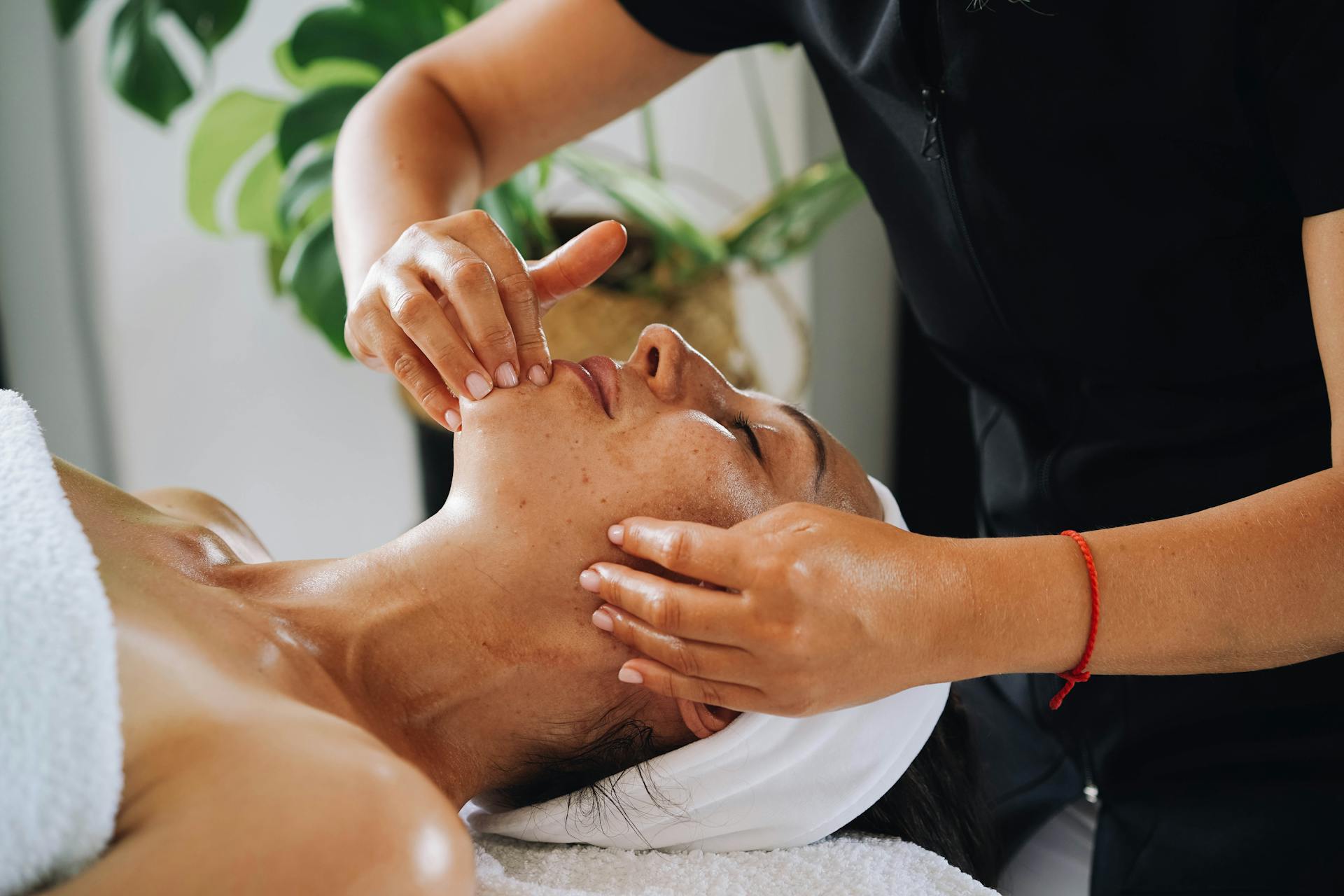
Your therapist focuses on the outside of your face, cheeks, temples, and neck line. Using specialized, firm, and slow downward strokes, they work to release long-standing tension in the masseter and temporalis muscles. This targeted pressure breaks up muscle adhesions, stimulates healthy blood circulation, and allows the jaw to rest in a more natural, relaxed position.
2. Intraoral Massage (Internal Treatment)
Because some of the most critical jaw-moving muscles—like the pterygoids—sit deep within the skull structure, they cannot be reached from the outside. Using a protective, sterile glove, your therapist gently accesses these deep muscles from the inside of your mouth. By applying careful, direct pressure to these internal trigger points, they can release deep-seated spasms that external massage simply cannot reach. This internal release is often the missing piece that restores smooth, click-free jaw mobility.
Conclusion: Restoring Comfort and Alignment
Living with chronic jaw tension is exhausting, but you do not have to accept facial pain and headaches as part of your daily routine. TMJ Jaw Massage in Burlington provides an effective, non-invasive pathway to break the cycle of clenching, alleviate pain at its muscular root, and protect your teeth from the forces of overnight grinding.
By systematically releasing both the external and internal muscles of mastication, this targeted therapy restores balance to your bite, alleviates debilitating tension headaches, and helps you reclaim smooth, pain-free movement.
If you are tired of dealing with a stiff, clicking jaw or waking up with daily headaches, take the first step toward lasting relief. Partnering with a skilled professional for specialized TMJ therapy provides the expert care, anatomical precision, and customized clinical approach you need to relax your jaw and live comfortably again.