
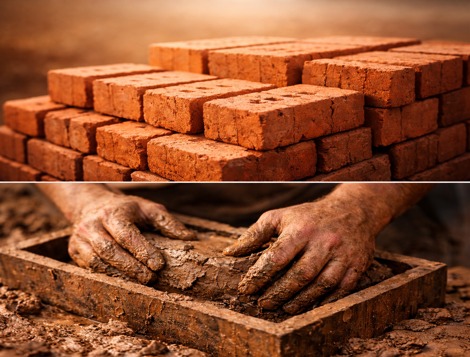
Long before concrete and steel took over construction sites, clay brick masonry was already building civilizations. The Indus Valley. Mesopotamia. Ancient Rome. Structures stacked from simple fired units, built not just to function, but to last. Thousands of years later, many of these structures are still standing. That is not a coincidence. It is material reliability proven over millennia.
What’s striking is how little the core idea has changed, and how much the details still catch contractors off guard. Not all clay bricks perform the same. Composition, firing temperatures, and manufacturing methods create real differences in strength, finish, and cost. Differences that matter long before the first unit is laid. This guide breaks down the types of clay bricks, how they’re made, and what they cost – everything you need to know before the order is placed.
Which Brick Fits Your Project?
The types of bricks available today serve very different project needs. Here’s what matters:
- Paver Bricks — Dense, load-tolerant units built for driveways, walkways, courtyards, and outdoor surfaces that take consistent foot and vehicle traffic.
- Reclaimed Handmade Bricks — Salvaged from original structures, cleaned, and graded. They carry a weathered texture and have tonal variation that new bricks simply can’t replicate — ideal for heritage restorations, conservation projects, and facades where authenticity matters.
- Recycled Handmade Bricks — Reprocessed from brick waste, offering an eco-conscious option without sacrificing finish quality. A cleaner look than reclaimed, with a similar sustainable intent.
- Red Handmade Bricks — Fired clay units with strong structural integrity and a warm, consistent finish suited for walls, facades, and exposed brickwork.
- London Yellow Bricks — Made from London clay, producing a warm gold to pastel yellow tone with characteristic coal flecks. Popular in period-style builds and high-end facade work.
- Black Tinted Tumbled Bricks — Marked by a rustic appearance, the darkened, worn finish works well in modern landscaping, feature walls, and accent detailing.
From Raw Earth to Ready-to-Lay — How Bricks Are Actually Made
The clay bricks manufacturing process for handmade units is more deliberate than industrial production. Clay is sourced, prepared, and mixed to the right consistency before being hand-moulded, which is why output averages around 750 bricks per worker per day. That slower pace is what gives handmade bricks their character: natural creases, irregular edges, and tonal variation that machine-made alternatives can’t reproduce.
After moulding, bricks are dried in rows for air circulation, then fired at high temperatures, fusing the clay into a dense, durable unit. This stage determines compressive strength, water absorption, and colour depth. Under-fired bricks absorb more water and deteriorate faster. The margin between a reliable brick and a weak one comes down to kiln control, raw material consistency, and adherence to quality standards.- details that only bricks manufacturers controlling the full process from clay to dispatch can actually guarantee.
What Should You Expect to Pay?
Clay bricks price varies by type, grade, and order volume. Red handmade bricks in India typically range between ₹5 to ₹12 per unit, with reclaimed and vintage units commanding a premium based on aesthetic value. London Yellow Bricks sit at a higher price point globally given their specialized clay and craft. Bulk order size, distance from the manufacturer, and project timelines all play a role in determining the final figure.
Why Contractors Trust Arvicon to Deliver
For contractors who need consistent grading, superior quality standards, dependable lead times, and materials that balance structural performance with visual appeal, Arvicon International stands out as an excellent choice. One of the most well-known brick manufacturers, Arvicon offers a diverse range covering Paver, Reclaimed, Recycled, Red Handmade, London Yellow, and Black Tinted Tumbled Bricks. These are available across multiple sizes and thicknesses to fit project specifications.
With over 25 years of experience in global trade and a proven track record in international supply, Arvicon International ensures steady availability, consistent quality, and dependable delivery timelines to markets such as the UK, Netherlands, USA, Japan, and Germany. Explore the full range at arvicon.com.
FAQs
1: How do reclaimed bricks differ from recycled bricks?
A: Reclaimed bricks are salvaged whole from original structures, carrying genuine weathering and historic character. Recycled bricks are reprocessed from brick waste and tend to be more uniform. Choose reclaimed for authenticity, and recycled for a cleaner, sustainable finish.
2: What sizes are available for handmade bricks?
A: Sizes typically range from 180×80 mm to 228×114 mm, with thickness options between 45 mm and 73 mm. Custom sizes are also produced depending on project specifications.
3: Do handmade bricks hold up structurally compared to machine-made ones?
A: Yes. Handmade bricks fired at the right temperatures meet standard compressive strength requirements for most structural and facade applications. However, compared to machine-made bricks, they may display greater variation in size and strength. The main difference lies in consistency and finish, rather than inherent capability.