
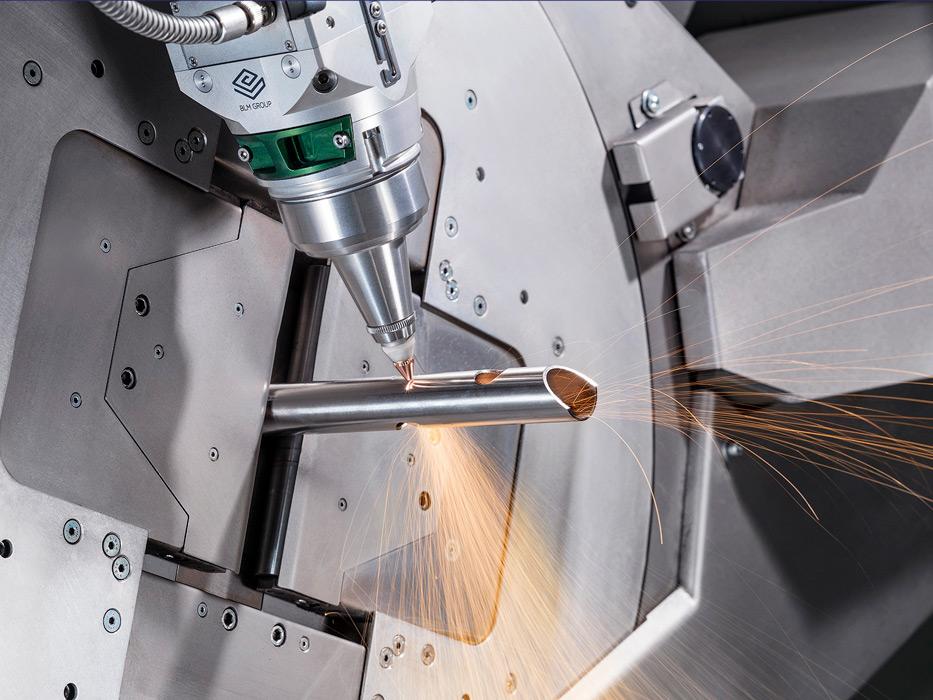
Selecting the right laser pipe cutting machine is an important decision for any manufacturing business. Whether you produce automotive parts, construction materials, furniture, or industrial equipment, the quality of your cutting equipment directly affects productivity, precision, and operating costs. With numerous models and specifications available, understanding your production needs is essential before making an investment.
Today’s manufacturing industry demands greater accuracy, faster turnaround times, and reduced material waste. A Laser Pipe Cutting Machine offers an efficient solution by delivering precise cuts, supporting automation, and handling a wide variety of pipe materials and profiles. Choosing the right machine, however, requires careful evaluation of several technical and operational factors.
Assess Your Production Requirements
Before comparing machine specifications, identify your current and future production needs. Different businesses require different cutting capacities depending on their products and production volume.
Consider the following questions:
- What types of metal pipes will you cut?
- What are the maximum pipe diameters and lengths?
- How many components are produced daily?
- Will you need to process custom or complex designs?
Having clear answers will help narrow your options and prevent investing in equipment that is either insufficient or unnecessarily advanced.
Consider Material Compatibility
Not all laser cutting machines are designed for the same materials. Ensure the machine can efficiently process the metals used in your manufacturing operations.
Common compatible materials include:
- Carbon steel
- Stainless steel
- Aluminum
- Copper
- Brass
- Alloy metals
If your business works with multiple materials, selecting a machine with broad compatibility provides greater flexibility for future projects.
Evaluate Laser Power
Laser power significantly impacts cutting performance. Higher-powered machines can cut thicker materials more quickly, while lower-powered models are often suitable for thinner pipes and lighter production workloads.
Choosing the correct power level depends on:
- Material thickness
- Production speed requirements
- Desired cutting quality
- Energy efficiency
Selecting the appropriate laser power helps balance productivity with operating costs.
Check Cutting Accuracy
Precision is one of the primary advantages of laser cutting technology. High cutting accuracy minimizes errors, reduces material waste, and improves the quality of finished products.
Look for machines that offer:
- Tight dimensional tolerances
- Smooth cutting edges
- Consistent repeatability
- Minimal burr formation
Accurate cutting also reduces the need for secondary finishing operations, saving both time and labor.
Review Automation Features
Automation has become an essential feature in modern manufacturing. Many laser pipe cutting machines include advanced automation systems that improve productivity while reducing manual work.
Useful automation features include:
- Automatic loading and unloading
- Intelligent material positioning
- CNC programming
- Real-time monitoring
- Production management software
These capabilities help streamline operations and maintain consistent production quality.
Examine Software Compatibility
The software controlling the laser cutting machine plays an important role in overall efficiency. User-friendly software simplifies programming, design adjustments, and production planning.
Modern systems often support popular CAD and CAM software, allowing seamless transfer of design files into the cutting process. This minimizes programming errors and speeds up job preparation.
Choosing equipment with reliable software also makes employee training easier.
Consider Maintenance Requirements
Maintenance costs should be included when evaluating any manufacturing equipment. Machines with fewer mechanical wear components generally require less frequent servicing and lower replacement costs.
When comparing options, consider:
- Availability of spare parts
- Ease of routine maintenance
- Service support
- Warranty coverage
- Expected machine lifespan
Reliable equipment with accessible technical support helps reduce unexpected downtime.
Think About Future Business Growth
Investing in manufacturing equipment is a long-term decision. While your current production needs may be modest, future expansion could require greater capacity.
Choosing a machine that supports increased production volumes or additional material types can help avoid costly upgrades later. Scalability is especially valuable for businesses planning to expand their product range or enter new markets.
Balance Cost and Value
Price should never be the only deciding factor. Instead, evaluate the total value the machine provides over its lifetime.
A higher-quality machine may have a larger initial investment but can generate significant savings through:
- Higher production efficiency
- Reduced material waste
- Lower maintenance costs
- Improved product quality
- Longer service life
Considering the total cost of ownership provides a more accurate picture of long-term profitability.
Conclusion
Choosing the right laser pipe cutting machine requires careful planning and a clear understanding of your manufacturing goals. Factors such as production volume, material compatibility, laser power, automation, software, and maintenance all play important roles in selecting equipment that meets your operational requirements.
By focusing on long-term performance rather than simply the purchase price, businesses can invest in a solution that improves precision, increases efficiency, and supports sustainable growth. A well-chosen laser pipe cutting machine not only enhances productivity but also helps manufacturers remain competitive in today’s rapidly evolving industrial landscape.