
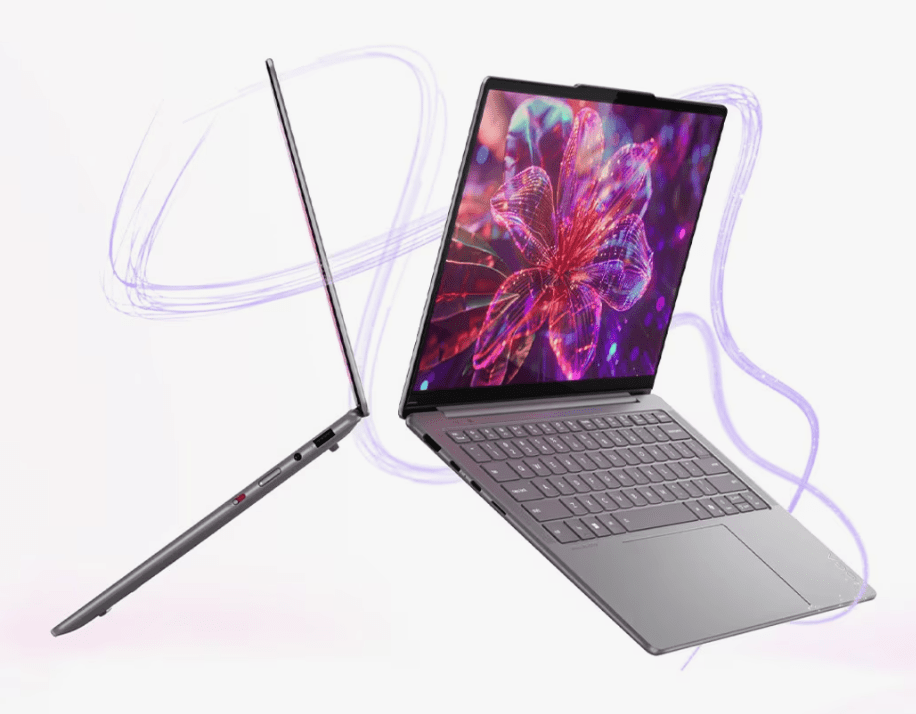
Buying a new AI PC is an exciting step into the future of computing. You might notice your laptop stays cool even when you open fifty tabs. This speed does not happen by accident or simple luck. Engineers have spent years building clever systems that allow the machine to think.
These computers do not just wait for your commands anymore. They look at your patterns and adjust their power in real time. This shift makes your daily work much smoother and faster. You are essentially using a brain made of silicon and gold. These machines use special chips to handle the hardest tasks.
Let us look at the nine core methods that make these PCs so fast.
1. Dedicated Neural Processing Units
Most old computers rely only on a CPU and a GPU. AI-driven PCs add a third specialized chip called the NPU. This chip is a master at handling AI math. It allows your AI-powered PCs to offload complex AI workloads from the CPU and GPU, delivering faster performance while keeping the system efficient and responsive.
- The NPU manages background tasks like noise cancellation.
- It uses much less power than a traditional processor.
- Your main CPU stays free for your heavy apps.
- It makes AI features run without slowing the system down.
The NPU acts as a dedicated worker for smart tasks. Once the NPU handles the logic, the system needs fast data access.
2. Shared Unified Memory Architecture
Traditional PCs waste time moving data between different memory pools. AI PCs use a unified memory system to stop this waste. Everything sits in one big fast bucket for all chips to see.
- The CPU and NPU access the same data instantly.
- You can run large AI models without hitting a wall.
- High-speed RAM ensures zero lag during heavy multitasking.
This shared pool allows the PC to move data quickly. The next step involves making that data much smaller and lighter.
With AI-powered PCs now being used by almost every business and individual, their market is continuously rising. The total market share is expected to surpass $992 billion by 2035.
3. Advanced Data Quantization
AI models are usually massive files that take up space. Quantization is a trick that shrinks these models down. It turns heavy complex numbers into smaller simple ones.
Making Math Much Faster
The PC performs calculations using lower precision numbers. This reduces the workload on the hardware significantly. You get the same smart results with half the effort.
Saving Your Storage Space
Small models fit into the fast cache memory easily. This means the PC does not have to hunt for data. Everything stays right where the processor can grab it quickly.
Shrinking the data makes the PC faster and more efficient. Now the computer can start predicting what you will do next.
4. Smart Predictive Prefetching
AI PCs watch how you use your favorite software. The system learns that you always open your email first. It starts loading that app before you even touch your mouse.
- The PC prepares resources based on your daily schedule.
- It keeps your most-used tools in the high-speed memory.
- You see an “instant-on” effect for your heavy programs.
- The system adapts to your changing habits over time.
Predicting your moves saves seconds every single hour. To keep this, the PC must also stay cool.
5. Proactive Thermal Management
Heat is a major reason why computers slow down. AI PCs use smart sensors to find heat before it starts. The AI adjusts the fan speed to keep the temperature perfect.
- Sensors track heat in every corner of the motherboard.
- The system lowers power to chips that are getting too hot.
- Fans spin up only when the AI detects a real load.
- Your laptop stays quiet during your morning meetings.
6. AI-Driven Image Upscaling
This technique is a favorite for gamers and video editors. The PC renders a small image and then grows it. AI fills in the gaps to make it look like 4K quality.
- The hardware works less by drawing smaller initial frames.
- AI algorithms add sharp details and smooth edges instantly.
- You get a higher frame rate in video games.
- Old low-quality videos look crisp and modern.
Better visuals are great but a fast internet connection is also vital.
7. Intelligent Bandwidth Allocation
A slow internet connection can make a fast PC feel sluggish. AI PCs manage your web traffic to prevent any lag. They know which apps are the most important for you.
- The PC gives more speed to your video calls.
- It pauses background updates while you are working.
- The system finds the best path for your data packets.
- You experience fewer drops during important online tasks.
Managing the network saves time and energy for the battery.
8. Contextual Power Optimization
AI PCs do not run at full speed when they do not have to. They look at your environment to save battery life. The system changes its power mode based on your behavior.
- The screen dims when the camera sees you walk away.
- The PC shuts down idle chips to save every drop of juice.
- It learns when you are away from your wall charger.
- Battery life lasts hours longer than an old laptop.
Saving power is important, but keeping your data safe is even better.
9. Local On-Device Security Processing
Security usually slows down your computer because it checks every file. AI PCs use the NPU to run security in the background. This keeps you safe without ruining your performance.
- Face ID and fingerprint checks happen on the chip.
- The PC scans for viruses using smart AI patterns.
- Your personal data stays on the hard drive.
- Real-time protection does not lag your creative apps.
Conclusion
These nine techniques work together to create a better experience. Your AI-powered PC is a mix of smart hardware and even smarter software. It learns from you and grows more efficient every day. The days of waiting for your computer to catch up are over. These machines are finally as fast as our own thoughts. It is a massive leap forward for every computer user.
