

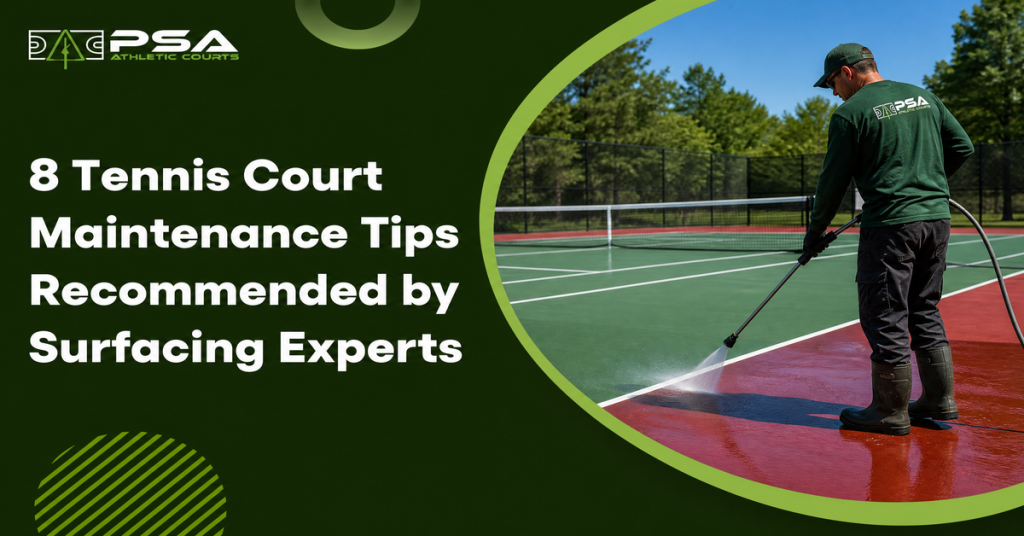
Proper tennis court maintenance is essential for preserving playability, safety, and the overall appearance of your court. Whether you manage a residential court, sports club, school, or community facility, routine maintenance can significantly extend the lifespan of your investment while reducing costly repairs.
Experienced tennis court surfacing contractors recommend proactive maintenance rather than waiting for cracks, fading, or drainage issues to become major problems. Here are eight expert-approved tips to help keep your court in top condition throughout the year.
1. Clean the Court Surface Regularly
Leaves, dirt, dust, and debris gradually accumulate on the court and can affect traction, ball bounce, and drainage.
Use a soft broom, blower, or pressure washer (when appropriate) to remove debris before it causes staining or promotes mold and algae growth.
Regular cleaning helps:
- Maintain player safety
- Improve court appearance
- Prevent premature surface wear
- Extend coating life
Consistent tennis court maintenance always begins with a clean playing surface.
2. Remove Standing Water Immediately
Water is one of the biggest causes of surface deterioration.
After heavy rain, inspect the court for puddles that remain longer than expected. Standing water can weaken coatings, create slippery conditions, and eventually lead to cracks or low spots.
If water consistently pools in the same areas, consult experienced tennis court surfacing contractors to evaluate drainage or surface grading.
3. Inspect for Small Cracks
Minor cracks may seem harmless, but they often expand over time due to moisture infiltration and freeze-thaw cycles.
During routine tennis court maintenance, inspect the playing surface for:
- Hairline cracks
- Surface separation
- Low spots
- Edge deterioration
Repairing minor issues early is far less expensive than complete resurfacing later.
4. Control Mold, Moss, and Algae Growth
Outdoor courts located near trees or shaded areas are especially vulnerable to biological growth.
Moss and algae create slippery surfaces that increase injury risks while gradually damaging court coatings.
Routine cleaning combined with approved court-safe cleaning solutions helps maintain proper traction and extends the life of the surface.
5. Maintain Court Drainage
Proper drainage protects the structural integrity of every tennis court.
Ensure surrounding drains remain clear and verify that rainwater flows away from the playing surface. Blocked drainage systems often result in standing water that accelerates surface deterioration.
Professional tennis court maintenance companies frequently inspect drainage systems as part of scheduled maintenance programs.
6. Schedule Periodic Resurfacing
Even the highest-quality court coatings eventually wear down after years of use.
If your court shows faded colors, worn playing lines, reduced traction, or widespread surface cracking, resurfacing may be necessary.
Experienced tennis court surfacing contractors can restore:
- Surface texture
- Ball bounce consistency
- Court appearance
- Player safety
Routine resurfacing every several years helps maximize the lifespan of the underlying court structure.
7. Protect the Court from Heavy Equipment
Many court owners unintentionally damage surfaces by placing heavy equipment or vehicles on the court.
Avoid:
- Maintenance trucks
- Construction equipment
- Heavy storage containers
- Sharp metal objects
Keeping unnecessary weight off the court helps prevent structural damage and surface deformation.
This simple step is often overlooked during regular tennis court maintenance.
8. Partner with Professional Tennis Court Maintenance Companies
While routine cleaning can be handled in-house, professional inspections provide long-term value.
Experienced tennis court maintenance companies identify hidden issues before they become costly repairs. They can evaluate drainage, coatings, structural movement, net systems, fencing, and surface performance using specialized equipment.
Working with professionals ensures your court remains safe, visually appealing, and ready for year-round play.
Signs Your Tennis Court Needs Professional Attention
If you notice any of the following issues, it’s time to contact qualified tennis court surfacing contractors:
- Large surface cracks
- Persistent standing water
- Faded court colors
- Uneven ball bounce
- Peeling coatings
- Worn playing lines
- Surface discoloration
- Slippery playing conditions
Addressing these problems early prevents more extensive repairs in the future.
Why Routine Tennis Court Maintenance Matters
Consistent tennis court maintenance does more than improve appearance- it protects your investment. A well-maintained court provides better playing performance, reduces safety risks, lowers long-term repair costs, and extends the life of the playing surface.
Whether your court serves recreational players, schools, clubs, or competitive athletes, preventive maintenance helps ensure reliable performance season after season.
Final Thoughts
Maintaining a tennis court doesn’t require major repairs if small issues are addressed early. By following these eight expert-recommended tennis court maintenance practices and working with experienced tennis court surfacing contractors and trusted tennis court maintenance companies, you can maximize your court’s lifespan while providing players with a safe, attractive, and high-performing playing surface for years to come.