

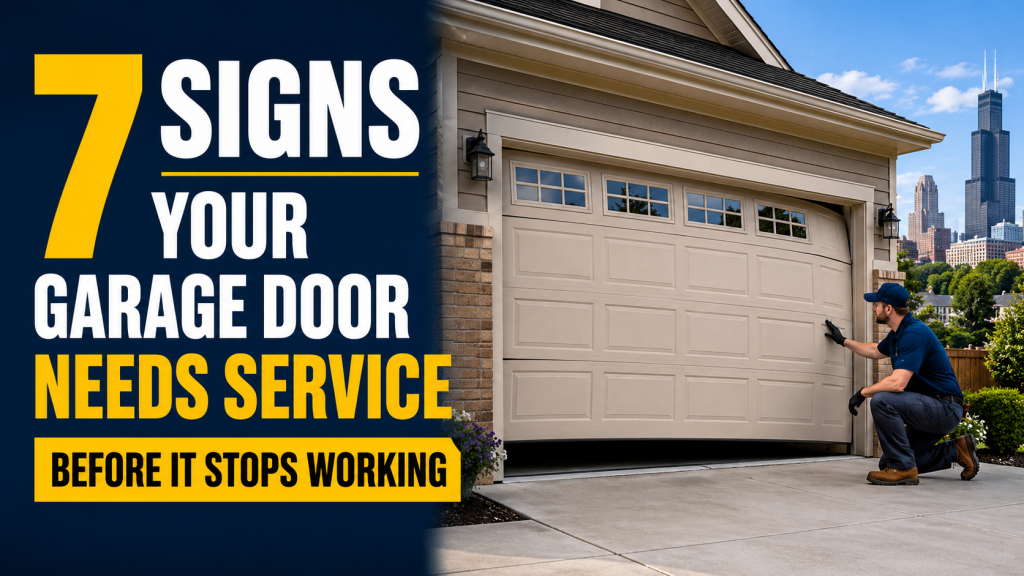
Most garage doors do not fail without warning. Before a door stops opening, gets stuck halfway, or leaves your home exposed, it usually gives small signs that something is wearing out, shifting, or working harder than it should.
For homeowners in Chicago, New Lenox, the Chicago Metro Area, and surrounding Chicagoland communities, catching these warning signs early can help prevent a stressful emergency. Cold winters, humid summers, road salt, daily use, and temperature swings can all affect garage door parts over time. Springs lose tension, tracks shift, rollers wear down, sensors get misaligned, and openers begin to strain.
The good news is that many garage door problems can be corrected before they turn into a complete breakdown. If you have been searching for “garage door service near me” because your door sounds different, moves unevenly, opens slowly, or reverses unexpectedly, it may be time to schedule a professional inspection.
Below are seven common signs your garage door needs service before it stops working altogether.
Why Homeowners Should Not Ignore Small Garage Door Changes
A garage door is one of the largest moving systems in your home. It depends on several connected parts working together, including springs, cables, rollers, hinges, tracks, sensors, and the opener. When one part begins to fail, the rest of the system often has to work harder.
Small changes can seem harmless at first. A little extra noise, a slight delay, or a small gap at the bottom of the door may not feel urgent. But these symptoms can point to bigger issues developing behind the scenes.
For example, a noisy garage door may simply need lubrication, but it can also mean worn rollers, loose hardware, or spring strain. A door that reverses unexpectedly may have a sensor issue, but it could also be meeting resistance from a track or balance problem. A slow opener response may be caused by remote batteries, but it can also signal opener wear or door imbalance.
The earlier you address these warning signs, the easier it usually is to avoid major repairs, safety risks, and inconvenient breakdowns.
1. Excessive Noise or New Grinding Sounds
A garage door will never be completely silent, but it should not suddenly become loud, harsh, or rough-sounding. If your door starts making grinding, scraping, squeaking, rattling, or banging noises, it is often one of the first signs a garage door needs repair.
A noisy garage door may be caused by:
- Worn rollers
- Dry or dirty tracks
- Loose hinges or brackets
- Lack of lubrication
- Rusted hardware
- Spring tension problems
- Opener strain
Different sounds can point to different issues. Grinding may suggest metal parts are rubbing together. Squeaking often means moving parts need lubrication. Rattling can come from loose hardware. A loud bang may indicate a spring issue, which should always be handled by a trained technician.
In Chicago and Chicagoland homes, seasonal weather changes can make noise worse. Cold temperatures may stiffen metal components, while moisture can contribute to rust or friction. If your garage door suddenly sounds different, do not ignore it. Noise is often the door’s way of telling you something is wearing down.
2. Slow Opening or Delayed Opener Response
If your garage door opens slowly or hesitates before moving, it may be more than a minor inconvenience. A healthy garage door system should respond smoothly when you press the wall button, keypad, or remote.
A slow or delayed response can be caused by:
- Weak remote batteries
- Opener motor problems
- Worn gears inside the opener
- Track resistance
- Poor door balance
- Aging springs
- Electrical issues
Sometimes the issue is simple, such as a remote needing a new battery. But if the wall button also causes a delay, or the opener hums before the door moves, the system may be struggling.
A garage door opens slowly when the opener has to work harder than normal. This can happen if the door is too heavy due to spring wear or if rollers are not moving freely. Over time, this strain can shorten the life of the opener and lead to sudden failure.
If you notice slower movement, delayed response, or a door that seems heavier than before, it is best to schedule service before the opener burns out or the door stops moving entirely.
3. Uneven or Jerky Movement
A garage door should move smoothly along its tracks. If you notice the garage door jerking when opening, shaking while closing, or moving unevenly from side to side, there may be a problem with the door’s balance, rollers, cables, or tracks.
Jerky movement can be caused by:
- Damaged rollers
- Bent tracks
- Loose hinges
- Cable wear
- Spring imbalance
- Track obstruction
- Door section damage
Uneven movement is especially important to address because it can place extra pressure on the entire system. If one side of the door is moving faster than the other, the cables or springs may not be supporting the door evenly. This can lead to more serious damage if the door continues to operate.
Homeowners in New Lenox, the South Metro, West Metro, North Shore, and nearby communities often use their garage doors as a main entrance. That daily use can make small movement issues worse over time. If your door shakes, jerks, or appears crooked while moving, stop using it as much as possible and call for service.
For symptoms that involve uneven movement, strained parts, broken hardware, or possible safety concerns, it is smart to contact a professional for garage door repair in Chicago.
4. Sagging or Visibly Unbalanced Sections
A garage door that appears to sag, dip, or sit unevenly may have a balance problem. You might notice one side of the door hangs lower than the other, or one section looks warped or misaligned.
Common causes include:
- Weak or broken springs
- Damaged cables
- Worn hinges
- Bent panels
- Structural stress
- Long-term wear from frequent use
An unbalanced garage door can be dangerous. Springs and cables are designed to carry much of the door’s weight. When they are not working properly, the opener may be forced to lift more weight than it was designed to handle.
One warning sign is a door that will not stay in place when partially opened. Another is a door that feels unusually heavy if you try to lift it manually after disconnecting the opener. Because garage doors are heavy and spring systems are under high tension, balance issues should not be handled as a do-it-yourself repair.
If your door looks uneven, sags in the middle, or seems heavier than usual, it is time for a professional inspection.
5. Worn Bottom Seal or Visible Gaps
Not every warning sign involves movement or noise. Sometimes the problem is visible when the door is fully closed. If you see daylight under the garage door, feel drafts, or notice water, leaves, insects, or debris getting inside, the bottom seal may be worn out.
A damaged bottom seal or visible gap can lead to:
- Water entering the garage
- Cold air drafts
- Higher energy loss
- Pest problems
- Dirt and debris buildup
- Damage to stored items
- Extra strain if the door is not closing evenly
In the Chicago Metro Area, garage door seals take a lot of abuse from snow, ice, rain, salt, and temperature changes. A brittle, cracked, or flattened seal may no longer protect the garage properly.
Sometimes a visible gap is only a weatherstripping issue. Other times, it may mean the door is not sitting level because of a balance problem, track issue, or damaged panel. If the seal is worn but the door moves normally, a tune-up may be enough. If the gap is uneven from one side to the other, the door may need a deeper inspection.
6. Door Reverses Unexpectedly
A garage door that reverses unexpectedly is one of the most common reasons homeowners search for help. If your garage door starts to close and then opens again, the system may be detecting a safety issue.
A garage door reverses unexpectedly for several possible reasons:
- Misaligned safety sensors
- Dirty sensor lenses
- Objects blocking the sensor beam
- Track resistance
- Incorrect opener force settings
- Damaged rollers or hinges
- Problems with the door’s balance
Start by checking whether anything is blocking the sensors near the bottom of the door tracks. Dust, cobwebs, leaves, or stored items can interfere with the sensor beam. Also look for blinking sensor lights, which may indicate misalignment.
However, if the sensors are clean and aligned but the door still reverses, the opener may be sensing resistance. This can happen when the door is not moving smoothly or is becoming too heavy for the opener. Continuing to force the door closed can create more damage.
Because the reversing system is a key safety feature, it should never be disabled or ignored. If the door keeps reversing, call for service before the problem worsens.
7. Opener Hesitation, Clicking, or Strain
Your garage door opener should not sound like it is struggling. If you hear clicking, humming, grinding, or repeated attempts before the door moves, the opener may be under strain.
Opener hesitation can be caused by:
- Worn internal gears
- Weak motor components
- Door imbalance
- Spring wear
- Electrical problems
- Remote or keypad issues
- Travel limit or force setting problems
It is important to remember that the opener is not meant to lift the full weight of the garage door by itself. The springs do most of the heavy lifting. If the springs are wearing out, the opener has to compensate. That extra strain can eventually cause the opener to fail.
A clicking opener may also mean the unit is receiving power but cannot properly move the door. If the opener light flashes or the motor hums without movement, stop trying to operate the system repeatedly. Repeated attempts can make the damage worse.
A professional technician can determine whether the opener itself needs repair or whether another part of the garage door system is causing the strain.
Repair vs. Tune-Up: How to Know What Type of Service You Need
Not every garage door issue requires a major repair. In many cases, preventative service can correct small problems before parts break.
A tune-up may be enough if your door:
- Makes light squeaking sounds
- Opens and closes but feels slightly rough
- Needs lubrication
- Has loose hardware
- Has minor sensor alignment issues
- Has weatherstripping beginning to wear
- Has not been serviced in a year or more
A repair may be needed if your door:
- Jerks, shakes, or moves unevenly
- Reverses repeatedly
- Has broken springs or cables
- Looks crooked or sagging
- Has damaged panels
- Will not open or close fully
- Makes grinding or banging sounds
- Causes the opener to strain
Preventative service is especially useful for homeowners who rely on their garage door daily. An annual garage door maintenance and tune-up can help identify worn parts, improve door movement, reduce noise, and extend the life of the system.
In areas like Chicago, New Lenox, and the broader Chicagoland region, annual maintenance can be especially helpful because weather changes can affect springs, seals, rollers, and metal hardware. A tune-up before winter or after a long season of heavy use can help reduce the chance of an unexpected breakdown.
FAQ: Garage Door Warning Signs
Why is my garage door suddenly noisy?
A garage door may suddenly become noisy because of worn rollers, loose hardware, dry hinges, dirty tracks, rusted parts, or spring strain. If the noise is new, getting louder, or includes grinding or banging, schedule service before the problem causes more damage.
Why does my garage door move unevenly?
A garage door may move unevenly because of damaged rollers, bent tracks, worn cables, loose hinges, or spring imbalance. Uneven movement can put stress on the door and opener, so it should be inspected as soon as possible.
Why does my garage door reverse when closing?
A garage door may reverse when closing because the safety sensors are blocked, dirty, or misaligned. It may also reverse if the opener senses resistance from a track problem, worn rollers, or an unbalanced door. If cleaning and checking the sensor area does not fix the issue, call a technician.
When should I call for garage door service?
You should call for garage door service when your door becomes noisy, slow, uneven, jerky, unbalanced, or starts reversing unexpectedly. You should also call if the opener strains, the door looks crooked, or you see gaps around the bottom of the door.
What are the warning signs before a garage door breaks?
Common warning signs before a garage door breaks include excessive noise, slow opening, delayed opener response, jerky movement, sagging sections, visible gaps, unexpected reversing, clicking sounds, and opener strain. Most garage door failures show at least one of these symptoms before a complete breakdown.
Schedule Service Before the Door Fails Completely
Garage door problems are easier to handle when they are caught early. A noisy, uneven, slow, or reversing garage door is not just an annoyance. It may be an early warning that parts are wearing out or the system is working harder than it should.
Whether you live in Chicago, New Lenox, the South Metro, West Metro, North Shore, or another nearby Chicagoland community, paying attention to these signs can help you avoid an emergency repair.
If your garage door is noisy, uneven, slow, or reversing unexpectedly, schedule service before it fails completely.