
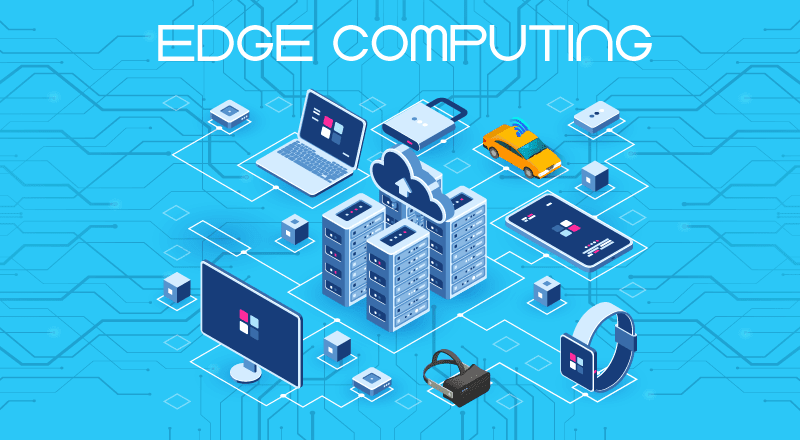
Smart grids are transforming the way we utilize and handle electricity. They assist in driving homes and businesses in more efficient and quicker ways. But why are they so effective? The answer is edge computing. It helps in processing data closer to its creation. It implies less time wastage and quicker decision-making.
The global edge computing market is expanding rapidly, with a projected market size expected to rise from about USD 168.40 billion in 2025 to USD 249.06 billion by 2030.
This increase shows the importance of edge computing in enabling smarter grids. It maintains system stability, minimizes energy waste, and is more effective in controlling power demand.
Keep reading to discuss six practical uses that render edge computing a game-changer for smart grids.
1. Real-Time Energy Tracking to make Rapid Decisions
Smart grids are based on real-time information to operate effectively. Edge computing helps gather and process this information in real-time, close to the energy source and it monitors power flow, voltage, and usage patterns.
This fast reaction prevents overloads and maintains the power constant. It also helps the energy companies to make quicker decisions. They receive updates immediately, rather than waiting until the data is relayed to a central cloud.
Benefits include:
- Automatic notifications on energy spikes.
- Faster fault detection
- Improved grid reliability
2. Power Equipment Predictive Maintenance
Equipment failures can cause prolonged power outages. Smart grids can anticipate such failures prior to their occurrence with edge computing. Transformers, meters, and switches are monitored using sensors to gather live data. This data is then analyzed on the spot by edge devices.
Technicians receive alerts on time, allowing them to notice any abnormal patterns. This will enable them to correct minor issues before they escalate into major problems.
The benefits to the energy providers.
- Reduces repair costs
- Extends equipment life
- Guarantees a continuous power supply.
Edge computing is smarter and safer in maintenance. It maintains the grid without unexpected failures.
3. Quick Response to Power Outages
Power outages impact thousands of users. Edge computing is used to restore electricity more quickly by controlling data on the local level. It assists in identifying the point of failure precisely in a few seconds.
Local edge nodes respond quickly when a section of the grid fails, ensuring the problem is isolated. They are able to divert power from nearby sources until full repair is completed.
- Rapid outage detection
- Automatic power rerouting
- Increased customer satisfaction.
4. Better Integration of Renewable Energy
Solar and wind energy are increasing rapidly all over the world. However, their power output is usually weather-dependent. Edge computing can be used to address this problem by processing real-time data from renewable sources.
Smart Energy Balance in Action
Edge devices are able to measure wind speed, sunlight, and energy demand in real time. They are able to balance power supply between renewable and traditional sources.
- Easy assimilation of renewables.
- Reduced power waste
- More stable energy delivery
Green energy is made more predictable and efficient with edge computing.
5. Smart Energy in Homes and Cities
Edge computing is utilized to support smart meters and IoT devices in both homes and cities. These gadgets record information about electricity usage on a second-by-second basis. The data helps users to monitor and minimize their energy expenses.
These edge systems are linked to the smart grid, which regulates the flow of energy according to demand. To illustrate, they can reduce energy consumption in less busy locations during peak times to avoid overloading.
- Greater user control of energy.
- Cost savings for households.
- Less pressure on power systems.
How Cities Benefit
Edge computing is used to control streetlights, electric vehicles, and public buildings in smart cities. It makes sure that energy is consumed when necessary. This forms cleaner and more efficient urban areas.
6. Improved Power Network Security
Smart grids process sensitive information on a second-by-second basis. Edge computing provides an additional security measure by processing data at the edge. This minimizes the possibility of data theft or cyber attacks.
Security benefits:
- Stronger data protection
- Rapid identification of cyber threats.
- More trusted and safer power systems.
This helps energy providers safeguard their infrastructure and customer information with ease.
A Future Prospectus: Edge Computing and the Future of Energy
Energy management is not the only area that edge computing is enhancing. It is transforming the way complete grids are run. Its influence is felt throughout the energy chain, whether it is predictive maintenance or quicker outage recovery.
What Comes Next
As the world shifts towards electric cars, smart homes, and renewable energy, the use of edge computing is expected to grow significantly. It will help control millions of interconnected devices collaborating to provide energy effectively.
Conclusion: A Smarter Grid for a Brighter Future
The future of global energy systems lies in smart grids. They are also getting safer, faster, and more reliable with edge computing. It fills the gap between humans and machines by transforming raw data into fast action.
Its advantages are evident in the reduction of power outages and the increased consumption of renewable energy. With the increasing number of energy companies utilizing this technology, the world will have access to reliable and effective electricity.
Smart grids are not the only ones being powered by edge computing. It is driving the new generation of energy to a smarter and cleaner world.