
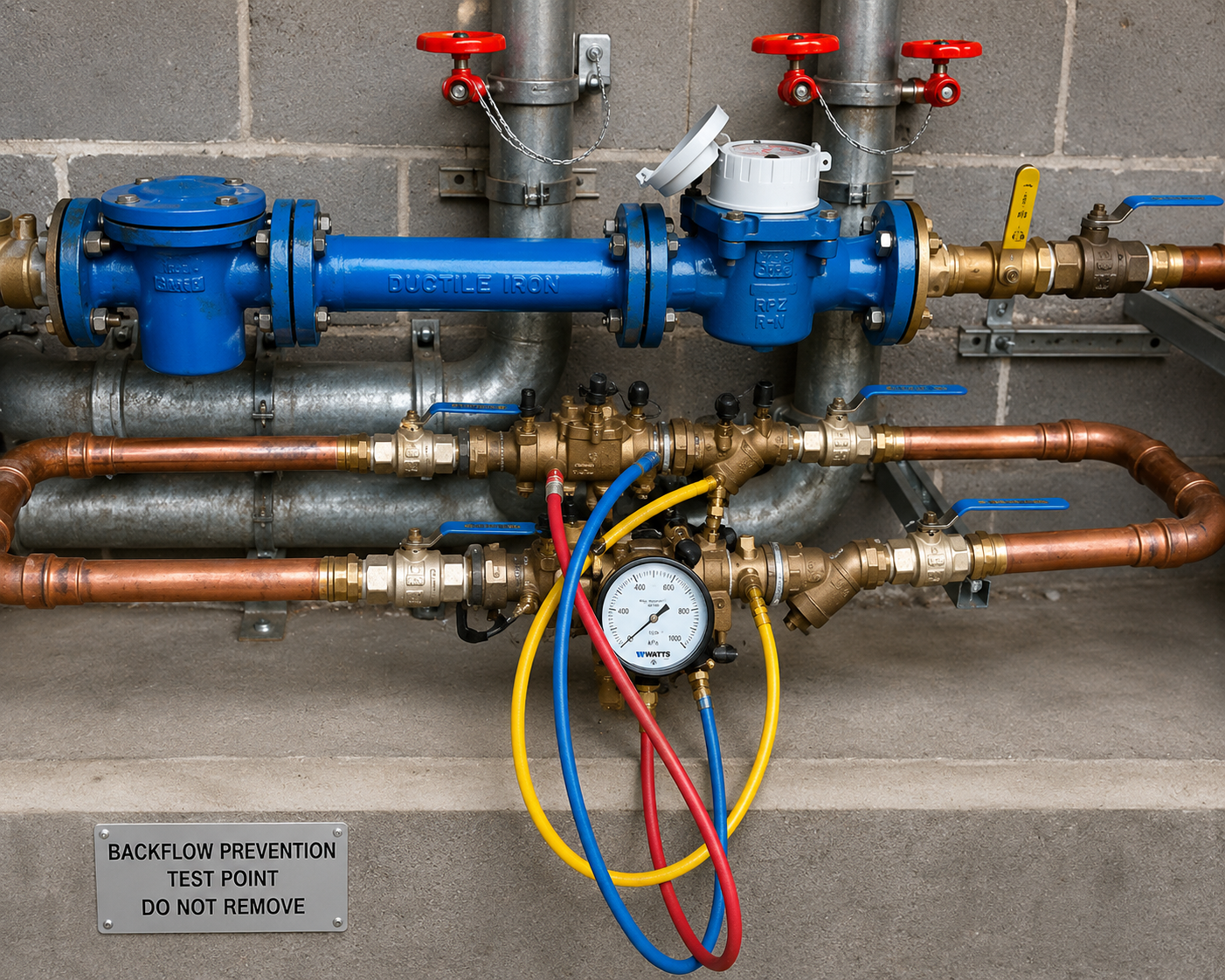
Most Sydney property owners rarely think about their backflow prevention system until they receive a compliance notice or encounter an unexpected plumbing issue. Unfortunately, waiting until a problem arises can increase the risk of water contamination, compliance concerns, and costly repairs.
Backflow prevention plays a critical role in protecting Sydney’s drinking water supply. According to Sydney Water, certain properties are required to install, maintain, and regularly test backflow prevention devices to help prevent contaminated water from flowing back into the public water network. This is particularly important for commercial buildings, industrial facilities, multi-unit developments, and properties with irrigation systems or specialised water equipment.
The challenge is that backflow issues are not always obvious. In many cases, property owners remain unaware of potential problems until a formal inspection or annual test is carried out. Understanding the warning signs can help you take action before minor issues become larger concerns.
Here are five signs that your property may need immediate backflow testing.
What Is Backflow and Why Is It a Concern?
Backflow occurs when water flows in the opposite direction from its intended path, allowing potentially contaminated water to enter the drinking water supply. This can happen when there is a sudden change in water pressure caused by factors such as water main breaks, firefighting activities, equipment failures, or plumbing modifications.
To minimise these risks, many Sydney properties are fitted with backflow prevention devices. These devices are designed to ensure water flows in one direction only, helping to protect both individual properties and the wider public water network.
The importance of backflow prevention is recognised throughout Australia. The Australian Drinking Water Guidelines identify cross-connection control and backflow prevention as important components of maintaining safe drinking water systems. Likewise, Sydney Water requires many properties to have their devices tested annually by accredited professionals.
While these systems are highly effective when properly maintained, they are mechanical devices that can wear over time. Regular testing helps verify that they continue to function as intended.
Sign #1: You’ve Received a Sydney Water Compliance Notice
One of the clearest indicators that your property requires immediate attention is receiving a compliance notice or annual testing reminder.
Many Sydney property owners first become aware of their backflow obligations after receiving correspondence from Sydney Water. These notices are typically sent when a registered backflow prevention device requires its annual inspection and certification.
It can be tempting to put the notice aside and deal with it later, especially if there are no obvious plumbing issues. However, these reminders exist for a reason. Annual testing helps confirm that the device continues to provide adequate protection against contamination risks.
A common misconception is that a backflow prevention device only needs attention when something goes wrong. In reality, many issues cannot be identified through visual inspection alone. Internal components may gradually deteriorate while the device appears perfectly normal from the outside.
If you have received a testing reminder and have not yet arranged an inspection, this should be considered a priority.
Sign #2: Your Device Hasn’t Been Tested in More Than a Year
Another major warning sign is uncertainty about when your device was last tested.
Many property owners inherit existing systems when purchasing a commercial building, managing a strata property, or taking over a business location. Over time, maintenance records can become difficult to track, particularly when multiple contractors have been involved.
Sydney Water requires many medium and high hazard backflow prevention devices to undergo annual testing by accredited professionals. These devices often include Reduced Pressure Zone (RPZ) valves and other testable assemblies designed to protect the public water supply.
Because backflow prevention devices contain moving mechanical parts, normal wear and tear can gradually affect performance. Environmental conditions, water quality variations, and general ageing can all contribute to reduced effectiveness over time.
If you cannot confidently confirm that your device has been tested within the past 12 months, arranging an inspection is a sensible step. Proactive testing is often far easier and less costly than dealing with unexpected compliance issues later.
Sign #3: You Manage a Commercial, Industrial, or Multi-Unit Property
Certain types of properties face a greater level of backflow risk due to the complexity of their plumbing systems.
Commercial buildings, shopping centres, restaurants, medical facilities, manufacturing sites, educational institutions, and apartment complexes frequently contain multiple water connections, specialised equipment, and potential cross-connections. These factors can increase the likelihood of contamination risks if proper safeguards are not maintained.
For example, restaurants often use specialised equipment connected to water supplies. Industrial facilities may operate machinery that requires additional water protection measures. Apartment complexes frequently contain extensive plumbing networks that serve numerous occupants.
Because these properties can present a higher level of risk to the public water supply, regulators place greater emphasis on ongoing testing and compliance.
Property owners and facility managers should not assume that a previously compliant system will remain compliant indefinitely. Ongoing inspections help ensure devices continue to perform as intended and meet current requirements.
Sign #4: You’ve Recently Completed Plumbing Renovations or Upgrades
Plumbing modifications are another common reason to consider immediate backflow testing.
Many property owners invest in upgrades without realising that changes to the plumbing system can affect existing backflow protection arrangements. New irrigation systems, fire service modifications, water tank installations, commercial fit-outs, and major plumbing renovations can all alter the way water moves throughout a property.
Even when work has been completed by qualified professionals, testing can provide valuable confirmation that the backflow prevention system continues to operate correctly.
One of the most overlooked risks occurs when new equipment creates additional cross-connections within the plumbing network. These situations are not always immediately apparent and may only be identified during a professional assessment.
For this reason, many experienced plumbing professionals recommend reviewing backflow protection whenever significant plumbing work has been completed.
Sign #5: You’re Experiencing Unusual Water Pressure or Water Quality Changes
Changes in water performance should never be ignored.
While unusual water pressure or water quality does not automatically indicate a backflow problem, these symptoms can signal that further investigation is necessary.
Property owners sometimes report unexplained pressure fluctuations, intermittent water flow, unusual tastes, odours, or discolouration. These issues may result from a variety of plumbing conditions, including equipment failures, pipe issues, or backflow-related concerns.
The key point is that unexplained changes should be assessed by a qualified professional rather than dismissed as temporary inconveniences.
Prompt investigation can help identify potential problems early and reduce the likelihood of more significant issues developing in the future.
How Often Should Backflow Testing Be Performed in Sydney?
Testing requirements vary depending on the property’s risk classification and the type of backflow prevention device installed.
For many commercial and higher-risk properties connected to the Sydney Water network, annual testing is required. The inspection must generally be completed by a licensed plumber who holds the appropriate backflow prevention accreditation.
Maintaining accurate testing records is equally important. Documentation helps demonstrate compliance and provides a clear maintenance history for future inspections.
Property owners who are uncertain about their obligations should review Sydney Water requirements or seek advice from a qualified backflow specialist.
What Happens During a Professional Backflow Test?
Many property owners are surprised by how thorough a professional backflow inspection can be.
The process typically begins with a detailed assessment of the device and surrounding installation. Accredited testers use specialised equipment to evaluate pressure levels and verify that the internal components are operating correctly.
The inspection may identify worn seals, damaged valves, pressure irregularities, or other issues that could affect performance. If repairs are required, these can often be addressed before they develop into larger compliance or operational concerns.
Once testing is complete, the appropriate documentation is prepared and submitted where required.
Professional testing provides confidence that the device continues to protect both the property and the wider public water system.
Final Thoughts
Backflow prevention devices are one of the most important yet frequently overlooked components of a property’s plumbing infrastructure. Because many issues remain hidden until a formal inspection is performed, relying solely on visible signs can create unnecessary risks.
If you have received a Sydney Water reminder, cannot remember your last inspection, manage a higher-risk property, recently completed plumbing upgrades, or have noticed unusual water system behaviour, now may be the right time to arrange testing.
Property owners seeking reliable backflow testing Sydney services can learn more through the official website. Those looking for local reviews, service information, and business details can also visit their Sydney backflow testing specialists.
Taking a proactive approach to testing not only supports compliance but also helps protect Sydney’s drinking water network and the people who rely on it every day.