
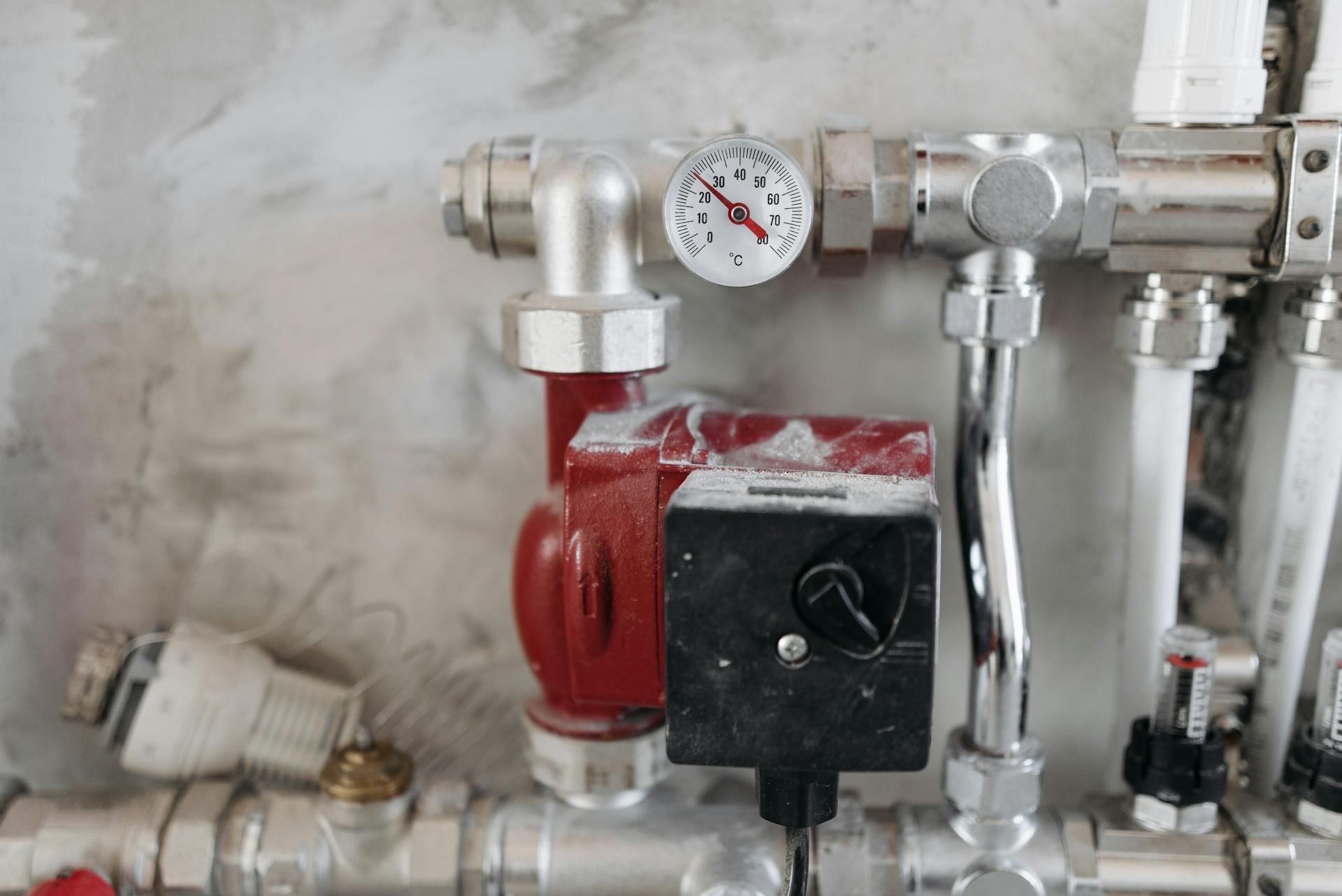
This article provides an industry-specific guide to pressure-reducing valve (PRV) applications across commercial building sectors. We discuss five critical use cases: high-rise water pressure zoning, healthcare medical gas systems, hospitality guest comfort and safety, manufacturing equipment protection, and large-scale irrigation systems. We include application-specific selection criteria, installation photos, and a call to action for a professional commercial system assessment.
Introduction: Why commercial buildings need PRVs
Commercial buildings face pressure challenges that residential systems do not. Variable occupancy patterns create widely fluctuating demand. High-rise structures contend with static pressure that increases 1 PSI for every 2.31 feet of elevation. Medical and manufacturing applications require precision pressure control that off-the-shelf valves cannot provide.
A properly selected and installed PRV is not optional in these environments—it is a critical safety and reliability component. This guide walks through five commercial applications where PRV selection makes the difference between reliable operation and chronic problems.
Application #1: High-rise building water pressure zoning
The challenge: A 40-story building requires 160 PSI at the ground floor main just to deliver 40 PSI to the top floor (accounting for static head and friction losses). However, 160 PSI at the lower floors would destroy fixtures, burst pipes, and create unsafe conditions.
The solution: Zoned pressure reduction using multiple PRVs.
How it works:
- The building is divided into pressure zones (typically 10-15 stories per zone)
- A main riser delivers high pressure up the building
- At each zone, a PRV reduces pressure to safe levels (typically 40-80 PSI)
- Zones may be stacked: Zone 1 (floors 1-10) reduced from 160 PSI to 60 PSI; Zone 2 (floors 11-20) reduced from 120 PSI to 60 PSI; etc.
Selection criteria for high-rise PRVs:
- Dual parallel PRVs – Essential for critical loads. One valve operates while the other serves as a standby. Alternating operation extends service life.
- Pressure ratings – Inlet rating must exceed maximum static pressure at the valve location. High-rise applications often require Class 300 or higher bodies.
- Fail-safe configuration – Valves should fail closed (or fail open only with pressure relief protection) to prevent overpressurization of lower zones.
- Flow rangeability – High-rise PRVs must handle wide flow variations from nighttime minimums to daytime peaks. Look for a 10:1 turndown ratio minimum.
Installation considerations:
- Locate PRVs in accessible mechanical rooms, not inside walls or ceilings
- Install pressure gauges upstream and downstream of every PRV
- Include bypass lines with isolation valves for maintenance
- Consider <a href=”https://techmatic.com.sg/product_category/pressure-reducing-valve/”>pilot-operated PRVs</a> for high-rise applications—they handle wide flow variations better than direct-acting valves
Application #2: Healthcare medical gas systems
The challenge: Medical gas systems (oxygen, nitrous oxide, medical air, vacuum) require absolutely precise pressure control. The NFPA 99 standard mandates specific pressure ranges: medical oxygen at 50-55 PSI, medical air at 50-55 PSI, and nitrous oxide at 50-55 PSI. Pressure outside these ranges can damage medical equipment or harm patients.
The solution: Specialized medical gas PRVs with redundant configurations.
Critical requirements for medical gas PRVs:
- Dual-stage reduction – Two PRVs in series provide backup if the first valve fails
- Material compatibility – Oxygen service requires specially cleaned components (no hydrocarbons)
- Pressure relief – Each zone must have a pressure relief valve set just above operating pressure
- Alarm capability – PRVs must interface with medical gas alarm systems to alert facility staff of pressure excursions
Selection criteria:
- Verify compliance with NFPA 99 and ASSE 6000 series standards
- Specify valves designed specifically for medical gas service (not modified industrial valves)
- Require factory documentation of oxygen cleaning and testing
- Select body materials compatible with the specific gas (brass for oxygen, anodized aluminum for medical air, etc.)
Common mistakes to avoid:
- Using standard water PRVs on medical gas lines (seals and lubricants may contaminate the gas)
- Single-valve configurations with no backup
- Missing pressure relief protection
- Inadequate downstream piping volume causing pressure drop during peak demand
Application #3: Hospitality guest comfort and safety
The challenge: Hotels, resorts, and multifamily housing must deliver consistent water pressure to every guest room regardless of building occupancy or fixture usage. A guest on the 15th floor should experience the same shower pressure whether the hotel is at 20% or 100% occupancy.
The solution: Distributed PRV architecture.
System design principles:
- Floor-by-floor reduction – Install small PRVs at each floor or every 2-3 floors rather than a single large valve at the building entry
- Room isolation – Some high-end installations include individual PRVs at each guest room or suite
- Thermal balancing – PRVs must maintain pressure during recirculation loop operation for hot water
Selection criteria for hospitality PRVs:
- Quiet operation – Specify valves designed for low noise. Guest complaints about water hammer or chattering noise are unacceptable.
- Compact size – Mechanical rooms in hotels are often space-constrained. Look for compact PRV designs.
- Lead-free construction – All wetted components must comply with lead-free plumbing laws (Safe Drinking Water Act, NSF/ANSI 372)
- High cycle life – Hospitality PRVs see constant operation. Choose valves rated for 500,000+ cycles.
Installation best practices:
- Install strainers upstream of every PRV (debris from construction or system maintenance is common)
- Provide test ports for pressure measurement without gauge removal
- Document set pressures at each valve for future maintenance reference
Application #4: Manufacturing equipment protection
The challenge: Industrial equipment—hydraulic presses, injection molding machines, CNC coolants, boilers—requires stable inlet pressure for consistent operation. City main pressure that varies from 40 PSI at peak hours to 90 PSI at night can cause product defects, tool damage, and safety hazards.
The solution: Point-of-use PRVs dedicated to specific equipment.
Critical considerations:
- Flow characterization – Equipment may have highly variable flow (e.g., a press that draws flow only during its stroke cycle). The PRV must respond instantly.
- Pressure accuracy – Some equipment requires pressure holding within ±2 PSI. Standard PRVs may not suffice.
- Response time – Fast-acting pilot-operated valves are often required for cyclic equipment.
Selection criteria for manufacturing PRVs:
- Flow range – Calculate required Cv at both minimum and maximum flow (see our PRV chatter diagnosis guide for why this matters)
- Lock-up performance – Valve must seal tightly when downstream demand stops
- Dirt tolerance – Manufacturing environments often have debris in piping. Choose valves with robust seat designs.
- Serviceability – Select valves that can be rebuilt without removing the body from the line
Industry-specific examples:
- Plastic injection molding – Cooling water pressure must be stable within ±3 PSI or part dimensions vary
- Hydraulic systems – Pilot-operated PRVs maintain consistent fill pressure for accumulators
- Boiler feed – Low inlet pressure to feed pumps causes cavitation and pump damage
Application #5: Large-scale irrigation systems
The challenge: Golf courses, campuses, and municipal irrigation systems operate across large areas with varying elevations. A single irrigation main may see pressure from 60 PSI at the pump house to 120 PSI at the lowest sprinkler head (from elevation gain). Without pressure reduction, lower-elevation zones will mist and fog rather than producing proper droplet patterns.
The solution: Elevation-based zone pressure reduction.
System architecture:
- Divide the irrigation system into pressure zones based on elevation
- Install PRVs at the point where each zone branches from the main line
- Set each PRV to the same downstream pressure (typically 60-80 PSI for standard sprinklers)
Selection criteria for irrigation PRVs:
- Weather resistance – Valves may be installed in vaults or outdoors. Specify NEMA 4X enclosures for electronic controls.
- Low-flow performance – Irrigation PRVs often operate at very low flows during night cycles or between station runs. Oversizing causes chatter.
- Pressure relief integration – Thermal expansion from sunlight heating standing water requires pressure relief protection.
- Diaphragm material – Choose EPDM or Viton diaphragms for chemical resistance to fertilizers and herbicides.
Installation best practices:
- Install upstream strainers rated for irrigation water (may contain sand, organic material)
- Provide drain ports for winterization in freezing climates
- Consider direct-acting PRVs for irrigation—they handle low flow better than pilot-operated designs
- Document set pressures for each zone to simplify future troubleshooting
Application-specific selection matrix
| Application | Recommended PRV Type | Key Feature | Turndown Needed | Material |
|---|---|---|---|---|
| High-rise zoning | Pilot-operated | High capacity, wide range | 10:1 | Bronze / Stainless |
| Medical gas | Specialized medical | NFPA 99 compliant, oxygen cleaned | 5:1 | Brass (O2 clean) |
| Hospitality | Direct-acting or compact pilot | Quiet operation, lead-free | 8:1 | Lead-free brass |
| Manufacturing | Pilot-operated or industrial | Fast response, high accuracy | 10:1 | Bronze or iron |
| Irrigation | Direct-acting | Low-flow stability | 15:1 | Bronze with EPDM |
Signs you need a commercial system assessment
Your facility may need a professional PRV assessment if you observe:
- Fluctuating pressure – Downstream pressure varies even when upstream pressure is stable
- Chatter or noise – Valves make audible noise, especially at night or low-demand periods
- Frequent PRV replacements – Rebuilding or replacing PRVs more often than every 3-5 years
- Guest/patient/tenant complaints – Complaints about pressure, temperature fluctuations, or noise
- Equipment problems – Unexplained failures of downstream equipment may trace to pressure issues
What a professional assessment includes
A qualified commercial PRV assessment typically includes:
- Pressure mapping – Measure pressure at multiple points across the system at different times of day
- Flow characterization – Document min, normal, and max flow for each zone
- Valve inventory – List all PRVs with location, size, set pressure, and age
- Sizing verification – Calculate the required Cv for each application and compare to the installed valves
- Recommendations – Prioritized list of repairs, replacements, and system improvements
Conclusion: Match the valve to the application
Commercial PRV applications are not one-size-fits-all. The valve that works perfectly in a high-rise pressure zone may chatter and fail in an irrigation application. The medical gas PRV requires certifications that standard valves lack. By matching the PRV type, materials, and features to the specific application, facility managers can achieve reliable pressure control, protect downstream equipment, and avoid chronic problems.
For a complete commercial pressure-reducing valve selection, consult with a qualified supplier who understands these application-specific requirements.