

In the world of modern architecture—particularly when specifying hardware for sleek glass railings—material selection is far more than a technicality. It is the deciding factor in a project’s safety, longevity, and maintenance schedule. The industry’s most common debate centers on choosing between 316L and 304 stainless steel standoffs, especially for coastal developments where saltwater is a constant threat.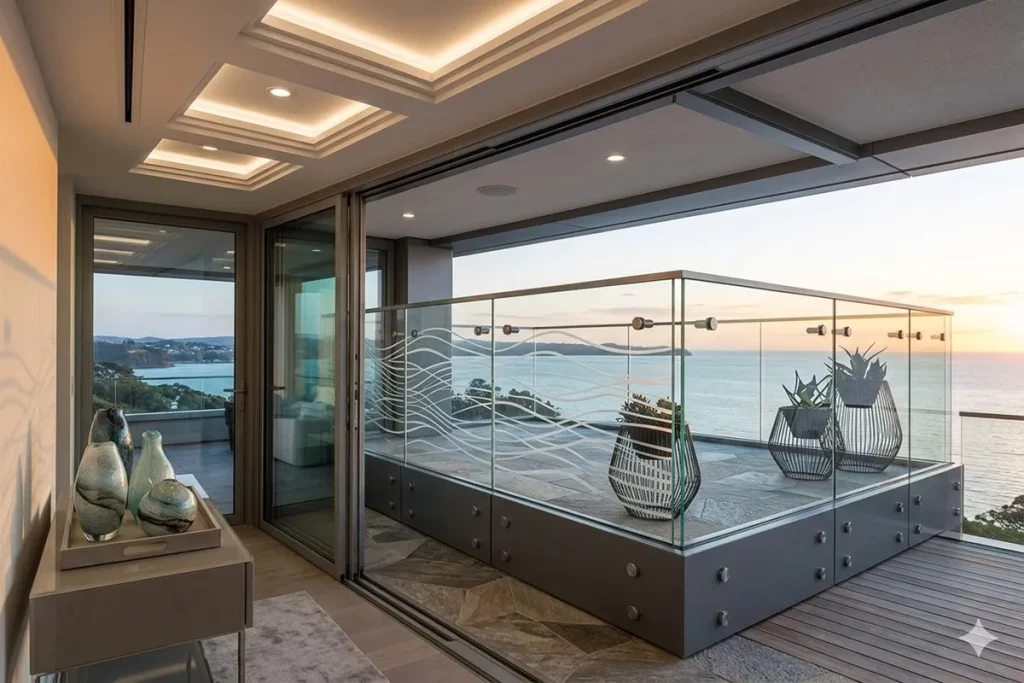
If you are evaluating 304 stainless steel standoffs for an upcoming build, this guide provides a deep dive into the performance differences. We will compare these grades side-by-side to help you determine which hardware will thrive in your specific environment.
What Are Stainless Steel Standoffs?
Standoffs are precision-engineered mounting components designed to secure glass panels while creating a “floating” aesthetic. By holding the glass away from the mounting surface (fascia or stairs), they achieve a minimalist look popular in frameless glass railing systems for balconies and decks.
These components are central to high-end modern railing systems, providing unobstructed views for beachfront resorts, luxury villas, and contemporary commercial spaces.
The Challenge of Coastal Environments
Proximity to the ocean introduces “harsh” variables: salt spray, high humidity, and airborne chlorides. These elements act as catalysts for oxidation. Data from the National Association of Corrosion Engineers (NACE) indicates that corrosion rates can be up to 10 times higher in coastal zones compared to inland areas. This makes the choice between standard 304 stainless steel standoffs and marine-grade 316L alternatives a critical structural decision.
Grade 304 Stainless Steel: The Versatile Standard
Grade 304 is the most widely utilized stainless steel globally, composed of approximately 18% chromium and 8% nickel.
Advantages of 304 Grade:
- Cost-Efficiency: Generally more affordable than high-molybdenum alloys.
- Structural Strength: Offers excellent durability for standard indoor and outdoor use.
- Polishing: Easy to maintain in high-shine or brushed finishes.
While perfect for inland glass standoffs, 304 lacks molybdenum. Without this element, it is susceptible to “pitting”—small, localized spots of rust that can compromise the hardware’s appearance and integrity in salt-heavy air.
Grade 316L Stainless Steel: The Marine-Grade Solution
The “L” in 316L stands for “low carbon,” which enhances weldability and prevents corrosion at joints. The defining difference, however, is the addition of 2% to 3% molybdenum.
Why 316L Wins Near the Ocean:
- Chloride Resistance: It is specifically engineered to resist saltwater and industrial chemicals.
- Lower Maintenance: Requires less frequent cleaning to stay pristine.
- Design Flexibility: It pairs perfectly with advanced mounting solutions like the glass profile channel for frameless glass railing.
Side-by-Side Comparison: 304 vs. 316L
| Feature | 304 Stainless Steel | 316L Stainless Steel |
| Corrosion Resistance | Moderate | Superior (Marine Grade) |
| Ideal Setting | Inland / Residential Interiors | Coastal / High-Humidity / Marine |
| Price Point | Budget-Friendly | Premium Investment |
| Maintenance Need | High (in coastal areas) | Low to Moderate |
Practical Applications and Trends
When designing a balcony or staircase, the finish is as important as the metal. Contractors are increasingly moving toward matte black design hardware for a bold, industrial look. However, even with a coating, the base metal must be appropriate for the location.
For projects requiring specific aesthetics, exploring various [glass standoff finishes](https://urailing.com/glass- standoff-finishes/) can ensure the hardware complements the building’s overall palette without sacrificing performance.
Summary: Making the Right Choice
The decision rests on your project’s geography. If you are building more than 5 miles from the coast, 304 stainless steel standoffs offer an excellent balance of cost and durability. However, for any project within reach of salt air, 316L is the only way to ensure your railing remains a “once-in-a-lifetime” installation.
For expert technical advice or to request a quote for your next project, please contact our team today.
FAQs
Q: Can I use 304 standoffs for an interior glass staircase?
A: Absolutely. 304 is the ideal choice for interior settings where moisture and salt exposure are non-existent.
Q: Does “matte black” protect 304 from rusting?
A: While a high-quality powder coating adds a layer of protection, if the coating is scratched, the underlying 304 will still be vulnerable to salt corrosion.
Q: How do I identify the difference between 304 and 316L?
A: Visually, they are almost identical. Always verify with your supplier or look for grade stamps on the hardware itself.