

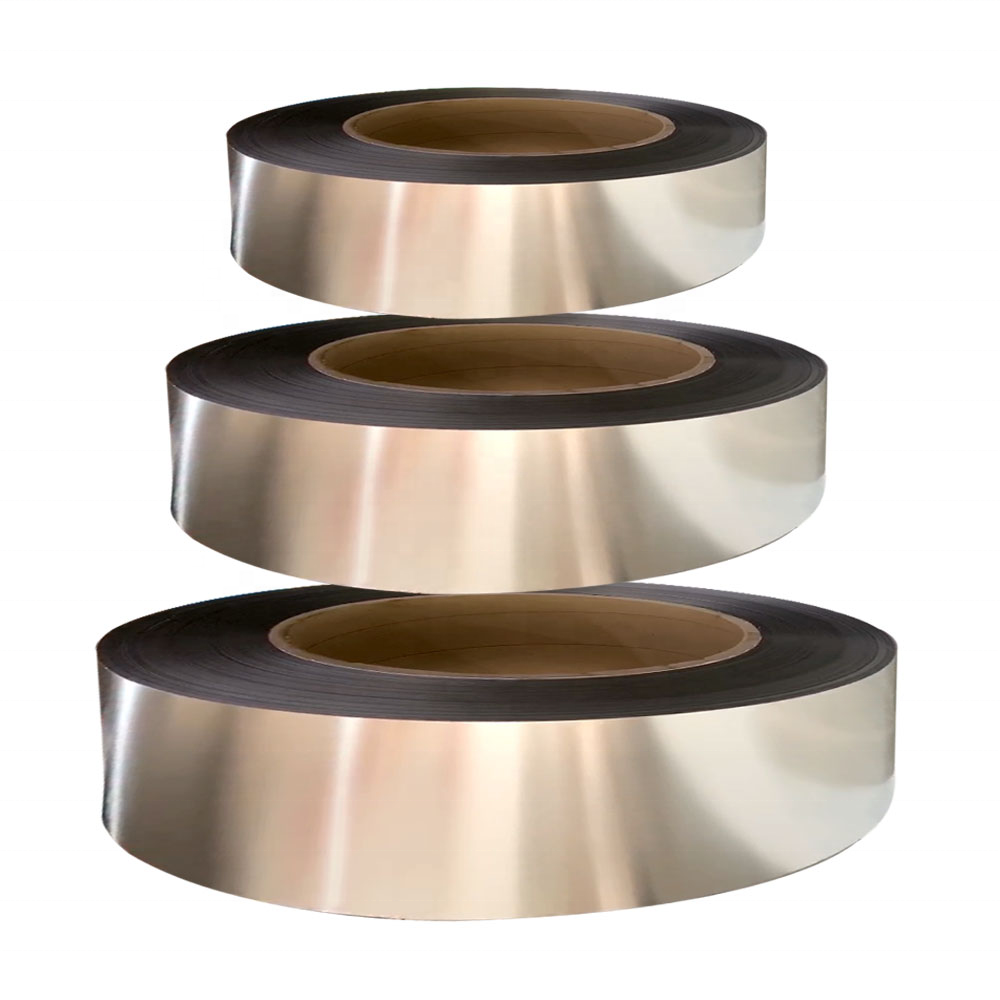
Selecting stainless steel foil involves more than checking thickness, strength, or alloy numbers. The material must match the environment, fabrication process, operating temperature, and expected service life of the finished component.
This is particularly important when comparing 316 vs 316L stainless steel foil. These two grades have almost identical alloy compositions and offer excellent resistance to corrosion. However, a small difference in carbon content can significantly affect welding performance and corrosion resistance around heat-affected areas.
Choosing the wrong grade may result in weld-related corrosion, unnecessary maintenance, higher production costs, or premature component failure. This guide compares the composition, mechanical properties, corrosion resistance, fabrication characteristics, applications, and cost of 316 and 316L foil so that you can select the right material for your project.
For additional technical information, review our original AISI 316 vs 316L foil grade comparison. You can also explore the complete range of materials available from Stainless Steel Foil or browse our dedicated stainless steel foil products.
What Is AISI 316 Stainless Steel Foil?
AISI 316 is an austenitic stainless steel that contains chromium, nickel, and approximately 2–3% molybdenum. The molybdenum improves resistance to pitting and crevice corrosion, particularly in environments containing chlorides, saltwater, and aggressive industrial chemicals.
This makes 316 foil a reliable material for:
- Marine equipment
- Chemical-processing components
- Food-production machinery
- Pharmaceutical equipment
- Industrial heat exchangers
- Automotive heat shields
- Precision electrical components
- Architectural applications
Compared with lower-alloy stainless steels, 316 generally provides stronger protection against chloride-related corrosion. Buyers comparing several stainless steel families may also find our 201 vs 304 stainless steel comparison helpful for understanding how alloy composition affects cost and corrosion performance.
AISI 316 can be supplied in extremely thin gauges for precision manufacturing. To understand available thickness capabilities, read how thin stainless steel foil can actually get, including 0.01 mm foil.
What Is AISI 316L Stainless Steel Foil?
AISI 316L is the low-carbon version of standard 316 stainless steel. The letter “L” stands for low carbon.
Standard 316 may contain up to 0.08% carbon, while 316L is normally limited to a maximum of 0.03%. Although this difference appears small, it becomes important when the material is exposed to welding temperatures.
During welding, carbon can combine with chromium and form chromium carbides near the grain boundaries. This process may reduce the chromium available to maintain the protective oxide layer around the welded area.
Because 316L contains less carbon, it has a lower risk of chromium carbide precipitation. As a result, it generally maintains better corrosion resistance in welded components without requiring additional post-weld heat treatment.
This makes 316L especially suitable for:
- Welded foil assemblies
- Pharmaceutical-processing equipment
- Medical and surgical components
- Marine fabrication
- Chemical-processing systems
- Laboratory instruments
- Semiconductor equipment
- Hygienic food-production systems
For marine applications, review our detailed comparison of 316L and 304 stainless steel for marine environments.
316 vs 316L Foil: Chemical Composition
The alloying elements in 316 and 316L are nearly identical. Carbon content is the primary distinction.
| Element | AISI 316 | AISI 316L |
|---|---|---|
| Chromium | 16–18% | 16–18% |
| Nickel | 10–14% | 10–14% |
| Molybdenum | 2–3% | 2–3% |
| Carbon | Maximum 0.08% | Maximum 0.03% |
| Iron | Balance | Balance |
Both grades rely on chromium to create a thin, passive oxide layer on the metal surface. This layer protects the steel and can reform when oxygen is present. A broader explanation of this behavior is available in the external overview of stainless steel and its corrosion-resistant properties.
The reduced carbon content of 316L does not dramatically change its general appearance or room-temperature corrosion resistance. Its main advantage appears after welding or prolonged exposure to temperatures that may cause sensitization.
Mechanical Properties of 316 and 316L Foil
Both grades offer excellent ductility, formability, and toughness. Manufacturers can roll them into thin foil while maintaining the flexibility required for stamping, forming, wrapping, shielding, and precision fabrication.
Typical annealed mechanical properties may include:
| Property | AISI 316 | AISI 316L |
| Tensile strength | Approximately 515 MPa | Approximately 485 MPa |
| Yield strength | Approximately 205 MPa | Approximately 170 MPa |
| Elongation | Approximately 40% | Approximately 40% |
| Density | Approximately 8.0 g/cm³ | Approximately 8.0 g/cm³ |
These values are general references. Actual properties depend on foil thickness, rolling condition, temper, production standard, and heat treatment.
Standard 316 may provide slightly higher strength in some conditions. However, the difference is not large enough to control most purchasing decisions. Corrosion exposure, welding requirements, temper, and dimensional tolerance usually matter more.
For applications that require higher spring strength rather than maximum chloride resistance, consider learning what 301 stainless steel foil is and where it is used.
Which Grade Offers Better Corrosion Resistance?
In an unwelded and properly finished condition, 316 and 316L normally provide similar corrosion resistance. Both perform well in environments involving moisture, mild acids, industrial chemicals, and chloride exposure.
Their molybdenum content gives them an advantage over common 304 stainless steel in many salt-containing environments.
The performance difference becomes more noticeable after welding.
Corrosion resistance of 316
Standard 316 provides excellent general corrosion resistance. It can be a suitable choice when:
- The component will not be welded
- Welding is limited
- The finished product will not remain in a highly aggressive environment
- Slightly higher strength is beneficial
- The fabrication process controls heat exposure carefully
Corrosion resistance of 316L
316L is generally preferred when:
- The foil requires TIG, laser, seam, or resistance welding
- Welded areas will contact chemicals or saltwater
- The finished assembly must resist intergranular corrosion
- Post-weld heat treatment is impractical
- The application requires strict hygiene and reliability
The lower carbon level reduces the risk of sensitization around the heat-affected zone. This can help protect welded joints and extend the service life of the final component.
Welding Performance: The Main Selection Factor
Welding is often the deciding factor in the 316 vs 316L comparison.
When standard 316 is heated within certain temperature ranges, carbon may combine with chromium near the grain boundaries. If enough chromium becomes tied up in carbide particles, the surrounding area may lose part of its corrosion protection.
316L limits this problem because it contains significantly less carbon. Therefore, engineers frequently specify 316L for fabricated assemblies that require extensive welding.
Potential benefits include:
- Better protection around weld zones
- Lower risk of intergranular corrosion
- Reduced need for post-weld heat treatment
- Longer service life in aggressive conditions
- Improved reliability of welded components
- Lower long-term maintenance requirements
Standard 316 can still perform well in welded products when fabrication conditions, filler materials, surface treatment, and post-weld procedures are properly controlled. However, 316L provides a safer specification for many demanding projects.
Heat Treatment and High-Temperature Applications
Stainless steel foil may experience elevated temperatures during welding, manufacturing, heat shielding, or industrial processing. The correct grade and thickness depend on the peak temperature, exposure time, atmosphere, and required oxidation resistance.
Neither 316 nor 316L is normally hardened through conventional heat treatment. Their mechanical properties are usually adjusted through cold working and controlled annealing.
For more guidance, read the stainless steel foil heat-treatment guide.
For heat-treatment wrapping applications, thickness selection is equally important. Our guide explains how to select the correct stainless steel foil thickness for heat-treat wrap.
Common Applications for 316 Stainless Steel Foil
Standard 316 foil is appropriate for many components where strong general corrosion resistance is required but extensive welding is not the main concern.
Common applications include:
- Industrial heat exchangers
- Automotive exhaust and heat-shield components
- Chemical equipment liners
- Precision shims
- Architectural panels
- Electronic shielding
- Flexible metal seals
- Industrial gaskets
- Food-processing components
- High-temperature insulation systems
When a project requires a wider or heavier format, manufacturers may choose 316 stainless steel coil instead of precision foil.
Buyers can also compare available stainless steel coil products and stainless steel strip materials for applications that require different dimensions or mechanical characteristics.
Common Applications for 316L Stainless Steel Foil
316L is commonly selected for applications where welding, hygiene, chemical exposure, or long-term corrosion performance is critical.
Typical uses include:
- Pharmaceutical-processing machinery
- Medical and surgical instruments
- Laboratory equipment
- Chemical-processing systems
- Marine hardware
- Desalination equipment
- Semiconductor-production components
- Aerospace assemblies
- Welded flexible-metal components
- Hygienic food-processing systems
Both 316 and 316L can be used in food-related equipment when the material, finish, fabrication, cleaning procedure, and regulatory requirements suit the specific application. Learn more about choosing stainless steel foil for food-processing applications.
How Stainless Steel Foil Is Manufactured
The final performance of stainless steel foil depends on more than its chemical grade. Rolling accuracy, annealing, surface treatment, slitting, and quality control all affect thickness tolerance, flatness, strength, and surface condition.
Production typically involves:
- Melting and alloy preparation
- Casting and hot rolling
- Pickling and surface cleaning
- Repeated cold rolling
- Controlled annealing
- Precision thickness reduction
- Slitting or cutting
- Surface inspection and packaging
A more detailed explanation is available in our guide on how stainless steel foil is made.
The manufacturing route becomes especially important for ultra-thin foil, where minor variations in thickness or flatness can affect stamping, welding, sealing, and precision assembly.
Surface Cleaning and Maintenance
Correct cleaning helps preserve the appearance and corrosion resistance of stainless steel. Use cleaning methods that remove contamination without scratching the surface or leaving residues that may promote corrosion.
Some household cleaning guides suggest using aluminum foil on stainless steel surfaces. Before applying that method, review our articles explaining how to clean stainless steel with aluminum foil and whether aluminum foil can safely clean stainless steel.
Cleaning recommendations may vary according to the finish, contamination type, equipment design, and hygiene requirements. Test any abrasive or unconventional cleaning method on a small, inconspicuous area first.
316 vs 316L Foil Cost Comparison
The price difference between 316 and 316L is generally modest because both grades contain similar amounts of chromium, nickel, and molybdenum.
Actual pricing depends on:
- Nickel and molybdenum market prices
- Foil thickness
- Width and coil weight
- Surface finish
- Temper or hardness
- Dimensional tolerances
- Order quantity
- Testing and certification requirements
- Packaging and shipping
316L may carry a slightly higher price in certain specifications. However, the initial material price should not be the only consideration.
For welded or highly corrosive applications, 316L may reduce:
- Repair frequency
- Replacement costs
- Corrosion-related downtime
- Post-weld processing
- Product-failure risk
- Long-term maintenance expenses
In those situations, 316L can provide a lower total lifecycle cost even when its purchase price is slightly higher.
Should You Choose 304, 316, or 316L?
Not every project requires a molybdenum-bearing stainless steel grade.
Choose 304 when:
- The environment is relatively mild
- Chloride exposure is limited
- Cost control is a major priority
- General-purpose corrosion resistance is sufficient
- The component does not operate in marine or aggressive chemical conditions
Buyers sourcing this grade can review the capabilities of a 304 stainless steel strip supplier.
Choose 316 when:
- Chloride resistance is important
- Welding is minimal or carefully controlled
- Slightly higher strength is useful
- The application requires better corrosion resistance than 304
- The component will operate in an industrial or coastal environment
Choose 316L when:
- Extensive welding is required
- The welded component will face saltwater or chemicals
- Intergranular corrosion is a concern
- Pharmaceutical, medical, or hygienic fabrication is involved
- Post-weld heat treatment is difficult
- Long-term reliability is more important than a small price difference
Quick Selection Table
| Application Requirement | Recommended Grade |
| General industrial use with minimal welding | 316 |
| Welded chemical-processing component | 316L |
| Marine component without major welding | 316 or 316L |
| Welded marine assembly | 316L |
| Pharmaceutical equipment | Usually 316L |
| Hygienic food-processing equipment | 316 or 316L, depending on fabrication |
| Precision shim in a chloride environment | 316 |
| Welded medical component | Usually 316L |
| Mild indoor environment | Consider 304 |
| High-strength spring component | Consider 301 |
Final Recommendation
The best grade depends on the manufacturing process and service environment rather than the grade name alone.
Choose AISI 316 stainless steel foil when you need strong corrosion resistance, limited welding, and slightly higher mechanical strength.
Choose AISI 316L stainless steel foil when the component requires substantial welding or will operate in chemical, pharmaceutical, medical, food-processing, desalination, or marine environments. Its lower carbon content helps preserve corrosion resistance around welded areas and can improve long-term reliability.
Before placing an order, confirm:
- Required thickness and width
- Material temper
- Surface finish
- Dimensional tolerance
- Welding method
- Operating temperature
- Chemical exposure
- Certification requirements
- Expected service life
Browse our complete stainless steel product collection to compare available foil, strip, sheet, and coil options. For project-specific specifications, pricing, or material-selection support, contact the stainless steel foil team.
Frequently Asked Questions
Is 316L always better than 316?
No. 316L is generally better for welded components and applications where sensitization could reduce corrosion resistance. Standard 316 may be more suitable when welding is limited and slightly higher strength is preferred.
What is the main difference between 316 and 316L foil?
The primary difference is carbon content. Standard 316 may contain up to 0.08% carbon, while 316L normally contains no more than 0.03%. The lower carbon content improves resistance to weld-related intergranular corrosion.
Which grade is better for marine environments?
Both grades resist chloride-related corrosion better than many common stainless steels. However, 316L is generally preferred for welded marine components because it better preserves corrosion resistance around heat-affected areas.
Can 316 and 316L foil be used in food-processing equipment?
Yes, both grades are commonly used in food-processing applications. The correct choice depends on fabrication, surface finish, cleaning procedures, operating conditions, and applicable regulatory requirements.
Is 316 stronger than 316L?
Standard 316 may provide slightly higher tensile and yield strength in some conditions. However, actual strength depends on thickness, temper, cold work, annealing, and the applicable material standard.
Does 316L cost considerably more than 316?
Usually, the price difference is relatively small. Thickness, order quantity, tolerance, finish, certification, and current alloy prices may have a greater effect on the final cost.
Can 316L replace 316?
In many applications, yes. However, engineers should confirm the required strength, specification, certification, temperature range, and fabrication process before substituting one grade for another.
Where can I purchase 316 or 316L stainless steel foil?
Visit the complete stainless steel foil and metal product listings or contact the supplier directly for thickness, width, temper, finish, certification, and quotation information.