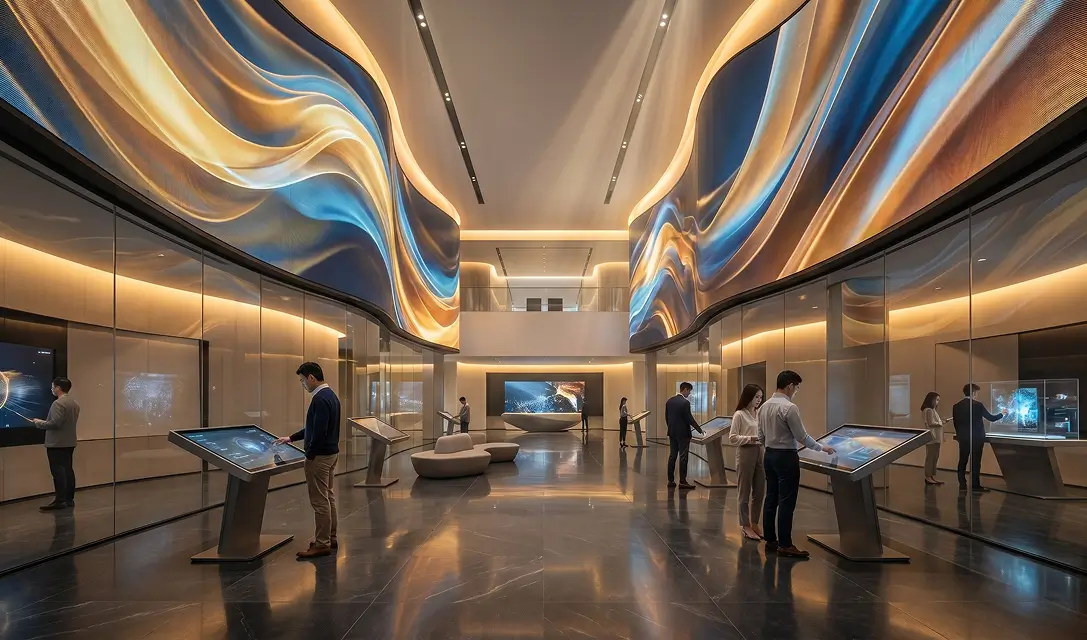
How cultural institutions use technology, data, and immersive design to compete for attention and build lasting value.
Museums no longer compete only with one another. They compete with streaming services, theme parks, and every other claim on a visitor’s limited time and attention. Research from the UK’s Museums Association has found that cultural institutions increasingly measure themselves against polished commercial experiences rather than peer organizations alone. In that climate, museum design innovations have shifted from cosmetic upgrades. To strategic investments that influence attendance, revenue, and long-term relevance.
This article examines twelve innovations reshaping how institutions plan, build, and operate, with the business logic behind each.
Why Museum Innovation Matters
Why are museums investing in innovation? Because visitor expectations, funding pressures, and digital habits have changed at the same time. The International Council of Museums recently built its global agenda around the future of museums in changing communities. Naming new technologies as a central force. The American Alliance of Museums tracks how artificial intelligence and digital infrastructure are reshaping operations through its annual foresight reporting.
For executives, the implication is practical.
Museum innovation now affects three results on any balance sheet:
How many people visit.
How long they stay.
How often they return.
Institutions that treat design as experience engineering, rather than decoration, build durable audiences and steadier income.
12 Museum Design Innovations Defining 2026
Together, they show how museum exhibit design now blends physical space, digital media, and measurement.
AI-Powered Personalization Artificial intelligence tailors routes, recommendations, and interpretation to individual interests. Museums adopt AI-powered exhibits to turn uniform galleries into adaptive journeys. Visitors find relevant content faster, and institutions learn what genuinely engages their audiences.
Augmented Reality Interpretation AR overlays digital context onto physical objects: reconstructing ruins, animating extinct species, or revealing an artist’s process. These AR experiences deepen understanding without touching fragile artifacts, while attracting younger, mobile-first audiences who expect layered information.
Virtual and Immersive Museum Environments VR experiences transport visitors to places they cannot physically reach, from ancient cities to recreated studios. For an immersive museum, environments like these extend programming beyond the building and create premium, ticketed offerings that diversify revenue.
Projection Mapping and Light and Sound Shows Large-scale projection mapping and light and sound shows turn entire rooms into responsive canvases. These spaces encourage repeat visits and social sharing, and their content refreshes digitally, lowering update costs versus physical rebuilds.
Multisensory and Spatial Audio Spatial and binaural sound, scent, and tactile elements engage more than sight alone. Multisensory experience design strengthens memory and emotional connection, and it broadens access for visitors with visual impairments.
Interactive and Gamified Installations Motion sensors, gesture tracking, and game mechanics replace passive viewing with participation. An interactive museum installation increases dwell time and learning retention. Which matters most for science and history institutions explaining dense or abstract ideas to families.
Digital Twins, Holograms, and Virtual Tours High-resolution digital twins, often shown as holographic displays. Let institutions present and study fragile objects safely. They support conservation, enable virtual loans, and open collections worldwide through virtual tours for people who cannot travel on-site.
IoT and Smart Infrastructure Connected sensors power indoor navigation, crowd management, and predictive maintenance. Smart museums use this IoT layer to reduce operating friction by guiding visitors, balancing staffing, and protecting assets through environmental monitoring.
Visitor Analytics and Data-Driven Design Visitor analytics reveal which spaces draw crowds, where attention fades, and when demand peaks. Design teams increasingly justify decisions with measured outcomes, which lets institutions optimize layout, pricing, and programming rather than rely on instinct.
Accessibility-First Design Inclusive design covers multilingual content, sign-language tours, audio description, and step-free routes. It treats accessibility as a driver of innovation, not a compliance task: accessible institutions reach larger, more loyal audiences.
Sustainable and Modular Exhibitions Eco-friendly materials, energy-efficient lighting, and modular, reusable components reduce both environmental impact and long-term cost. Modular systems let teams refresh content without dismantling entire galleries, aligning sustainability with budget discipline.
Flexible, Revenue-Generating Spaces Museums increasingly design for events, rentals, and hybrid physical-digital programming that extends reach and creates new income. To build these spaces, many institutions partner with experience design studios that engineer interactive exhibition technologies around audience behavior rather than retrofitting screens onto static rooms.
How Does Modern Museum Design Create Business Value?
How does innovation translate into returns? Through engagement that compounds over time. Each innovation above targets a measurable lever:
Attendance and reach through AR, VR, and digital museum experiences that travel beyond the building
Dwell time and loyalty through interactivity, personalization, and multisensory storytelling
Operational efficiency through IoT, analytics, and predictive maintenance
Resilience and revenue through flexible spaces, virtual access, and modular construction
Museum transformation is therefore less about technology for its own sake and more about aligning design with institutional strategy. The strongest projects, part of a wider wave of museum digital transformation. Choose tools that serve the story rather than the trend cycle.
Looking Ahead
The next phase of museum technology will likely favor integration over novelty, connecting analytics, accessibility, and immersive content into one coherent visitor experience.
As funding stays competitive and audiences grow more discerning. The rise of digital museums and hybrid programming rewards institutions that treat human-centered design and cultural innovation as continuing disciplines, not one-time renovations. For museum leaders, architects, exhibition designers, and investors in cultural infrastructure, the message is consistent: design is no longer the finishing touch on a museum’s mission. It is the mechanism through which that mission reaches, engages, and retains the public.