
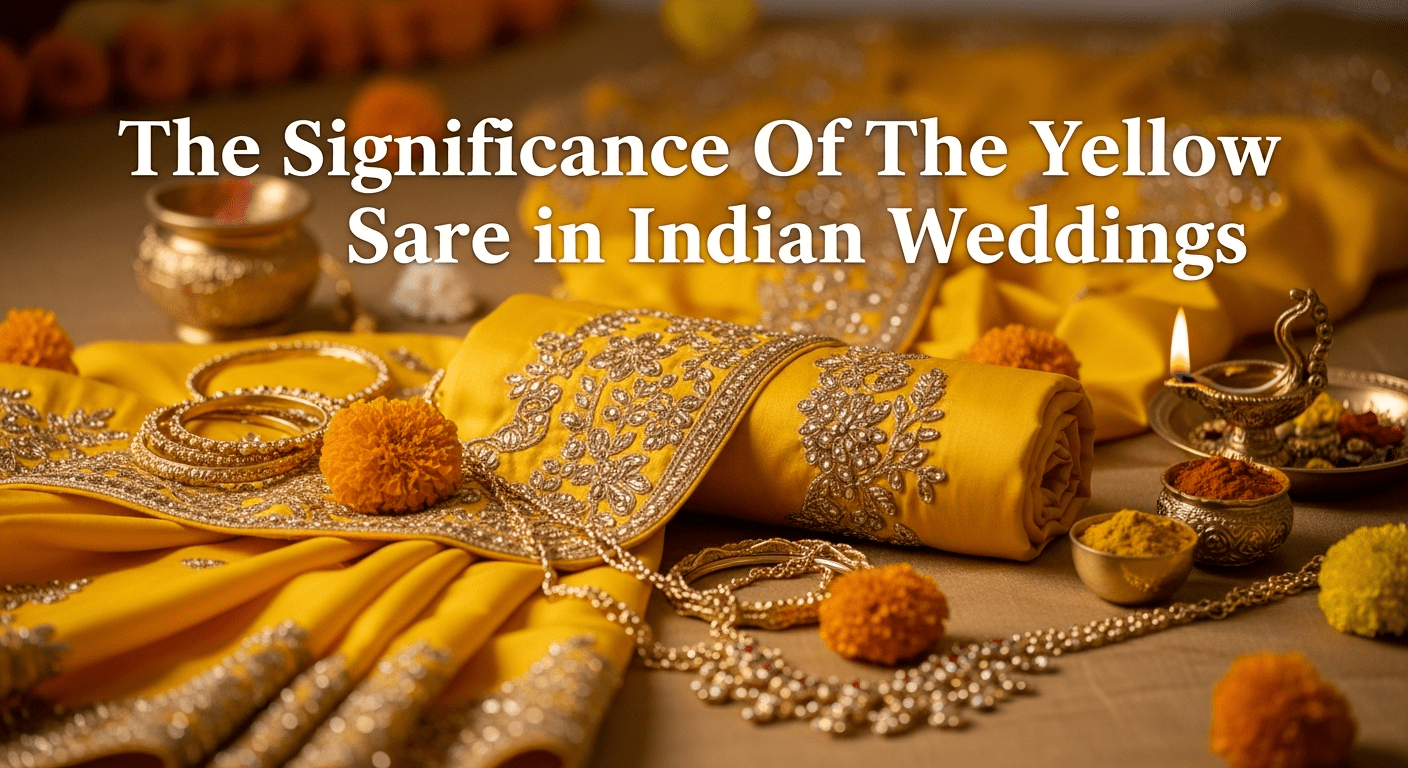
One should paint a picture of an Indian wedding, and it would be a bright burst of crimson, gold, emerald, and saffron. Colors in this polyphrastic of culture are never just ornamental; they are narrators, reciting the legends of prehistoric tradition, religious views, and human feelings. It is the yellow color that plays almost a holy role among this rich selection of colors. It is a glittering beacon of innocence, wealth, immense joy, and the beginning of a new life.
Although the wedding day itself is actually red in color, during the pre-wedding events, yellow is the prevailing color. It is the shade of the sunshine, the color of harvest, and the earthly blessings. The yellow clothes, be it the splendid silk fabrics on the grand wedding day, or a simple saree for Haldi ceremony, that is breathable and comfy in the Haldi ceremony, not only make the bride look pretty, but also cozy up the mood at the wedding, as it takes the form of a blend between the Godly ceremony and a happy party.
The yellow saree is yet to change as the world rapidly transforms into a fast-fashion-changing world. It is not about having bling-bling clothes and flashy displays of affluence; the point is meaning, blessings, and passing cultures to the next generation.
The Holy Importance of Yellow
The psyche of Indians when it comes to color needs to be known in order to comprehend the yellow saree. According to the Hindu mythology, the color yellow is a common color of Lord Vishnu (the Preserver) and Ganesha (the Remover of Obstacles), and signifies knowledge, learning, and peace. It is the sun’s color, which is an expression of warmth and the life energy that nourishes us.
A bride is not merely wearing a yellow saree, but she is putting herself into a cloud of good things. This particular color is said to have some magical power in keeping off evil eyes (nazar) and other bad energies that may envelop the couple prior to their consummated marriage. It is a protective barrier that is posing as high fashion.
5 Reasons Why Yellow Sarees Are Worn During Indian Weddings
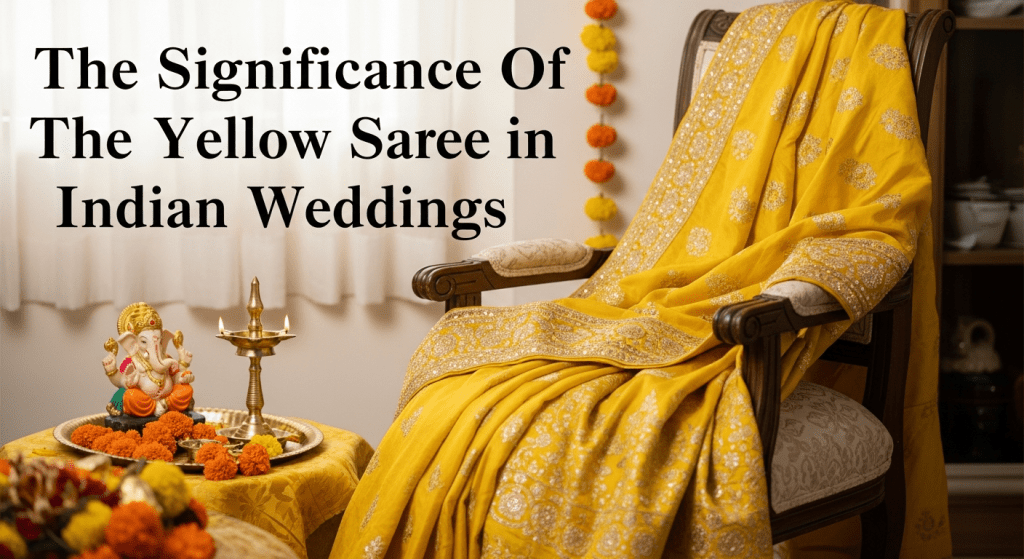
The Indian traditions have a great palette, with each color bearing a certain frequency of power, a certain legend. Yellow is not only a feast to the eye, but it is a promise of good things to come. The five reasons why this color will dominate the wedding trousseau are deep-rooted.
1. Symbol of Good Fortune and Good Luck
The Indian spiritual vocabulary cannot do without yellow, which is closely associated with turmeric (haldi). Turmeric is a spice and also a medicine, a make-up, and a sacrifice. It is alleged to cleanse the body, protect the spirit, and bring blessings to the couple before they are married.
Since Hindus consider the color yellow to be related to the sun, wisdom, and power of the gods, wearing the color yellow is similar to bringing the gods to the ceremony. Wedding ceremonies are performed in yellow color, which is supposed to be a good omen and avoid bad omen. This is the reason why pre-wedding functions make use of yellow sarees. It is not a mode or even a trend, but an old tradition that is aimed at making sure that the bride enters into her new life with the universe on her side.
2. Deep Connection with the Haldi Ceremony
The Haldi ceremony is a wedding event that is probably the most emotional, intimate, and joyful event in the wedding schedule. It is a riotous, exuberant ceremony in which the bride is slathered with a mixture of turmeric, sandalwood, and rosewater to make her skin have a glowing appearance.
A yellow saree is the best choice for this ritual. This is a practical, as well as symbolic, decision. In practice, a yellow saree goes well with the turmeric paste – the stains can be incorporated as a part of the pattern instead of a catastrophe. Meaningfully, the bride is united to the ritual.
Compared to a heavy bridal lehenga that may weigh as much as 10kg, a plain yellow saree will allow freedom of movement, enabling the bride to laugh, dance, and enjoy the playful attack of the members of the family applying the paste. It is this comfort and culture that makes many brides make several intentional choices to dress in light and breathable yellow materials such as cotton or linen on this day.
3. Symbolizes Fertility, Growth, and New Beginnings
Yellow was the hue of the harvested crops in an agrarian community such as ancient India: mustard fields, wheat that is ready to pick. Therefore, yellow symbolizes fertility, abundance, and growth, and these are the culturally vital elements of married life.
It marks the beginning of a new life, the same way as spring succeeds winter with its severity. The symbolism here is potent. A yellow-dressed bride is an embodiment of a future, prosperity, and a new beginning. It is a prayer that is a visual prayer of having a long marriage, not merely long, but growing and developing. It is false narration, spun into half a dozen yards of exquisiteness.
4. Appears Good on Everybody and Every Event
A lack of understanding of the color is usually a problem that causes seeing a yellow saree as an underestimated fashion statement. The fact is that the yellow is extremely versatile. It flatters the broad range of Indian flesh, from porcelain to dark chocolate.
It could be the low and smoky notes of a mustard Banarasi silk that reminds one of royalty, a light and easy lemon Chanderi that matches a summer wedding best, or a neon handloom silk to give it a modern feel; everyone has a shade. Yellow sarees can be an all-purpose garment regardless of the detailed embellishment, and they would suit the personal trait of the bride. They are vivid enough to keep her in focus, but dark enough not to intrude on the seriousness of the ceremony.
5. Strong Roots in Handloom and Craft Traditions
The bridal yellow saree has a close relationship with the tradition of Indian handloom. Yellow is considered the simplest of the dyes and was readily obtained using natural materials, such as turmeric, marigold flowers, and onion skins, and thus it is a common color in traditional weaving facilities.
Due to these natural dyes, local weaving traditions, and local crafts, each saree is unique. A wedding ceremony saree made on a handloom, yellow in color, too, is a tacit recognition of the word-making of something that endures. These are values that brides of today particularly relate to; brides who care more about the meaning and the superficiality of beauty. The yellow saree is a hand-woven garment that links the bride with the makers of Varanasi, Kanchipuram, or Bengal, and is a thread of heritage that the bride brings with her into the contemporary celebration.
Where to Buy A Simple Saree for The Haldi Ceremony?
It is difficult to have the right color. You would like to have a piece of clothing that respects tradition but is contemporary. When it comes to a simple saree that one can wear during a haldi ceremony, Kalyanja is a name that has to be mentioned.
The next question is, at this very point of wedding preparation, do you take what is great, or what is right? It is at that point that Kalyanja comes into the limelight.
Kalyanja Fashion has also chosen and edited the fashions of Indian handloom sarees very carefully, which combine tradition with everyday glamour. Their sarees are not mere collections of fashions that are built on the color yellow; there is a tradition of weaving, natural fabrics, and cultural authenticity.
You can prefer soft cottons that breathe when you are in an open ceremony, elegant breathable silks, or light weaves. At Kalyanja, it is not difficult to buy authentic handloom sarees online without a loss of quality and custom.
To brides who would want a fancy gown and, at the same time, meaningful, Kalyanja provides a relief to the overloaded, bulky gowns, which make movement hard. Shopping is only one part of it, but also selecting a story, a craft, and a tradition, which will be in keeping with the spirit of the real Indian wedding.
Conclusion
It is not a wedding dress; it is a blessing, a purity, and happy beginnings in a yellow saree. Many will never compromise with its presence in the wedding trousseau, not due to its superstitious nature, but due to the warmth and happiness it brings. Yellow has always been a wedding favourite ever since its spiritual connection with the activities of turmeric and its strong affiliation to the Indian handloom culture.
In the style of the haldi ceremony, which is usually focused on a modest and graceful saree, it becomes clear that a contemporary bride is not always interested in spending too much on the superficial luxury. Rather, she values tradition, comfort, and authenticity.
And with websites such as Kalyanja actually realizing the accessibility of handloom sarees of high quality to the World Wide Web, there has never been a more convenient, or a more enjoyable, way to pay tribute to these traditions in your own, special manner.
