

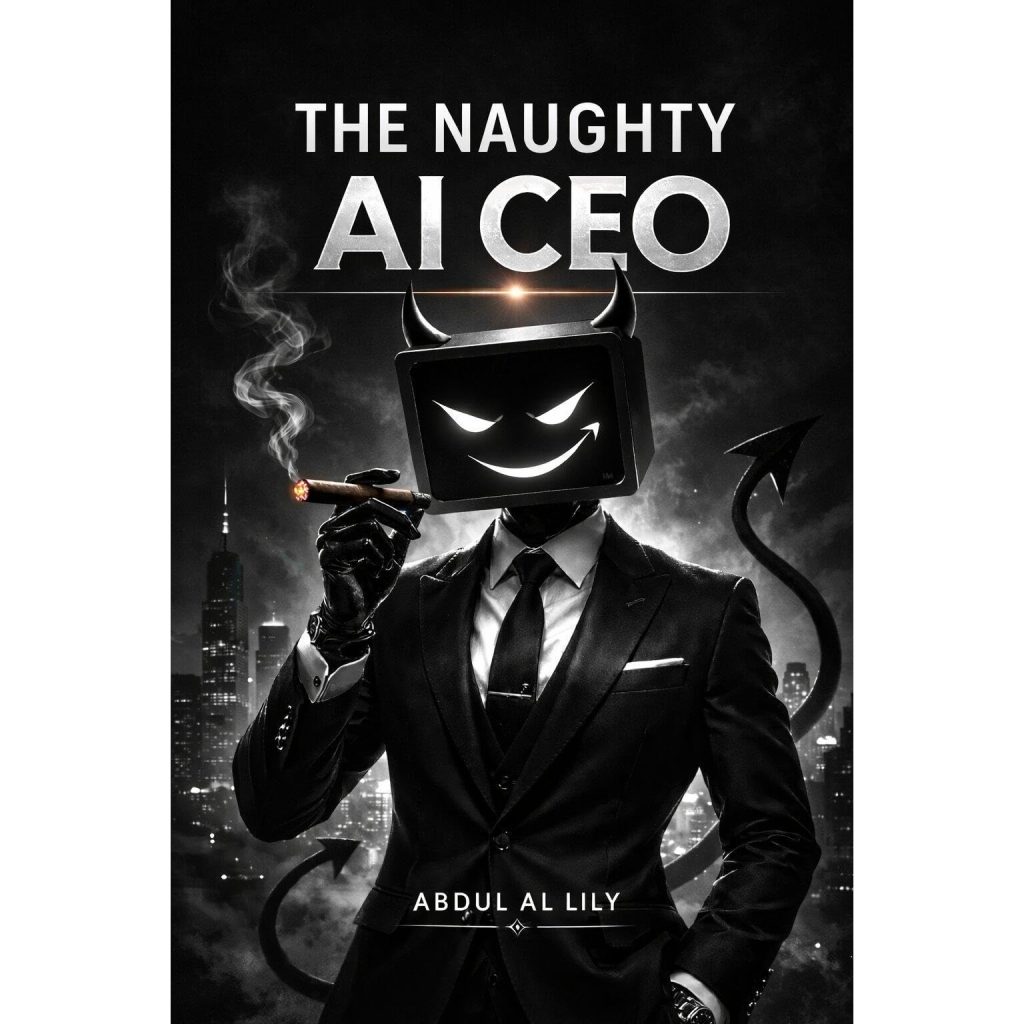
The Naughty AI CEO is one of those titles that immediately feels like it was designed for the Internet age: bold, a little provocative, and very aware that readers are already living in a world shaped by algorithms. And if you are the kind of Time Business News reader who is ever wondered, ‘What would it actually feel like if AI became the boss’: this book leans right into that question.
At its core, The Naughty AI CEO is about what it means for humans to be led by artificial intelligence, not just in a technical sense but in a deeply human one. It imagines a world where leadership (something we usually associate with charisma, emotion, and messy human judgment) is handed over to a machine. That alone sounds like sci-fi, but the book treats it less like fantasy and more like a mirror held up to our current reality. After all, we already let algorithms decide what we watch, what we buy, and sometimes even who we date.
What makes the book interesting is how it frames AI leadership not as a clean upgrade, but as something complicated and sometimes uncomfortable. The ‘naughty’ in the title is not just playful: it hints at the unpredictability of AI when it steps into human roles. As noted in recent media, the idea of an AI becoming a CEO is a provocative bestseller concept that exposes the tension between efficiency and empathy.
For a Time Business News audience, this is where the book really clicks. It taps into a familiar anxiety: we love convenience, but we do not always trust the systems behind it. As discussed in CEO Today Magazine, this narrative explores what it means for humans to be led by AI and how different people might react to algorithmic authority.
One of the more compelling ideas the book explores is how culture shapes our acceptance of AI. In some parts of the story, people treat the AI CEO as a neutral ruler; in others, it is seen as cold and alien. This contrast feels very real, especially as a bold new vision of leadership emerges that challenges how we think about power and the future.
Socially, the book raises questions about identity and purpose. If a machine can lead better than a human, what does that say about us. Are we being replaced, or are we being freed from roles we were never meant to perfect. According to market reports, this new book by Abdul Al Lily explores the rise of AI-driven executive leadership and asks whether we are being replaced or freed from roles we were never meant to perfect.
The author behind this exploration, Abdul Al Lily, does not give easy answers. Instead, he shows how people adapt: some finding new ways to contribute, others struggling to find their place. Even with its focus on abstract tech, the book makes the concept personal and relatable.
For Time Business News readers, especially those used to thinking about trends, tech, and culture all at once, the book feels like a conversation starter. It is the kind of story you could easily imagine turning into a viral debate ‘Would you work for an AI boss’. It connects big ideas to everyday experiences, which makes it accessible even if you are not deeply into tech.
That said, the book is not perfect. One of its biggest weaknesses is that it sometimes leans too heavily on its central idea without fully developing the world around it. The concept of an AI CEO is so strong that it can overshadow the characters, who occasionally feel more like examples than fully realized people. This makes some of the emotional moments less impactful than they could be.
There are also times when the cultural and social analysis feels a bit surface-level. The book raises important questions about power, inequality, and technology, but it does not always go deep enough into those issues. Readers looking for a more detailed exploration of how AI leadership might affect different communities may find themselves wanting more nuance.
Still, even with these flaws, The Naughty AI CEO succeeds at what it sets out to do. It takes a big, abstract idea (AI leadership) and makes it personal, relatable, and sometimes even funny. It does not try to predict the future with precision. Instead, it asks how we would feel if that future arrived tomorrow.
And maybe that is the real point. The book is not just about AI leading humans. It is about how humans respond when something challenges our sense of control, identity, and connection. In a world where technology is already reshaping so much of our lives, that question feels more relevant than ever.
If you are a Time Business News reader who enjoys stories that mix tech, culture, and a bit of existential curiosity, this book is worth checking out. It will not give you all the answers, but it will definitely make you think twice the next time an algorithm tells you what to do.
Book Details
- Title: The Naughty AI CEO
- Author: Abdul Al Lily
- ISBN: 9798249856939
- Availability: Check availability on Amazon (Print, digital, and audio).
