
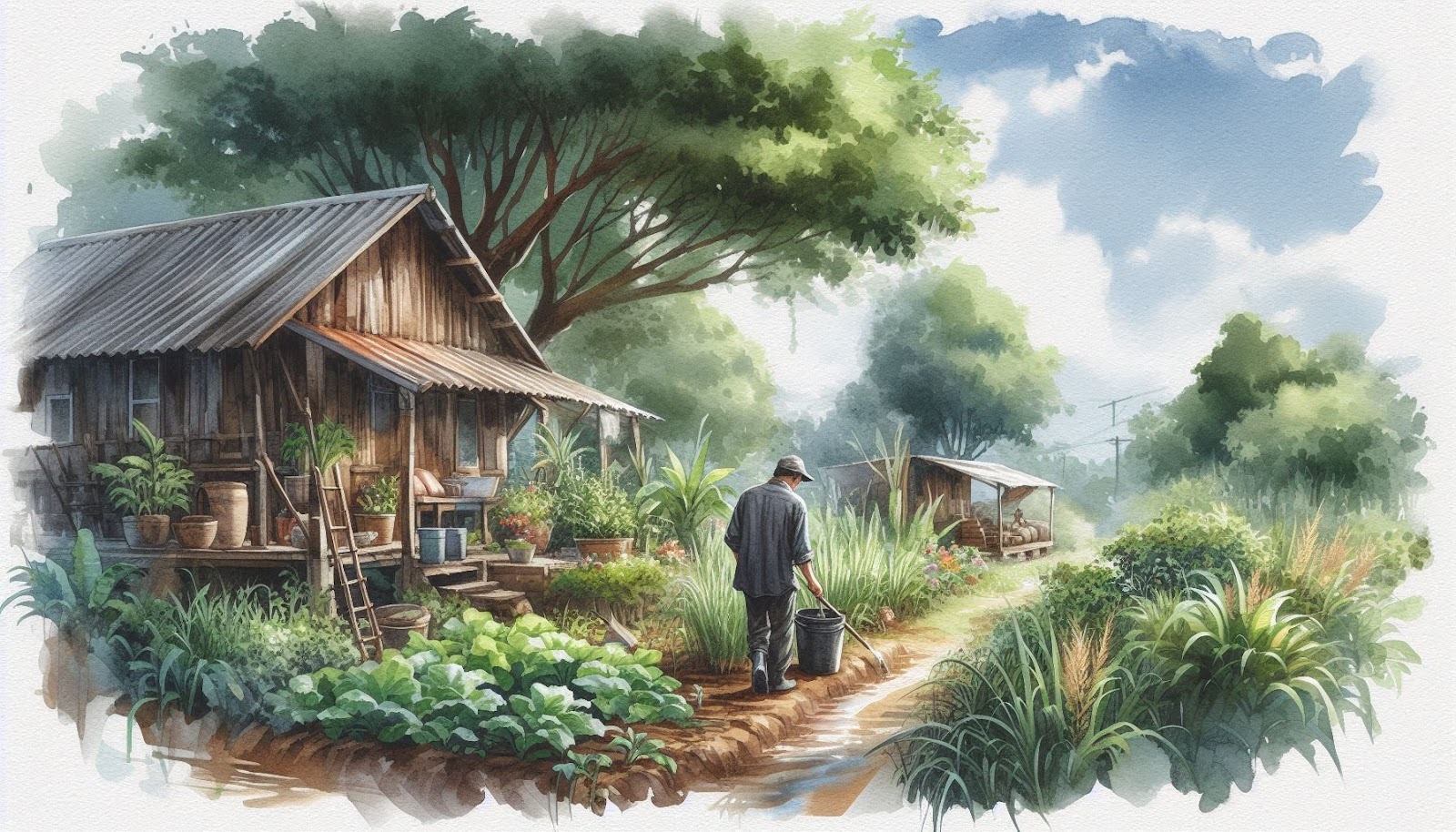
Comparing the long-term viability of deep woods survival against the anonymity of a crowded metropolis.
WASHINGTON, DC.
The question sounds like a strategy discussion. Woods or city. Remote or crowded. Disappear into nature or vanish into a crowd.
But in real life, long-term hiding is less about geography and more about friction. It is a life where every normal requirement becomes complicated: getting medical care, keeping a stable shelter, moving safely, earning money, maintaining relationships, and avoiding the bureaucratic checkpoints that now sit inside ordinary life.
In 2026, the most important shift is not that “surveillance is everywhere,” though cameras and data systems are undeniably more common. It is that verification is everywhere. Identity checks are no longer rare events like a border crossing. They are routine features of modern living. That is why the woods versus city debate is often a false choice, because both environments force contact with systems that remember, record, and cross-reference.
Public “wanted” systems, such as the FBI’s searchable listings at fbi.gov/wanted, make the baseline reality even harder to ignore: the modern hunt is often fueled by tips, databases, and everyday recognition, not a constant dramatic chase.
So, when people ask whether the wilderness or the metropolis is better for staying hidden, they are often asking the wrong question. The real question is how long a person can live without stability, without support, and without the normal documentation that lets adults move through the world.
And the honest answer is that time is usually the deciding factor.
The nut graf
In theory, the wilderness offers distance and fewer people. The city offers anonymity through crowds. In practice, both environments impose a kind of tax on daily life that compounds over time. The wilderness taxes the body. The city taxes the identity. Both tax the mind.
People can endure discomfort for a while. They struggle to endure a life built around permanent improvisation.
Why the wilderness fantasy breaks down
The wilderness story is emotionally powerful because it suggests independence. No cameras. No neighbors. No questions.
But the wilderness demands constant competence. Food. Water. Shelter. Weather. Injury. Illness. All become immediate, not abstract.
The first constraint is health. Even well trained outdoors people get hurt. A twisted ankle is a nuisance in an ordinary life. In deep woods isolation, it becomes a clock. Infection risk rises. Mobility drops. Decision-making deteriorates. Pain changes judgment. Any serious medical issue forces contact with other humans and with institutions that record names, faces, and details.
The second constraint is logistics. Most people cannot live indefinitely without resupply. Even if someone is not buying groceries in a conventional way, there are still practical needs: clothing, tools, basic supplies, medications, fuel, and transportation support. Resupply creates patterns. Patterns create attention.
The third constraint is winter, heat, and disaster. Severe weather does not care about someone’s plan. Smoke from wildfires, storms, floods, and cold snaps are not rare anomalies anymore in many regions, and when nature becomes hostile, people drift toward help. Help comes with questions.
The fourth constraint is the psychological toll of isolation. Humans do not only need calories and warmth. They need contact. The deeper the isolation, the more the mind starts to push back. People begin to talk to themselves. They begin to misread sounds. They begin to feel hunted even when no one is there. Fear becomes ambient. Sleep becomes fragile. Anxiety becomes a baseline.
This is the part that does not show up in survival fantasies: the wilderness can remove social pressure, but it increases internal pressure. Over time, that internal pressure makes a person more likely to take risks they would normally avoid.
The woods also do not eliminate visibility. They shift it. Search and rescue systems, park staff, hunters, hikers, and property owners exist. So do trails, roads, and the infrastructure of rural life, including small town networks where unfamiliar faces stand out. A person can be alone for days, then become memorable in minutes.
The wilderness does not offer invisibility. It offers distance, and distance is not the same thing.
Why the urban anonymity fantasy breaks down
The city story is also emotionally powerful because it suggests blending. A million faces, one more face does not matter.
But modern cities run on credentials. Housing markets run on screening. Employment runs on verification. Healthcare runs on patient records. Banking runs on compliance. Transportation, especially anything that crosses regions, runs on tickets, IDs, and logs.
In the city, the main burden is not being seen; it is being asked to prove who you are.
That burden shows up fast in housing. Many people underestimate how much of urban life is gated by paperwork. Even “informal” rentals often require references, deposits, and repeated interactions with neighbors and landlords. Disputes are common. Noise complaints happen. Building staff notice patterns. A person trying to stay unremarkable can still become notable simply by living cautiously.
Work is similar. Urban job markets include plenty of cash-based labor, but those jobs are often unstable, underpaid, and vulnerable to exploitation. The lack of documentation that helps someone stay outside formal systems also removes the protections that make employment survivable. When a worker cannot complain, the employer holds power. That power can be abused.
Cities also produce dense traces, not because every camera is “watching,” but because life generates records. A phone activation, a ride, a clinic visit, a package pickup, a repeated route, a face captured in someone else’s photo. The city amplifies the number of moments where a person exists inside someone else’s system.
And then there is the most ordinary pressure point: emergencies. A theft. An assault. A fire. A health episode. A car accident. Any sudden event pushes people into contact with police, hospitals, insurers, or landlords. In urban life, “unplanned contact” is not rare.
The city is not one hiding place. It is thousands of tiny checkpoints that most law-abiding people hardly notice until they are forced to notice them.
The real comparison is not woods versus city, it is stability versus strain
If you strip away the romance, the two environments create two different kinds of strain.
In the wilderness, strain is physical and immediate. The cost is paid in calories, injuries, and exposure to the elements.
In the city, strain is bureaucratic and cumulative. The cost is paid in paperwork avoidance, unstable work, unstable shelter, and constant micro-decisions about how to exist without creating contradictions.
Both types of strain wear down a person’s decision-making over time, and worn-down decision-making is what ends most long runs. People make mistakes when they are tired, lonely, sick, or emotionally triggered.
That is why so many long-term hiding narratives end in mundane ways. A hospital intake. A landlord dispute. A traffic incident. A call to family. A job screening. A moment when human needs outvote operational caution.
If you track how these stories surface in the news cycle, the pattern is repetitive and revealing, with capture stories often tied to ordinary life events rather than cinematic chases, which is visible in broad public reporting streams like this ongoing coverage feed.
The emotional flaw that keeps returning: connection
The most consistent vulnerability in long-term hiding is not technology. It is relationships.
People miss their children. They miss their parents. They miss funerals and birthdays. They miss the feeling of being known. Even disciplined people tend to crack around illness, grief, and family emergencies.
This is where the environment matters less than the calendar. Holidays arrive. Parents age. Children grow up. Death happens. So does guilt. A person can suppress those forces for a while, but the longer the separation lasts, the more pressure builds.
In the woods, loneliness becomes acute. In the city, loneliness becomes masked. In both, it remains dangerous because loneliness makes people take chances.
The “underground economy” is not a neutral alternative; it is a penalty system
When people cannot use ordinary institutions, they often rely on informal ones. Cash work. No questions rentals. Intermediaries. Favors. Unofficial arrangements.
That is where another reality sets in: “no questions” is rarely free. The underground economy charges more for instability and risk. It also attracts people who exploit instability and risk.
This matters because the underground economy is not designed to build a person back up. It is designed to extract. When someone is desperate for shelter or income without scrutiny, they often accept worse terms, higher prices, and less safety. Over time, that becomes a trap that looks like survival but feels like dependency.
The hidden cost is not only financial. It is leverage. The person on the margins often becomes the person who can be threatened, coerced, or reported.
What lawful readers should take from this
This topic is easy to sensationalize, and it is also easy to misunderstand.
The most useful takeaway for the public is that long-term hiding is not a realistic “Plan B,” it is typically a slow crash into instability. It can endanger families, create collateral damage for landlords and employers, and deepen harm for victims who want closure.
If someone you know is facing legal exposure, the safest path is not a geographical one. It is a legal one. That usually means competent counsel, documented steps toward resolution, and avoiding choices that add new crimes and new victims.
This is the boundary where compliance-focused advisers often situate their work, not in helping people evade accountability, but in helping people reduce risk through lawful, verifiable processes. In public positioning, Amicus International Consulting has emphasized that sustainable outcomes in cross-border and high-scrutiny environments come from documented continuity and compliance, not from improvised concealment that collapses under routine verification.
The bottom line
Wilderness and cities each offer a different illusion.
The wilderness illusion is that fewer people equal invisibility. The city illusion is that more people equal anonymity.
Both ignore the same reality: modern life is built on verification, and human life is built on needs. A person can reduce exposure for a while. They cannot suspend biology, emotion, and time.
And that is why “where would you hide” is usually the wrong frame. The more accurate question is, how long can someone live without stability before the mind and body force contact with the world again.
For most, the answer is not as long as the myth suggests.
