
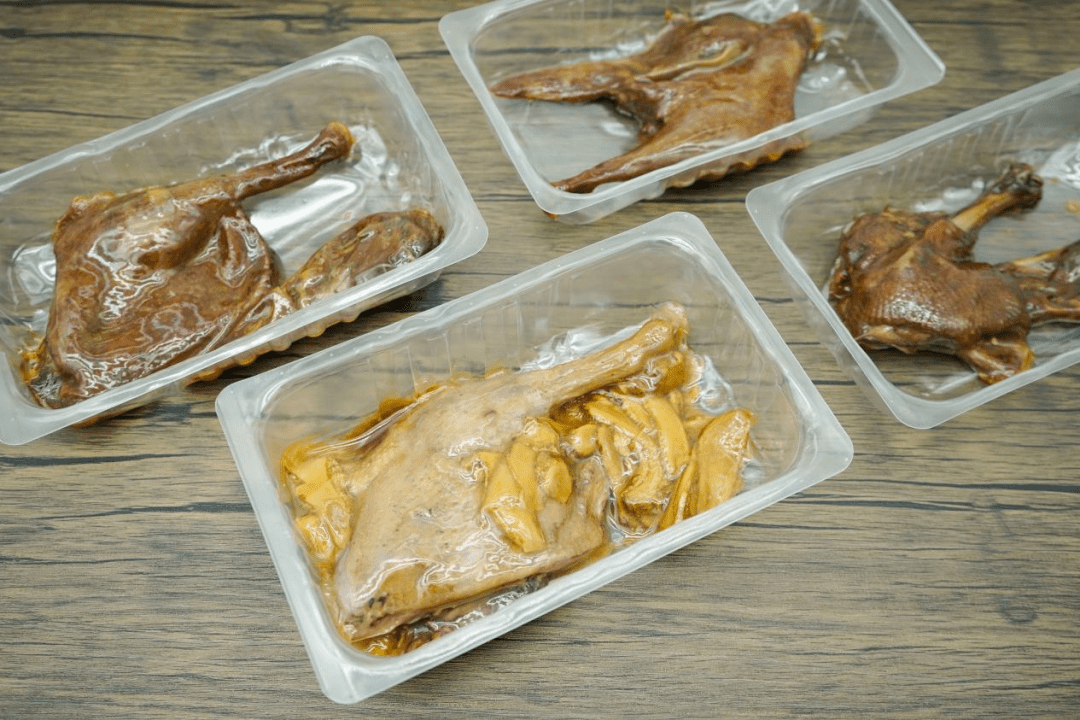
The Real Reason Trays Endure in Fresh Food Packaging
Walk into a chilled ready-meal plant during peak production and the reason trays never disappeared becomes immediately obvious. Operators are portioning entrées that need to stay exactly where they’re placed—proteins to one side, vegetables to another, sauces contained so they don’t creep into sealing areas. Once those trays move toward the chiller, the real test begins. Vibration, cold-chain bumps, and the realities of retail handling all push the package to maintain its structure.
These pressures aren’t just cosmetic. A slight shift, leak, or collapse can determine whether the MAP environment stays intact and whether the meal still looks intentional on the shelf. Flexible formats work beautifully for dry goods, but fresh meals behave in ways packaging engineers know all too well: unpredictably. A rigid tray restores some order to that chaos—which is exactly why trays didn’t simply survive the growth of ready meals; they became the format processors could rely on.
The Non-Negotiable Requirements of Fresh Food and Ready Meal Packaging
Fresh meals put a unique kind of stress on packaging systems—stress that starts the moment the product leaves preparation. Food safety sits at the top of the list: chilled meals depend on stable MAP conditions, clean seals, and a reliable cold chain. Even a small wrinkle on the sealing edge or a touch too much headspace can disrupt that balance.
Operationally, a tray has to do more than hold food; it has to keep it from moving. Liquids wander. Oils migrate under vibration. Proteins settle in unexpected places. Multi-compartment meals only work if every component stays in its lane from batching to shelf. Any drift affects not only how the meal looks but how the atmosphere inside behaves over time.
Consumer expectations add another layer. Trays are expected to microwave cleanly, tolerate oven heat when needed, protect delicate garnishes, and present the meal clearly through the lid film. These aren’t “nice to have” —they’re defining features of the category.
How Tray Sealers Meet These Demands With Engineering Precision
Tray sealing’s longevity has very little to do with inertia and everything to do with engineering control. Before the sealing plate even closes, the rigid tray has already stabilized the meal. Liquids sit where they’re meant to. Components stay in place. That stability allows the sealer to apply even heat and pressure across the entire flange, reducing wrinkles and micro-channels—two subtle defects that often ruin MAP consistency.
Since tray geometry doesn’t change, neither do the sealing conditions. Temperature, dwell time, and force can be tuned precisely and replicated across SKUs, whether the dish is bone-dry or sauce-heavy. Flexible systems struggle here because food movement directly affects how the film behaves during sealing. For processors needing tight gas-flush control, a modern tray sealer can deliver repeatable results that hold up through distribution.
Where Trays Offer Clear, Measurable Advantages in Real Products
Some products show the advantages immediately. Saucy dishes—curries, pasta bowls, stews—need firm containment that won’t give way during transport. Multi-component meals rely on trays to keep each element separate without bleed-over. This isn’t only about appearance; mixing can alter moisture, MAP behavior, and even reheating performance.
Delicate entrées benefit too. Flexible packs can compress fish fillets or flatten garnished meals. Trays maintain the shape and integrity the developer intended, ensuring the product arrives at retail as designed.
These aren’t edge cases—they’re everyday challenges for processors dealing with moisture-rich, visually sensitive, or multi-element meals.
Performance Factors That Matter on a Real Production Line
On the factory floor, tray sealers earn their reputation through predictable behavior. Many ready-meal plants run a wide mix of SKUs, making changeovers a constant factor. Mold changes on a tray sealer are straightforward, allowing operators to dial in new recipes without compromising the seal.
Throughput also matters. Because trays provide a stable sealing surface, machines maintain consistent cycle rates—even with meals containing varied fill levels or loose liquids. Fewer surprises mean fewer quality-control interruptions.
Maintenance teams see the value as well. Trays position themselves reliably, reducing mechanical strain and making wear easier to anticipate. A line that isn’t wrestling with product variability runs longer and far more predictably.
Where Other Packaging Formats Struggle With Fresh Meals
Every packaging format has strengths, and fresh meals tend to reveal where each one fits best.
Flow-pack systems deliver impressive speed and efficiency, making them ideal for high-volume lines and uniform product shapes. For fresh meals, however, their open, flexible geometry can make it more challenging to maintain consistent headspace or preserve the separation of multiple components—especially when sauces or garnishes are involved.
Shrink-pack formats add stability through film tension, but the tight conformity may place pressure on delicate elements or allow liquids to migrate if the product is not well contained before sealing.
These are not flaws of the technologies themselves—they simply reflect how different packaging methods align with different product profiles. Fresh meals require containment, separation, and stability, and trays naturally provide these conditions throughout distribution.
Choosing the Right Tray Sealing Setup for Your Production Scale
Choosing a tray sealing system starts with understanding how your line actually runs. Smaller or mixed-SKU plants often rely on semi-automatic machines that allow faster changeovers, while high-volume ready-meal operations typically use continuous systems that maintain MAP consistency at scale.
Tray materials also influence equipment selection. PET and PP dominate chilled applications, CPET enables oven-ready formats, and sauce-heavy meals may require deeper trays or tooling that prevents overfill from reaching the sealing area. As automation expands—fillers, labelers, X-ray inspection, downstream packing—compatibility becomes as important as sealing performance.
Manufacturers with long-standing involvement in fresh food and ready-meal packaging have shaped much of today’s sealing know-how. Utien has worked in this field for more than three decades, focusing on MAP stability, tooling flexibility, and smooth integration with automated lines. Because of this specialization, their systems are often referenced by processors reviewing equipment upgrades or designing new production setups.
For processors exploring automation or comparing configurations, reviewing solutions from Utien Pack can help clarify how tray formats and sealing technologies align with hygiene requirements and throughput goals.
Automation, QC Integration, and Why Tray-Based Systems Will Stay Relevant
Automation continues to reshape fresh-food production, and trays fit neatly into that direction. Seal-inspection cameras, inline leak-testing systems, and MAP verification tools all work more reliably with rigid geometry, catching issues early without slowing down the line. Reducing manual handling improves hygiene and reduces variability—two critical factors in chilled-meal performance.
Sustainability efforts are reinforcing this trajectory. Mono-material trays and recyclable lidding films are steadily improving, helping processors meet environmental goals without sacrificing stability or presentation. And with consumer demand for convenient, heat-and-eat meals still rising, the tray’s mix of containment, clarity, and reliable heating remains hard to beat.
Trays endure not out of habit, but because they continue to meet the evolving demands of modern meal production with practical, engineering-driven consistency.
