
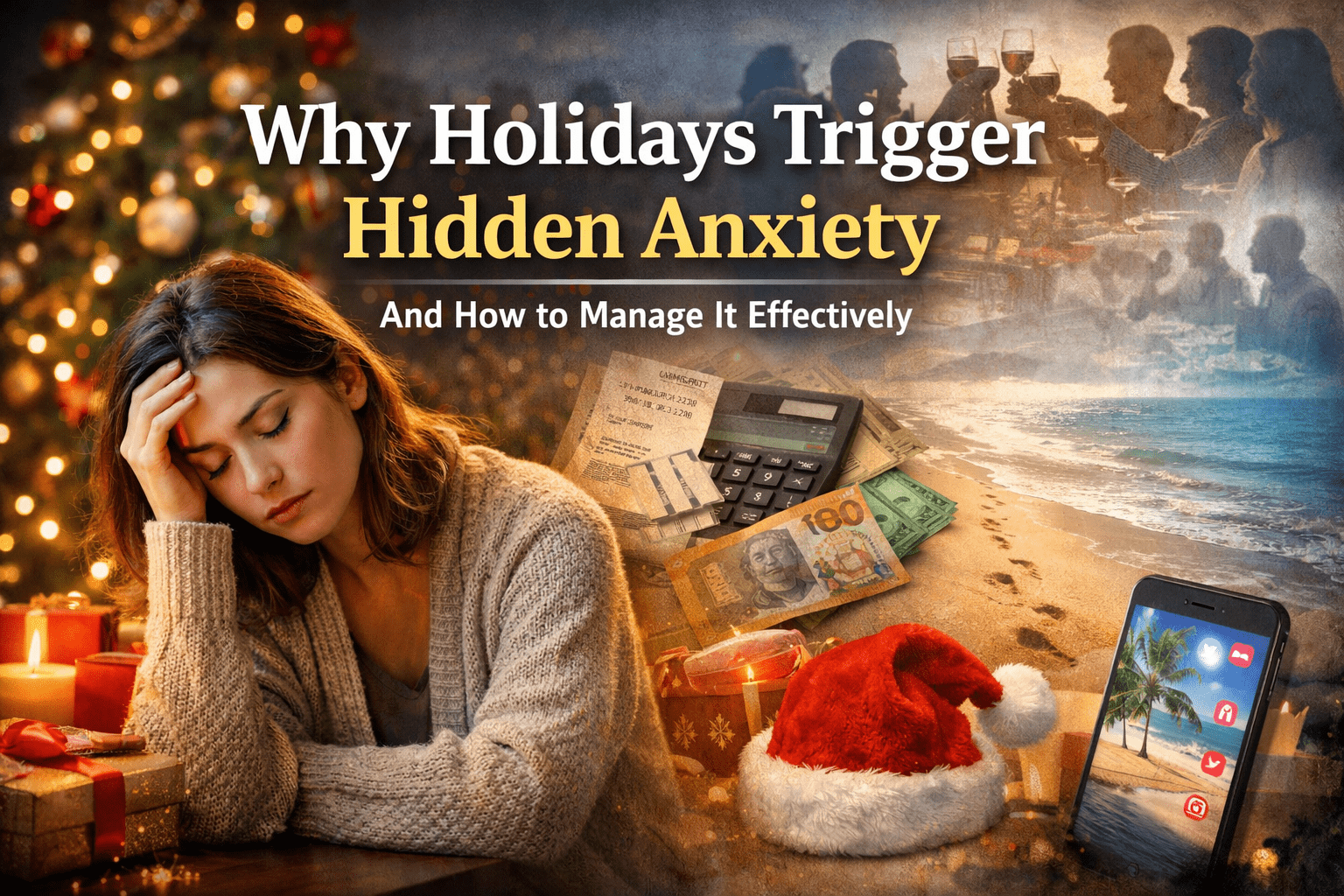
The festive season and school breaks are meant to be joyful but many Aussies silently ask themselves: Why Holidays Trigger Hidden Anxiety? It’s a common experience that goes beyond stress, affecting even those who seem relaxed and composed on the outside. Holidays can unintentionally exaggerate emotional pressures, expectations, family tensions, and disruptions to our routines, leaving many feeling overwhelmed and mentally exhausted.
In this blog, we’ll explore the psychological roots of hidden anxiety during holidays, how it impacts your wellbeing, and practical ways to manage it so you can genuinely enjoy the season without burning out.
What Is Hidden Anxiety?
Hidden anxiety also known as high‑functioning anxiety is the kind that operates below the surface. Unlike obvious forms of stress, those with hidden anxiety often look calm, capable, and sociable while internally dealing with fast‑racing thoughts, tension, or emotional overload.
It’s not a lack of strength or resilience. Rather, hidden anxiety is a subconscious response to heightened demands such as holiday planning, social expectations, and personal comparisons and can build up quietly until it becomes hard to ignore.
Typical patterns of hidden anxiety include:
- Trying to be “perfect” in every detail
- Feeling pressure to please everyone
- Being constantly busy to avoid uncomfortable feelings
- Keeping a smile even while stressed inside
These coping mechanisms can make someone appear composed, but they drain energy and increase emotional strain.
Why Holidays Can Trigger Hidden Anxiety
The festive period may be marketed as the most wonderful time of the year, but the reality for many is quite different. Here are some of the most common reasons holidays make hidden anxiety worse:
1. Social Pressure to Be “Happy”
Holidays often come with societal expectations: family gatherings, parties, gifts, and constant cheer. For people with hidden anxiety, the demand to appear upbeat or sociable can make them feel drained and inauthentic. Constantly “performing happy” makes internal stress build up.
2. Financial Stress and Expectations
The costs of presents, travel, dining out, and festive decorations can hit the wallet hard. Many people worry about not being able to afford “the perfect holiday,” which can trigger guilt, fear, and stress. This financial pressure is a significant contributor to anxiety during festive periods.
3. Family Dynamics and Old Conflicts
Family gatherings are lovely for some, but for others they stir up old memories, unresolved conflicts, or emotional tension. Navigating complicated relationships in close quarters can intensify stress and anxiety.
4. Disrupted Routines
School and work holidays often mean changes to sleep, eating, and exercise routines. These disruptions can leave your body and mind feeling off‑balance making it harder to regulate emotions and increasing vulnerability to anxiety.
5. Unrealistic Expectations and Social Comparisons
Scrolling through social media feeds full of “picture‑perfect” holiday posts can make anyone feel inadequate or left out. Comparisons, even subtle ones, can make hidden anxiety spike.
6. Memories of Loss
For people who’ve experienced bereavement or separation, the holidays can provoke grief and longing. Nostalgia mixed with sadness often intensifies emotional stress rather than easing it.
How Holiday Anxiety Affects Mental and Physical Health
Hidden anxiety doesn’t just affect your mind; it impacts your whole body. When stress stays elevated, the body stays in “alert mode,” meaning your nervous system remains vigilant even when you’re not consciously worried. This can lead to a collection of symptoms such as:
- Persistent irritability
- Trouble sleeping or insomnia
- Constant, restless thoughts
- Fatigue or lack of motivation
- Muscle tension, headaches, and digestive discomfort
- Emotional numbness or difficulty finding joy
Over time, ongoing hidden anxiety can contribute to burnout, depressive symptoms, or panic attacks which is why early recognition and management is so important.
Recognising the Signs: Are You Experiencing Hidden Holiday Anxiety?
You might be noticing subtle cues that hint at anxiety even if you’re “keeping it together.” Common signs include:
- Overthinking everything from social plans to gift choices
- Feeling exhausted even after rest
- Constantly saying “yes” to commitments you don’t want
- Quick irritability over small things
- Difficulty relaxing or switching off your thoughts
- Feeling overwhelmed before the season even starts
If you’re nodding along to these, you’re definitely not alone and recognising these symptoms is the first step to managing them.
Practical Tips to Manage Hidden Anxiety During Holidays
The good news is there are ways to navigate holiday stress thoughtfully without derailing your wellbeing. Here are strategies to help you stay grounded:
1. Accept What You’re Feeling
Instead of brushing your emotions aside, acknowledge them. Saying “I’m feeling anxious” isn’t weakness, it’s honesty. Journaling, speaking to a trusted mate, or just naming the feeling helps you process it rather than bury it.
2. Say No When You Need To
You don’t have to attend every event or please every person. Restricting your commitments to what genuinely brings joy can reduce overwhelm and help you conserve emotional energy.
3. Create Healthy Boundaries
Setting limits isn’t rude, it’s protective. If certain family members drain you or events feel too intense, choose shorter visits or decline politely. Boundaries allow you to show up as your best self.
4. Budget Wisely and Early
Money stress is a common anxiety trigger. Plan your spending early, and consider meaningful experiences or handmade gifts instead of expensive purchases. This helps align expectations with reality and protects your peace of mind.
5. Maintain Routines Where You Can
Even if work or school is off, try to keep sleep, meals, and mild physical activity consistent. Your body thrives on rhythm, and a stable routine helps keep stress responses lower.
6. Limit Social Media
Too much time online can fuel comparisons and unrealistic expectations. Consider screen‑free periods during your day so you’re more present in your own experiences.
7. Connect with Supportive People
Reach out to mates, siblings, cousins, or community groups who make you feel heard and valued. Genuine connection nourishes emotional health far more than forced small talk.
8. Practice Mindfulness
Whether it’s slow breathing, meditation, or nature walks, being mindful helps regulate your nervous system and reduce the impact of stress. Tasks like deep breaths or brief meditation sessions can calm your mind throughout the day.
When to Seek Professional Support
Sometimes holiday anxiety becomes more than occasional stress especially if it interferes with your sleep, daily functioning, or relationships. In those cases, talking to a mental health professional can offer structured support and customized strategies.
By recognising your triggers and learning skills to manage them, you can transform holiday pressure into an opportunity for self‑awareness and emotional growth.
Final Thoughts
The festive season, school breaks, and celebrations are a time of heightened emotions and that’s okay. Hidden anxiety doesn’t mean you’re weak or ungrateful; it means your nervous system is responding to real pressures.
By understanding why holidays trigger hidden anxiety and using effective coping strategies, you can reclaim your sense of calm, presence, and enjoyment during what should be a joyful time.
At ExpertMinds, we care about your emotional wellbeing and believe everyone deserves support that’s accessible and practical. With awareness and mindful habits, you can navigate holiday stress with confidence and compassion for yourself.