
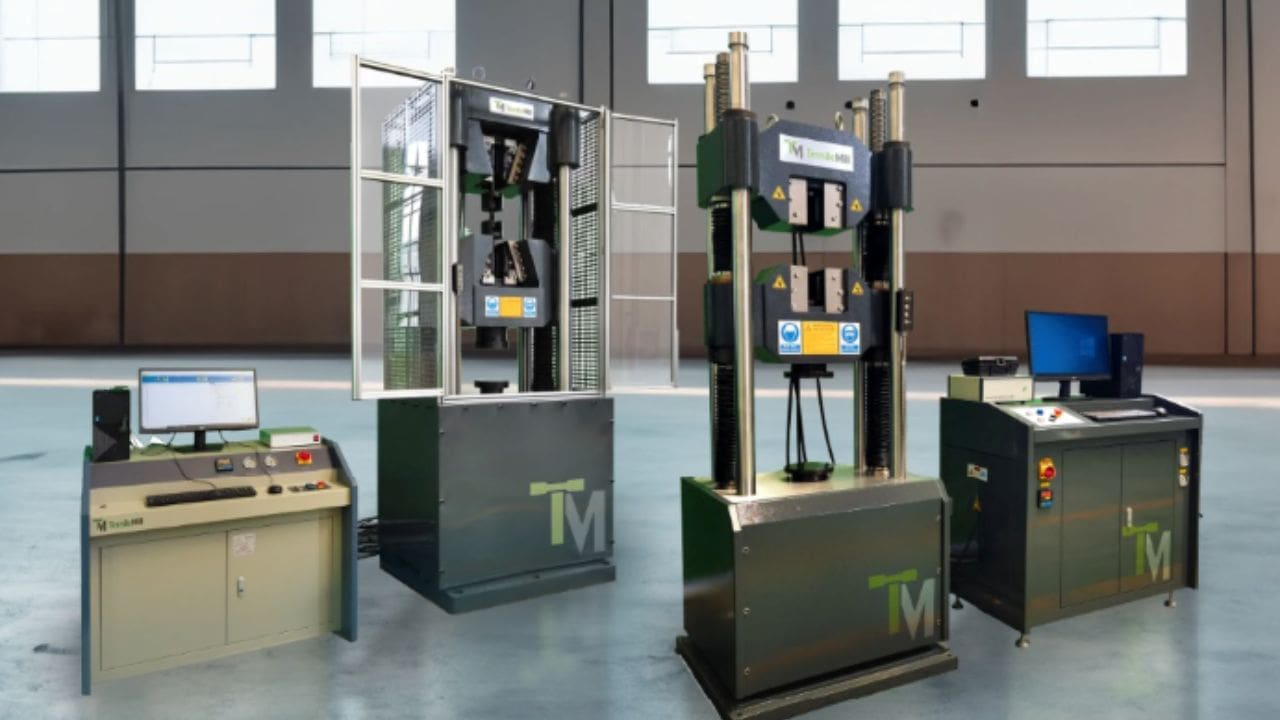
Tensile testing equipment provides the foundation for measurable, repeatable quality control. Across laboratories, engineers use tensile devices to observe how metals, plastics, and composites behave under stress. The data they record becomes the benchmark for certification and performance verification.
Over time, tensile testing systems have evolved from single-purpose setups to multi-functional platforms. Industry reports show a near 40% rise in demand, reflecting how testing is becoming faster and more connected. Today, one configuration can handle tension, compression, and bending tests that once required separate machines. The change highlights a global shift toward speed, compatibility, and precision.
Universal Testing Machines, or UTMs, merge mechanical control with digital intelligence. Operators can fine-tune parameters, test multiple materials, and maintain stable accuracy without constant recalibration. Their design bridges research and production, offering the same reliability in classrooms, labs, and industrial floors.
Understanding the Mechanics Behind Universal Testing Machines
A universal testing machine measures how a material reacts to tension, compression, or bending under controlled force. Before testing begins, samples are typically shaped and finished using tools for specimen prep to guarantee uniform dimensions and surface quality. A sample is placed between two grips that move at a constant rate while sensors record both force and deformation.
The system records how strength, elasticity, and ductility change as the load increases. Each curve on the testing graph reveals how a material behaves under pressure. These insights help engineers understand whether a material will hold up under practical conditions. Even the smallest variations in force or displacement are tracked automatically, producing precise feedback for analysis.
The same machine can perform multiple tests. By switching fixtures or grips, the operator can move from tension to compression or flexure without replacing the frame. This setup simplifies workflows and maintains consistent results across methods. Labs no longer need several instruments to achieve the same accuracy.
Modern UTMs rely on closed-loop control systems. Operators set speed, force range, and test mode through software that manages the crosshead’s motion. Load cells and extensometers capture readings in real time, which can be exported later in standard formats used by industries and research institutions.
Software configuration also allows compliance with ASTM, ISO, or DIN standards. One machine can test everything from rigid metals to flexible plastics. This makes universal testing systems efficient tools for both industrial production and academic research, where repeatability and speed matter equally.
Versatility in Modern Testing Laboratories
The versatility of modern universal testing machines is one of the main reasons they have become a standard feature in material testing laboratories. A single system can handle tension, compression, and bending tests with only minor setup changes. This consolidation saves space and reduces costs while keeping measurement accuracy steady across all procedures.
In daily lab work, flexibility quickly turns into efficiency. Instead of operating separate machines for each method, technicians can rely on one system equipped with interchangeable grips and fixtures. Switching between metals, plastics, and composite materials takes only minutes and requires no new calibration. That efficiency improves scheduling and helps maintain consistent testing speed, especially when large batches of samples are involved.
This adaptability also broadens access to testing. Universities use UTMs for classroom demonstrations and advanced research, while manufacturing facilities depend on them for inspection and certification. A shared testing platform simplifies training and data handling, allowing operators to master one interface and apply it across multiple test types. The outcome is reliable data that remains comparable between different users and projects.
Precision remains central to every test. Automated control systems manage force, speed, and strain in real time, minimizing the effect of human error. Because the process is software-driven, data consistency stays stable even when samples vary in form or size. Laboratories can compare results from different materials without losing accuracy.
International standard compliance further strengthens workflow efficiency. A single machine can execute tests aligned with ASTM, ISO, or DIN procedures. Switching between these protocols requires no physical changes, only a software adjustment. The result is a smooth testing process suitable for both research and production.
Modern systems reduce testing time while improving data reliability. Laboratories can measure several materials within the same session, avoiding idle periods between procedures. This efficiency lowers maintenance needs, reduces calibration frequency, and builds greater confidence in long-term performance.
Applications of Tensile Testing Equipment
Tensile testing machines are used in laboratories, factories, and classrooms. Each setting depends on accurate data that shows how materials react to stress and strain. The same system that helps students understand material science also supports engineers in verifying product performance before production.
In industrial environments, UTMs play a central role in quality control. Manufacturers test metals, plastics, and composites to confirm that each batch meets dimensional and mechanical standards. The results document compliance, support traceability, and guide process adjustments. Using one testing platform for both research and inspection helps companies keep consistent data across multiple product lines.
In research, tensile testing systems go beyond basic measurements. They allow experiments under controlled temperature, humidity, or cyclic loading to simulate real conditions. The data collected from these studies drives the development of new alloys, polymers, and composites while ensuring results can be replicated.
Independent laboratories and public testing centers also depend on universal machines. A single setup can follow ASTM, ISO, or DIN standards without hardware changes. Mid-size centers often process several thousand samples per month, while academic facilities handle hundreds per semester. The flexibility of one configuration keeps testing continuous, precise, and comparable across clients.
Tensile testing equipment unites these environments under a shared goal, reliable measurement. From classroom experiments to industrial validation, the same technology provides the structure that testing facilities rely on to confirm material strength and performance.
Why Universal Testing Machines Remain Central to Material Evaluation
Universal testing machines define how laboratories measure and compare material strength today. Their design ensures stable accuracy across different test types, from academic studies to industrial inspection. Combining multiple functions within one structure allows laboratories to maintain reliable results without switching equipment.
The adaptability of these systems remains their main advantage. One configuration can test metals, plastics, and composites under various speeds and loads, following ASTM, ISO, or DIN procedures. This versatility links research, education, and manufacturing, giving each field access to the same testing standards.
Data gathered through UTMs creates the reference base for materials worldwide. Every test adds to the records used in safety validation, design evaluation, and process certification. As technology advances, these machines evolve through improved sensors and updated software, keeping results consistent with modern requirements.
Their true strength lies in simplicity. Universal testing systems streamline preparation and reporting, allowing laboratories to focus on outcomes instead of setup. By combining precision with flexibility, they remain a dependable core of every material testing environment.