
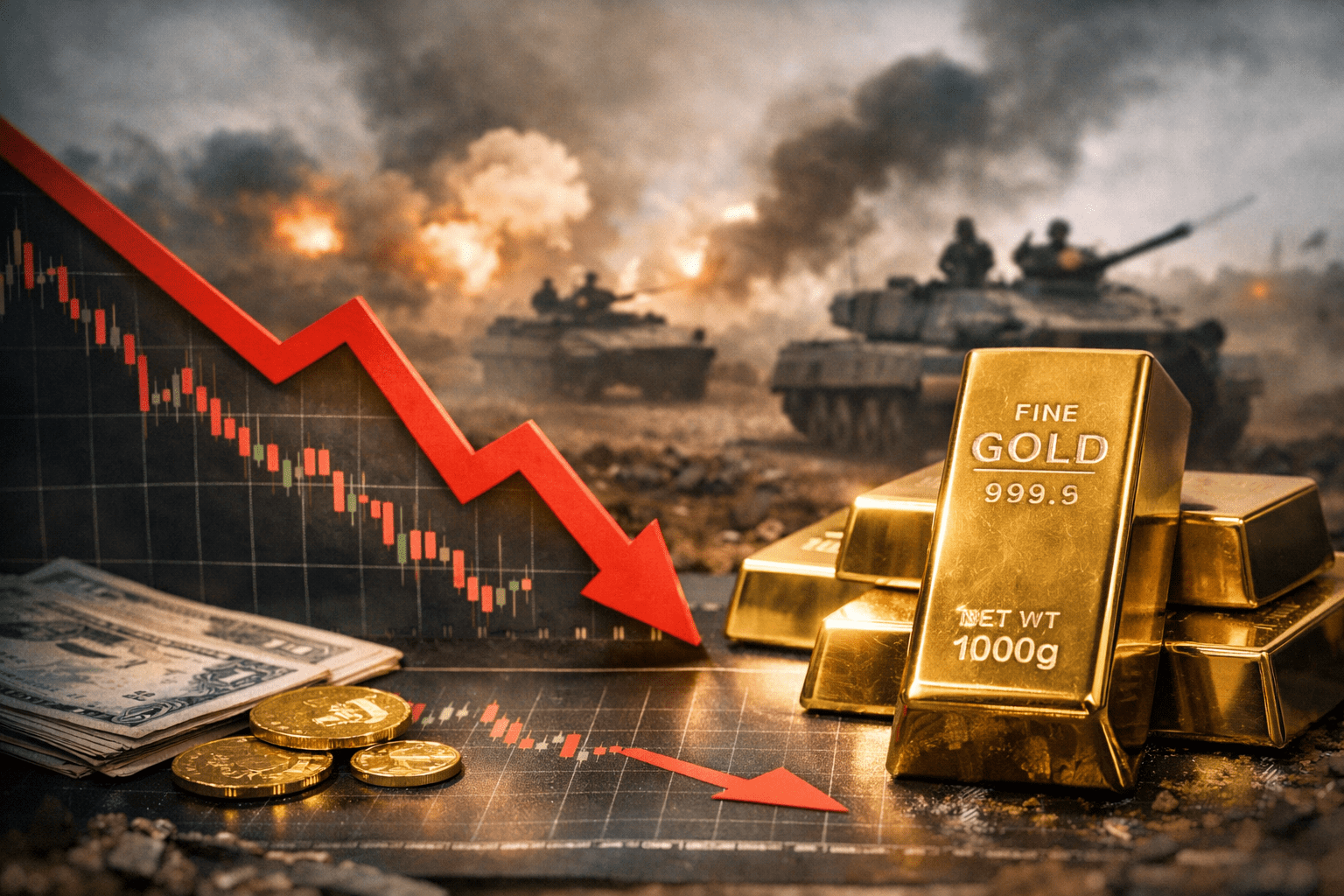
Investors often assume gold prices will skyrocket the moment a conflict begins. This “safe-haven” belief is deeply ingrained in financial history. However, the reality on the trading floor is often the opposite.
When a new war breaks out, gold prices frequently experience a sharp, unexpected decline. This phenomenon leaves many traders confused and their portfolios exposed. To understand why this happens, we must look past the headlines and into the mechanics of global market liquidity.
Connect on Telegram Don’t miss out on critical market updates. Join my Telegram community for the latest news and trading signals delivered straight to your phone: https://t.me/mql5signals_Sarowar
The Safe-Haven Myth: Why the Initial Spike Often Fails
The market rarely waits for the first shot to be fired. Most geopolitical risks are “priced in” months before a conflict actually starts. This anticipation creates a “pre-war” price spike driven by safe-haven demand.
By the time the war officially begins, the “buy the rumor” phase has already peaked. Investors who bought early often engage in massive profit-taking. This transition from anticipation to reality frequently triggers a price correction.
The “Liquidity Cascade”: Why Gold is the Market’s Ultimate ATM
The most critical reason for a gold price drop is the “Liquidity Cascade.” When a war starts, stock markets often panic and sell off sharply. This volatility triggers widespread margin calls for institutional investors and hedge funds.
To cover these losses and provide immediate cash, investors sell their most liquid and profitable assets. Gold is the ultimate ATM. Because it is highly liquid and usually sitting on gains, it is the first asset sold to save failing equity positions.
1.Geopolitical tensions drive a “pre-war” price spike.
2.Conflict outbreak triggers a stock market sell-off.
3.Investors face margin calls on equity positions.
4.Gold is liquidated to provide immediate cash liquidity.
5.The influx of supply causes a temporary price drop.
The “Sell the News” Phenomenon in Algorithmic Trading
Modern markets are dominated by algorithmic trading bots. these programs are designed to front-run geopolitical events. They identify the “risk premium” associated with a looming war and bid up the price of gold in the weeks prior.
Once the conflict is a confirmed reality, the “uncertainty” that fueled the rally is gone. Bots often switch to a “sell the news” strategy, exiting their long positions simultaneously. This coordinated selling creates a technical vacuum, pulling the price down despite the ongoing crisis.
The US Dollar Factor: Gold’s Invisible Enemy
Gold has an inverse relationship with the US Dollar Index (DXY). During a major war, the dollar often strengthens as the world’s primary reserve currency. This “flight to the dollar” creates a significant headwind for gold.
Since gold is priced in dollars, a stronger DXY makes bullion more expensive for international buyers. This reduced demand, combined with rising real interest rates as central banks fight war-induced inflation, puts immense downward pressure on gold prices.
| Factor | Impact on Gold | Reason |
| US Dollar (DXY) | Negative | Gold becomes more expensive for non-USD holders. |
| Margin Calls | Negative | Forced liquidation to cover stock market losses. |
| Profit Taking | Negative | Investors “sell the news” once the war starts. |
| Inflation Hedge | Positive | Long-term protection against currency debasement. |
Historical Precedents: From the Gulf War to the Present
History proves this paradox is the rule, not the exception. During the 1991 Gulf War, gold surged leading up to Operation Desert Storm but collapsed the day the air war began. Similarly, in the 2003 Iraq Invasion, gold prices peaked weeks before the first tanks crossed the border.
Even the 2022 Ukraine War saw gold spike initially, only to retreat as the market adjusted to the new reality of sanctions and dollar strength. These patterns show that Sarowar Jahan readers must distinguish between short-term liquidity stress and long-term value.
Long-Term Outlook: When Does the Recovery Begin?
The initial drop is usually a technical reaction to liquidity needs. However, gold’s fundamental value as an inflation hedge remains intact. Once the “liquidity cascade” stabilizes, gold often begins a sustained rally.
This recovery is driven by supply chain disruptions, increased government debt, and fiat currency debasement. While the first week of a war might be red, the following months often see gold reclaim its status as the ultimate protector of wealth.
Frequently Asked Questions (FAQ)
Why does gold go down when war starts?
Gold often drops because the market has already “priced in” the conflict. Once the war begins, investors engage in “sell the news” profit-taking or liquidate gold to cover margin calls in crashing stock markets.
The initial price spike usually happens during the buildup of tensions. When the conflict becomes a reality, the focus shifts from “fear” to “liquidity,” leading to forced selling by large institutions.
Is gold still a safe haven during war?
Yes, but its “safe-haven” status is often a long-term trend. While short-term prices may drop due to liquidity needs and a strengthening US Dollar, gold typically retains value over the duration of a conflict.
Gold protects against the long-term consequences of war, such as inflation and currency instability. Short-term volatility is a technical market reaction, not a reflection of gold’s underlying safety.
How did gold perform in the 1991 Gulf War?
In 1991, gold prices surged leading up to the conflict but collapsed by over $30 an ounce the day the air war began. This was a classic example of markets seeking liquidity.
The market realized the outcome was already anticipated. This “sell the fact” event remains one of the most cited examples of gold’s counter-intuitive behavior during wartime.
What is the relationship between the US Dollar and gold during conflict?
The US Dollar often strengthens during a war as a primary reserve currency. Since gold is priced in dollars, a stronger DXY makes gold more expensive, creating downward price pressure.
This inverse relationship is a key driver of the initial price drop. As investors flock to the safety of the dollar, the relative demand for gold can temporarily decrease.
Will gold prices recover after the initial war drop?
Historically, gold prices recover and trend higher if the war leads to prolonged inflation or increased government debt. The initial drop is usually a temporary technical reaction.
Once the immediate need for cash liquidity passes, investors return to gold as a hedge against the economic fallout of the conflict, such as supply chain issues and rising energy costs.
