
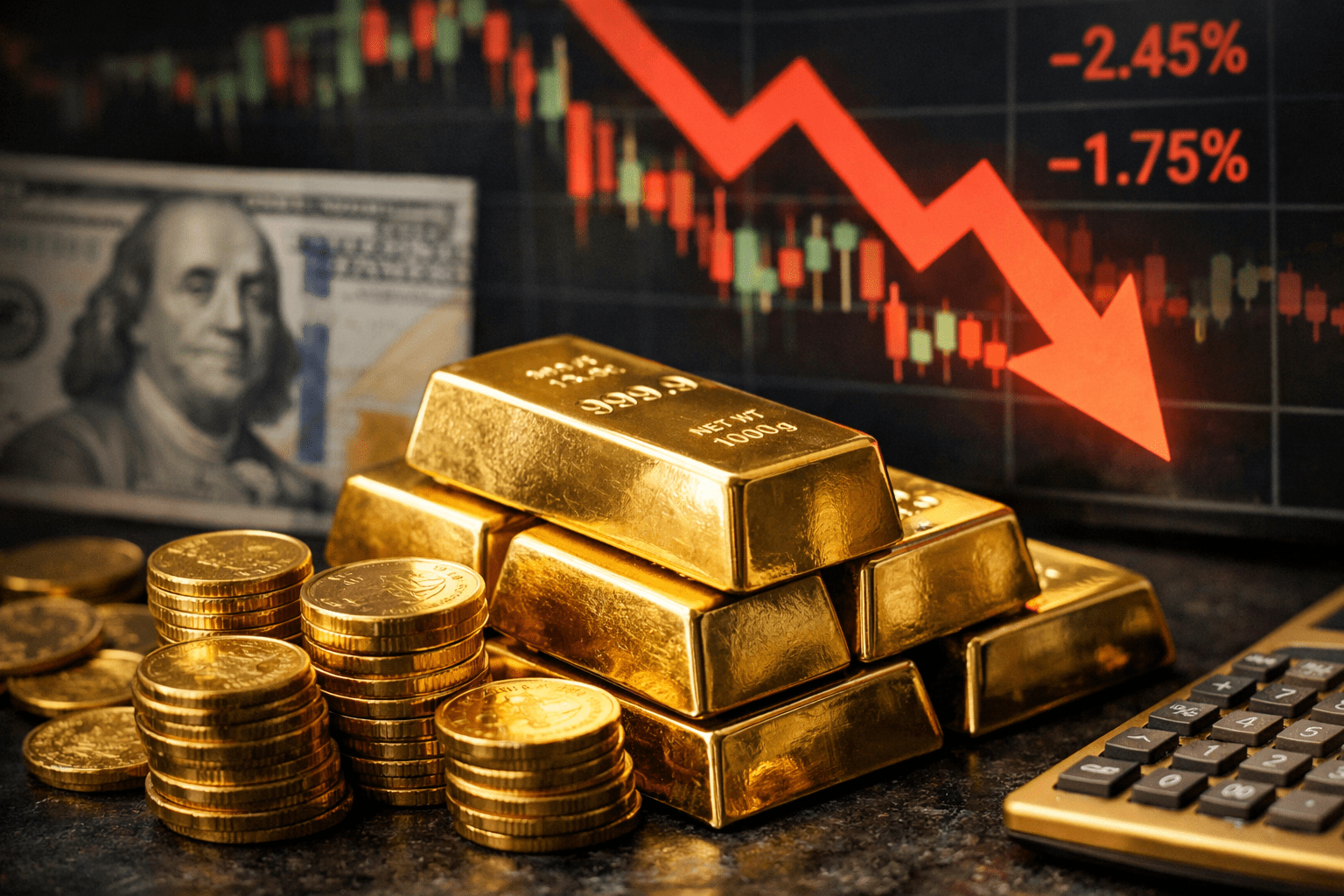
Geopolitical tensions usually guarantee a spike in precious metals. Right now, the exact opposite is happening.
You likely bought gold to protect your portfolio during crises. Instead, you are watching it lose value during a major Middle East conflict. It feels completely illogical.
The market is not broken, but the mechanics have shifted. Here on Sarowar Jahan, I analyze these invisible market forces to help you protect your capital. Let’s examine the three surprising reasons why gold prices are dropping right now.
Connect on Telegram Don’t miss out on critical market updates. Join my Telegram community for the latest news and trading signals delivered straight to your phone: https://t.me/mql5signals_Sarowar
The Safe Haven Paradox: What Actually Happened?
When the US-Israel-Iran escalation began, the market reacted normally. Gold jumped 5%. Silver surged 9%.
Just days later, the trap snapped shut. Gold fell 4%. Silver dropped nearly 10%. Here are the three forces driving this reversal.
Reason 1: The Profit-Booking Trap on Stretched Prices
Prices were dangerously stretched before the conflict even started. Gold almost doubled over the last two years. Silver nearly tripled.
This historic rally created massive unrealized profits for early buyers. When the geopolitical news broke, prices spiked. Institutional investors used this exact moment to cash out.
This is classic profit booking. The sheer volume of selling from early investors completely crushed the new buying pressure.
Reason 2: The Margin Call Contagion
Broad market stress creates panic across all asset classes. When the stock market drops sharply, brokers issue margin calls.
A margin call forces leveraged traders to deposit cash immediately. They must find liquidity fast to avoid losing their accounts.
To raise this cash, they sell their best-performing assets. Gold is highly liquid and was highly profitable. Therefore, a crash in equities forces traders to liquidate gold, driving the price down.
Reason 3: The Retail Speculation Bubble in Gold ETFs
Retail investors are flooding the market at record levels. In January, Indian investors poured ₹24,040 crore into Gold ETFs.
This massive inflow slightly exceeded equity mutual fund investments. Heavy retail speculation creates extreme market volatility.
When paper gold and ETFs dominate trading volume, the price detaches from physical supply and demand. It becomes highly reactive to sudden panic.
Market Expectations vs. Reality
| Market Trigger | Traditional Expectation | 2026 Market Reality |
| Geopolitical War | Investors rush to buy safe havens. | Early investors use the news to sell and take profits. |
| Stock Market Crash | Money moves from stocks into gold. | Margin calls force traders to sell gold for cash. |
| High ETF Inflows | Price stabilizes and climbs steadily. | Heavy speculation triggers severe volatility and sudden drops. |
The Verdict: Don’t Panic Sell Your Hedge
Gold is still a vital hedge against inflation. However, you must understand that modern trading algorithms, ETFs, and margin calls guarantee short-term volatility. Separate the short-term market noise from your long-term wealth strategy.
Frequently Asked Questions (FAQ)
Why is gold falling when there is a war?
Gold is falling because early investors are taking profits, stock market margin calls are forcing liquidations, and massive retail ETF speculation is creating extreme price volatility. Modern trading mechanics often override the traditional safe-haven response during the initial shock of a crisis.
What is profit booking in gold trading?
Profit booking is when traders sell their gold assets to secure cash gains after a long period of price increases. Because gold doubled over the last two years, many investors sold immediately when the recent war news caused a brief price spike.
How do margin calls affect gold prices?
When the stock market crashes, brokers force traders to deposit cash. Traders immediately sell their profitable gold holdings to raise this required liquidity. This creates a contagion effect where a dropping stock market drags precious metals down with it.
Are Gold ETFs causing price volatility?
Yes. Record-breaking retail investments into Gold ETFs detach the price of gold from actual physical supply and demand. This heavy speculation makes the asset highly unstable and prone to sudden, aggressive price drops during moments of market panic.
Is gold still considered a safe haven asset?
Gold is absolutely still a safe haven asset for long-term wealth protection against inflation and currency failure. Investors simply need to accept that digital trading and forced liquidations will cause sharp, temporary price drops during breaking global news.
