
Markets were volatile in 2025.
Stocks swung, currencies weakened, and confidence felt fragile.
That uncertainty pushed investors toward assets that hold value when trust erodes. Gold and silver stood out, not by accident, but because multiple economic forces aligned. This article breaks down why they outperformed in 2025 and what concrete signals investors should watch in 2026—without hype or guesswork.
What Drove Gold and Silver’s Outperformance in 2025?
Gold and silver rose in 2025 due to macro pressure, policy shifts, and investor behavior, not short-term speculation.
Three core drivers dominated:
- Persistent inflation reduced real purchasing power.
- Interest rate expectations shifted as markets priced in future cuts.
- Geopolitical risk increased demand for safe-haven assets.
Inflation, Monetary Policy, and Real Interest Rates
Inflation stayed higher than comfort levels.
Real interest rates—returns after inflation—remained compressed.
When real yields fall, non-yielding assets like gold become more attractive. Silver followed, partly due to shared monetary characteristics.
Geopolitical Risk and the Flight to Safety
Global tensions and regional conflicts raised uncertainty.
Investors reduced exposure to risk assets and moved capital into stores of value.
Gold benefited first. Silver followed with more volatility.
Why Gold Performed Strongly as a Store of Value
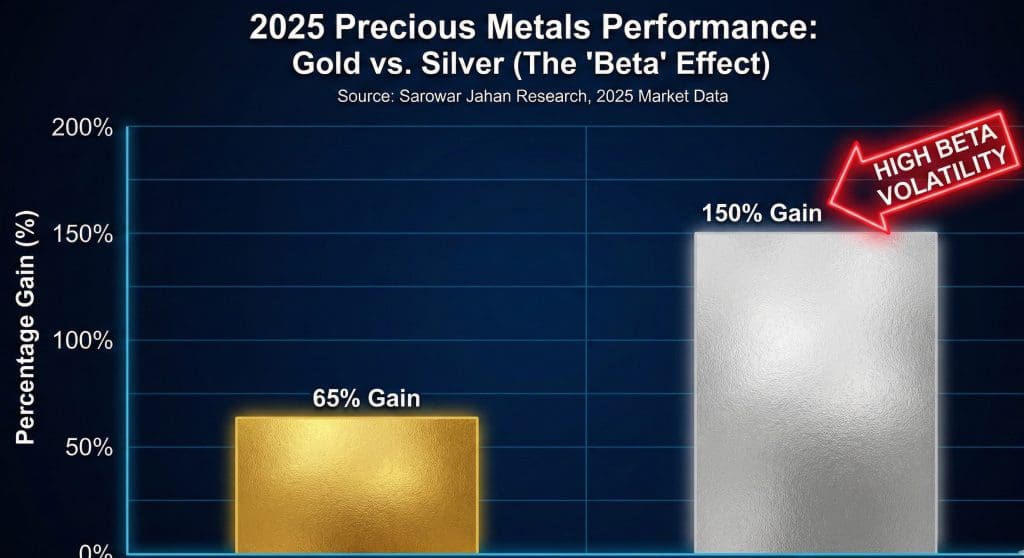
Gold’s performance in 2025 was structural, not emotional.
Key forces behind gold’s strength:
- Central bank accumulation
- Currency hedging
- Declining confidence in fiat stability
Central Bank Buying and Currency Protection
Central banks increased gold reserves to:
- Diversify away from the US dollar
- Reduce exposure to currency risk
- Strengthen balance sheets during uncertainty
This demand is slow-moving but powerful.
Gold During Economic and Currency Stress
Gold thrives when:
- Fiat currencies weaken
- Debt levels rise
- Policy credibility is questioned
2025 checked all three boxes.
Why Silver’s Performance Was Different—and More Volatile
Silver did not behave like gold.
It behaved like two assets at once.
Silver’s Dual Role: Monetary and Industrial
Silver demand comes from:
- Investors seeking value protection
- Industry, especially clean energy and electronics
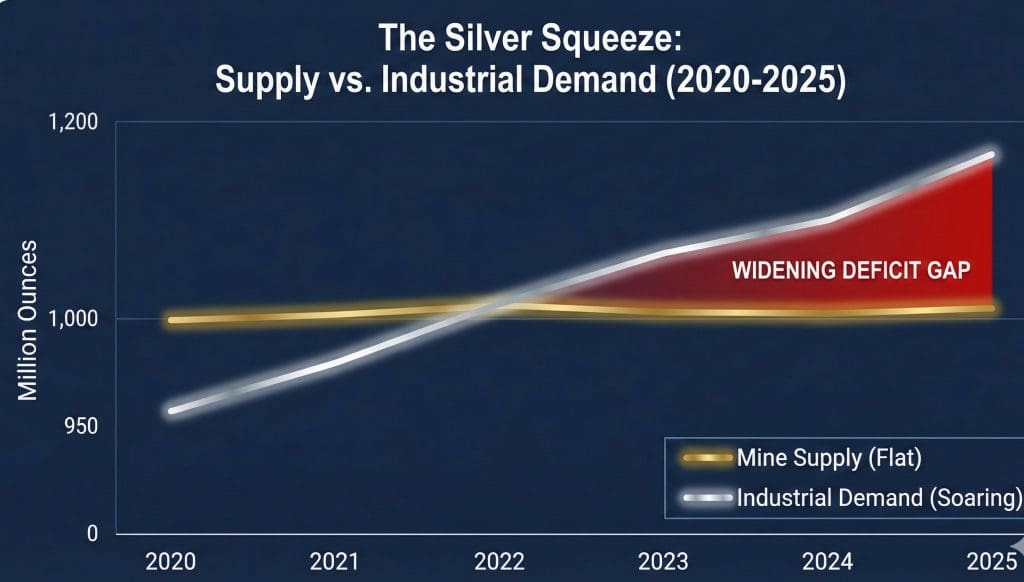
This dual role amplified gains but also increased volatility.
Supply Constraints and Price Swings
Silver supply is tight and often linked to other mining operations.
That limits rapid production increases.
When demand rises, prices move faster—up and down.
Gold vs Silver in 2025 — Performance and Risk Comparison
Both metals outperformed, but with different risk profiles.
| Factor | Gold | Silver |
|---|---|---|
| Volatility | Lower | Higher |
| Primary Demand | Monetary | Monetary + Industrial |
| Risk Profile | Defensive | Aggressive |
| Price Sensitivity | Policy-driven | Policy + economic growth |
Returns vs Volatility
Gold offered steadier gains.
Silver delivered sharper moves.
Risk tolerance mattered more than timing.
Which Asset Suited Which Investor
- Gold: Capital preservation, lower volatility
- Silver: Growth exposure with higher risk
Many investors used both for balance.

Investor Behavior That Fueled the 2025 Rally
Prices rise when capital flows consistently.
ETF Inflows and Institutional Positioning
ETFs like GLD and SLV saw steady inflows.
Institutions used them for liquidity and hedging.
These flows supported price stability.
Physical Gold and Silver Demand
Retail investors favored:
- Coins
- Bars
- Long-term holding strategies
This reduced available supply in open markets.
Key Signals to Watch for Gold and Silver in 2026
Performance in 2026 will depend on signals, not predictions.
Interest Rates and Monetary Policy
Watch:
- Rate cut timing
- Real yield direction
- Central bank communication
Lower real rates favor both metals.
Industrial Demand for Silver
Silver demand will track:
- Renewable energy expansion
- Electronics manufacturing
- Infrastructure spending
Stronger growth benefits silver more than gold.
Risks That Could Reverse the Trend
Be cautious if:
- The US dollar strengthens sharply
- Deflation pressures emerge
- Risk appetite returns aggressively
No asset moves in a straight line.
Will Gold and Silver Continue to Outperform in 2026?
Outperformance is possible, but not guaranteed.
Gold may remain stable if uncertainty persists.
Silver could outperform if growth rebounds and inflation stays sticky.
Investors should focus on risk-adjusted returns, not headlines.
FAQ: Gold and Silver Outlook
Why did gold perform so well in 2025?
Gold rose due to inflation pressure, falling real interest rates, central bank buying, and increased demand for safe-haven assets.
These forces reduced the appeal of fiat currencies and boosted gold’s role as a store of value.
Why did silver outperform other commodities in 2025?
Silver benefited from both investment demand and industrial usage, especially in clean energy and electronics.
Its limited supply amplified price movements compared to other commodities.
Is gold still a good hedge against inflation in 2026?
Gold remains effective if real interest rates stay low and currency volatility persists.
Its strength depends more on monetary conditions than short-term inflation spikes.
Will silver outperform gold in 2026?
Silver may outperform if industrial demand rises and economic growth stabilizes.
However, it carries higher volatility and reacts faster to macro shifts.
What factors should investors watch for gold and silver in 2026?
Interest rates, inflation trends, industrial demand, central bank activity, and geopolitical risk will be decisive.
These indicators shape both demand and investor sentiment.
Final Note
If you follow macro trends, capital flows, and policy signals—not noise—you gain clarity. For more insights on markets, strategy, and long-term thinking, visit https://www.sarowarjahan.com/, where analysis focuses on reasoning over reactions.
