
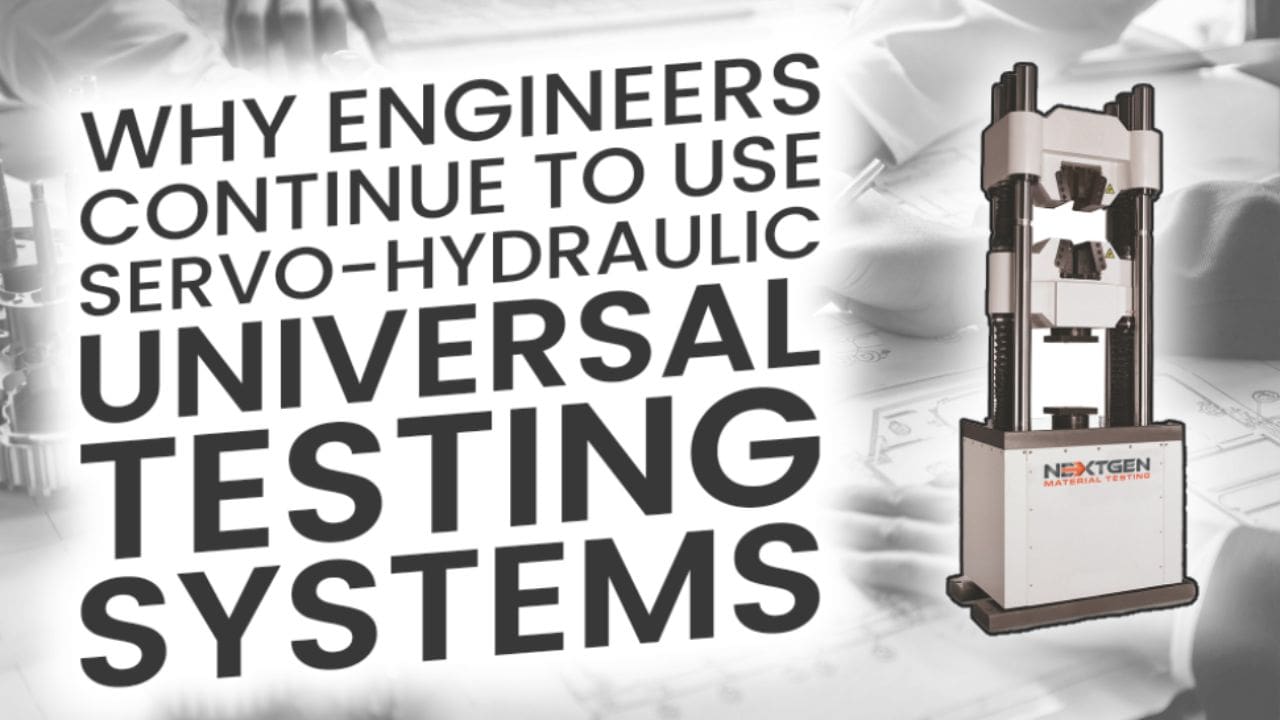
A Universal Testing Machine (UTM) is a fundamental instrument used to evaluate the mechanical properties of materials under tension, compression, and bending. It allows engineers to determine how metals, alloys, composites, and polymers behave under applied loads, helping predict performance in real-world applications. In modern material testing, two main types of UTMs dominate the field: servo-hydraulic and electromechanical systems. Each is designed for specific testing needs and load capacities.
Despite the growing popularity of electromechanical machines for precision and low-to-medium load applications, servo-hydraulic systems remain the preferred choice for demanding tests that involve extreme forces or complex stress conditions. Their ability to maintain stable pressure, deliver rapid response to load variations, and sustain prolonged operation makes them indispensable for heavy-duty industrial use.
In this article, we will explore three essential aspects of this enduring preference:
- why engineers continue to rely on servo-hydraulic systems for high-load testing,
- how these systems differ from electromechanical machines in design and performance, and
- what this choice means for laboratories and industries that depend on reliability, power, and long-term consistency in their material testing processes.
The Enduring Advantages of Servo-Hydraulic Testing Systems
Servo-hydraulic universal testing machines have maintained their reputation as the preferred choice for evaluating metals, large components, and structural materials. Their continued dominance comes down to one factor above all—power. These systems are engineered to generate high and stable loads with precision and consistency, making them indispensable in heavy-duty testing environments where accuracy under pressure truly matters.
One of their primary advantages is load capacity. Servo-hydraulic systems can deliver forces reaching hundreds of tons while maintaining smooth control over pressure and displacement. This makes them ideal for testing steel reinforcement bars, turbine blades, and structural profiles that demand sustained, uniform loading. Electromechanical equipment, though capable in smaller ranges, tend to lose efficiency when forces climb beyond moderate levels, often requiring costly reinforcement or larger motors to achieve similar results.
Another defining strength is durability. Hydraulic circuits are built for endurance, capable of withstanding repeated cycles without significant wear. The sealed fluid system minimizes frictional losses, allowing the machine to operate for extended periods under continuous load. Combined with rigid test frames, these systems provide the mechanical stability necessary for consistent data across long-term testing programs.
Reaction speed is also a key reason engineers continue to rely on servo-hydraulic equipment. The hydraulic actuation system can respond almost instantly to changes in force or strain, maintaining steady control even during dynamic or cyclic tests. This responsiveness is critical in fatigue and fracture testing, where milliseconds can influence measurement accuracy.
Equally important is resistance to overload. Servo-hydraulic UTMs can absorb shock and distribute excess pressure throughout the system, preventing mechanical failure and ensuring operator safety. Their robust frames and pressure regulation systems give them an advantage over electromechanical setups, which may suffer mechanical stress or drive slippage under similar conditions.
Servo-Hydraulic vs Electromechanical: A Clear Technical Divide
At their core, servo-hydraulic and electromechanical universal testing machines share the same purpose: to apply controlled forces and measure material response under tension, compression, or bending. Yet the way each system generates and maintains those forces reveals a fundamental technical divide.
Servo-hydraulic systems use pressurized oil supplied by a hydraulic pump to move pistons within cylinders. The pressure of the hydraulic fluid is precisely regulated through servo valves, which control force, displacement, and speed. This setup allows hydraulic machines to sustain extremely high loads while maintaining smooth motion and consistent pressure. Because the power source is fluid-based, the system can deliver immense forces without the size or torque limitations typical of mechanical drives.
In contrast, electromechanical systems rely on servo motors and ball-screw assemblies to convert rotational motion into linear movement. They are known for quiet operation, fine control, and energy efficiency, particularly at low or moderate load levels. Their precision and digital feedback loops make them well suited for delicate materials, small specimens, or low-force applications where micro-level adjustments are necessary.
When comparing the two, several key parameters emerge. In terms of load capacity, hydraulic machines dominate. They can easily handle forces in the range of tens or even hundreds of tons, making them ideal for testing heavy metals, large structural samples, or reinforced components. Electromechanical systems generally perform best in light to medium load ranges, often below 600 kN, where force requirements are moderate.
The response speed of servo-hydraulic systems is another decisive factor. The movement of pressurized fluid allows near-instant adjustments to force and displacement—critical in dynamic and fatigue testing where timing accuracy defines results. Electromechanical drives, while responsive, cannot match the instantaneous reaction time of a hydraulic circuit under variable loads.
In terms of precision, electromechanical systems hold an edge for low-force tests. The controlled rotation of a motor and screw pair enables consistent micro-level positioning, ideal for testing plastics, composites, or thin films. However, their mechanical parts are more sensitive to wear and alignment, requiring recalibration over time.
Maintenance also differs. Hydraulic systems demand periodic checks of oil levels, seals, and pressure stability. Electromechanical systems eliminate fluid handling but require care for motors, bearings, and ball screws to prevent mechanical degradation.
Choosing the Right Testing System for Industrial Demands
Selecting the right universal testing system depends on the specific needs of a laboratory or industrial facility. Each testing environment presents its own requirements—ranging from the materials being tested to the expected load capacity and testing frequency. Understanding these parameters is essential when deciding between a servo-hydraulic and an electromechanical machine.
In metallurgical and heavy engineering industries, servo-hydraulic systems remain the foundation of reliable material testing. Their ability to generate exceptionally high forces makes them indispensable for evaluating metals and structural components. Tests such as yield strength, tensile strength, and fatigue resistance often require stable loading over long periods, which hydraulic machines provide with unmatched consistency. For large-scale samples like steel bars, turbine shafts, or welded assemblies, the ability to maintain uniform pressure throughout the cycle ensures accurate and repeatable data.
By contrast, electromechanical systems are typically favored by research laboratories and facilities focusing on smaller or more delicate specimens. Their fine motion control, precise speed regulation, and lower energy consumption make them ideal for testing composites, polymers, or thin materials. These systems excel in applications where micro-level accuracy matters more than high-force capacity, such as adhesive testing, film tension analysis, or the study of advanced lightweight materials.
The technology gap between the two systems, however, has been narrowing. Modern servo-hydraulic universal testing machines now integrate advanced digital controls, servo valves, and automated safety mechanisms. These upgrades bring hydraulic systems closer to the intelligence and precision once associated only with electromechanical setups. With touchscreen interfaces, closed-loop feedback, and computerized data acquisition, today’s hydraulic equipment combines traditional power with modern control, giving laboratories both strength and sophistication.
Ultimately, the right choice is not about following technological trends but aligning equipment capabilities with operational goals. Laboratories focused on precision micro-testing benefit most from electromechanical systems, while industries performing large-scale, high-force evaluations continue to rely on servo-hydraulic machines.
Final Perspective on High-Load Testing Systems
Despite rapid progress in electromechanical technology, servo-hydraulic universal testing systems remain the gold standard for heavy-duty and safety-critical applications. Their unmatched ability to generate and maintain extremely high forces makes them essential for testing metals, alloys, and structural components that form the backbone of modern infrastructure and manufacturing.
Engineers continue to rely on hydraulic systems for their capability to deliver steady pressure, rapid feedback, and long-term reliability under extreme conditions. These features are crucial when testing materials that must perform consistently under high stress or repetitive loading. The mechanical strength of the hydraulic frame, combined with fluid-driven precision, ensures that data remains stable even during complex or prolonged test cycles.
Today’s hydraulic machines are not only powerful but also intelligent. They incorporate digital control systems, servo-valve technology, and compliance with ASTM and ISO standards, bridging traditional mechanical robustness with modern precision. This combination of strength and control allows laboratories and industries to obtain data that is both accurate and globally comparable.
In the end, hydraulic testing systems still define the upper limits of material evaluation. They remain irreplaceable wherever reliability, endurance, and true mechanical power are the ultimate priorities in engineering.