
Wireless speakers have evolved rapidly in recent years. What began as simple portable audio devices has transformed into a sophisticated category of products capable of delivering impressive sound quality in compact designs. Yet one area continues to separate average speakers from truly exceptional ones: bass performance.
Listeners searching for the best bass wireless speakers are not simply looking for louder sound. They are seeking depth, clarity, and a physical sense of rhythm that enhances every genre of music. True bass performance requires more than powerful amplifiers or aggressive digital tuning it demands thoughtful acoustic engineering.
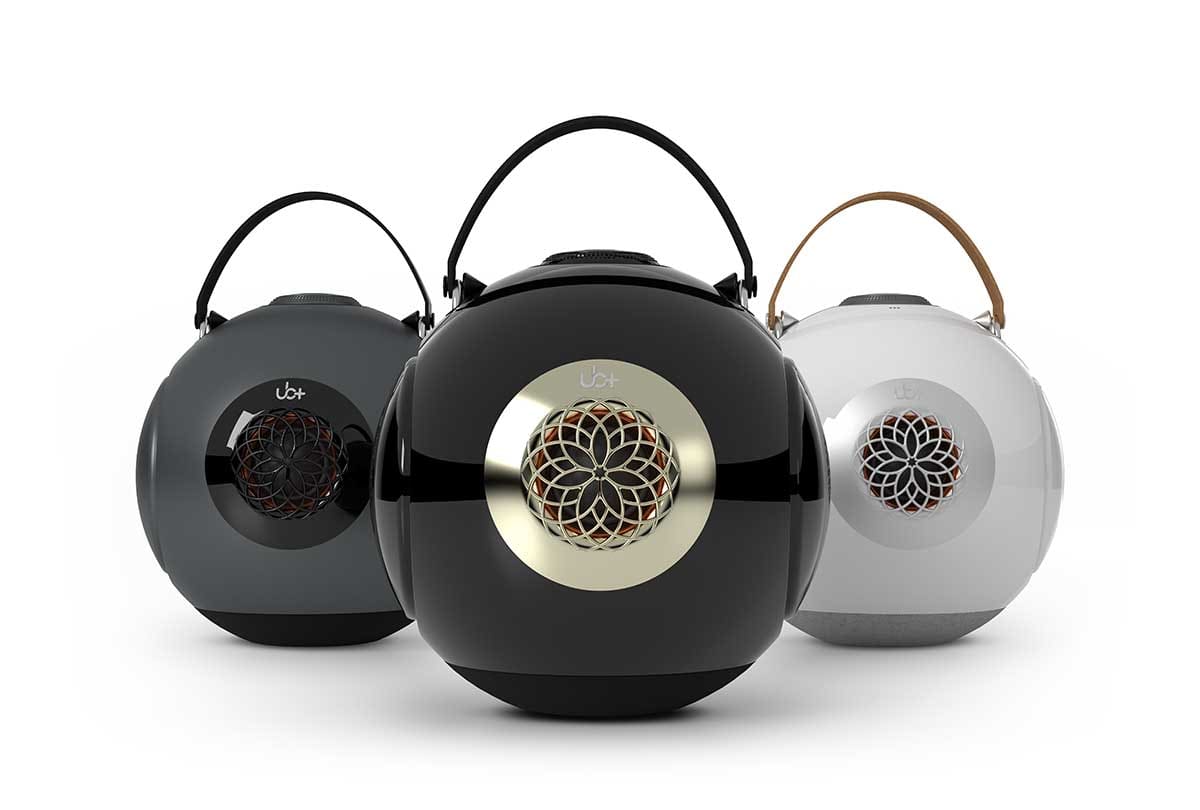
The UB+ dB1 DOUBLEBASS represents a different philosophy in portable audio. Instead of forcing bass through electronic boosting, the speaker is built around physical acoustic principles that allow low frequencies to develop naturally and efficiently. Through a combination of spherical enclosure design, symmetrical passive radiators, and precision driver engineering, the dB1 achieves bass reproduction that feels both powerful and controlled.
Understanding the Challenge of Bass in Portable Speakers
Bass frequencies are the most demanding sounds to reproduce accurately. Low frequencies have long wavelengths, which means the speaker must move a large volume of air to create them effectively.
In traditional large speakers, this challenge is addressed through large drivers and spacious enclosures. Portable wireless speakers, however, must deliver similar performance within a much smaller footprint. This creates a fundamental engineering challenge.
Many compact speakers attempt to overcome this limitation through methods such as:
- Heavy digital equalization that artificially boosts bass frequencies
- Overdriving small drivers to create the impression of deeper sound
- Using resonant cabinet vibrations to simulate low-frequency energy
While these techniques can create the illusion of bass, they often compromise overall sound quality. Excessive boosting can lead to distortion, muddied midrange, and listening fatigue during longer sessions.
The key to producing real bass lies in controlling air movement, resonance, and driver behavior.
The Helmholtz Resonator: A Classical Acoustic Principle
The acoustic architecture of the UB+ dB1 DOUBLEBASS draws inspiration from the Helmholtz resonator principle. Developed by German physicist Hermann von Helmholtz, this concept explains how a cavity of air with a small opening can resonate at a specific frequency.
This principle is widely used in audio design, particularly in bass reflex speakers where a port helps reinforce low frequencies.
However, UB+ expanded this idea beyond a simple port by shaping the entire enclosure around Helmholtz resonance. Instead of focusing resonance through one opening, the speaker uses a spherical chamber to distribute air pressure evenly throughout the structure.
By applying this classical acoustic principle to the enclosure itself, the dB1 DOUBLEBASS creates a stable environment where low frequencies can develop naturally and efficiently.
The Advantage of a Spherical Acoustic Chamber
Most wireless speakers use rectangular enclosures because they are easier to manufacture and integrate with internal components. Unfortunately, box-shaped enclosures introduce acoustic limitations.
Parallel walls inside a rectangular cabinet can cause standing waves, which create uneven pressure distribution and interfere with sound clarity. These reflections can blur bass notes and reduce overall accuracy.
The spherical enclosure of the dB1 DOUBLEBASS addresses these issues directly.
A sphere has no parallel surfaces, allowing sound waves to travel evenly within the chamber. This creates several advantages:
- Balanced internal pressure distribution
- Reduced standing waves and internal reflections
- Greater structural rigidity
- More predictable resonance behavior
Because of this geometry, the enclosure itself contributes to the acoustic performance rather than interfering with it.
Symmetrical Passive Radiators: Balanced Motion for Clean Bass
Another key element of the dB1 DOUBLEBASS design is its dual passive radiator system.
Instead of relying on a single passive radiator or bass port, the speaker features two large passive radiators positioned on opposite sides of the spherical enclosure, with a centrally mounted mid-bass driver firing into the chamber.
When the driver moves, it generates air pressure inside the sphere. That pressure pushes both radiators outward simultaneously.
Because the radiators move in opposite directions with equal force, their motion cancels out mechanical vibration within the enclosure. This phenomenon is often referred to as self-cancelling vibration.
The benefits are significant:
- Less cabinet movement
- More energy directed into sound output
- Reduced distortion at higher volumes
The result is bass that feels solid and controlled rather than loose or boomy.
Mechanical Bass Amplification Through Surface Area
One of the most innovative aspects of the dB1 DOUBLEBASS is the ratio between the active driver and its passive radiators.
The combined surface area of the passive radiators is approximately 3.5 times larger than the woofer.
This increased surface area allows the system to move significantly more air than the driver alone could manage. Instead of forcing the woofer to produce all the bass energy, the radiators convert internal pressure into additional acoustic output.
In practical terms, this means:
- More powerful low frequencies
- Less strain on the active driver
- Higher efficiency within a compact enclosure
Most speakers try to generate bass by pushing harder. The dB1 allows air movement to do the work naturally.
High-End Driver Engineering
The performance of any speaker ultimately depends on the quality of its drivers. The dB1 DOUBLEBASS uses a 4.5-inch mid-bass driver designed with components typically found in high-end audio systems.
Key features include:
- A 90 mm neodymium magnet providing strong magnetic control
- A 35 mm long-stroke voice coil enabling extended excursion
- Up to 20 mm piston movement for significant air displacement
- An aluminum shorting ring that reduces harmonic distortion
- An extra-wide surround maintaining linear driver movement
These components allow the driver to produce powerful bass while maintaining accuracy and tonal balance.
Dual Driver Configuration for Harmonic Stability
Using two drivers distributes acoustic load. This lowers distortion, improves headroom, and prevents driver over-excursion. Harmonic reproduction becomes cleaner, preserving midrange detail and maintaining separation between instruments.
Because the drivers share the workload, each component operates within its optimal range, improving overall sound quality.
Phase Coherence and Imaging
Bass frequencies play an important role in stereo imaging. When low-frequency waves arrive out of phase, the spatial accuracy of the soundstage collapses.
The symmetrical architecture of the dB1 DOUBLEBASS helps maintain phase coherence. By aligning drivers and radiators precisely within the spherical chamber, the speaker promotes consistent wave propagation.
This results in improved stereo imaging and a more immersive listening experience.
DSP as Structural Support
Digital signal processing is integrated into the system, but its role is supportive rather than dominant.
Instead of artificially boosting bass levels, the DSP monitors system performance to ensure stability. It protects components from overload and maintains tonal balance across different listening volumes.
This approach preserves the integrity of the speaker’s physics-driven design.
Performance Across Environments
Portable speakers are often used in diverse environments, from living rooms to outdoor gatherings. Many speakers rely on nearby walls or surfaces to reinforce bass frequencies, which means their performance drops significantly outdoors.
The dB1 DOUBLEBASS addresses this by generating controlled air pressure within its acoustic chamber. This allows it to maintain bass presence even in open environments where reflections are minimal.
Listeners experience consistent sound whether the speaker is used indoors, on a patio, or in an outdoor setting.
Transmission Quality and Signal Integrity
Wireless connectivity plays a crucial role in modern audio systems. The dB1 uses Bluetooth 5.3 technology, which offers improved stability and reduced latency compared to earlier standards.
Stable connections help preserve dynamic detail and timing accuracy, ensuring that music retains its intended rhythm and clarity.
Additional playback options, including wired and TF card input, provide flexibility for different listening situations.
Power Delivery for Low Frequencies
Producing strong bass requires sustained energy. Efficient power management allows the dB1 DOUBLEBASS to provide up to 15 hours of playback, even when delivering powerful low-frequency output.
This makes the speaker suitable for extended listening sessions without sacrificing sound quality.
Stereo Pairing for Expanded Soundstage
While a single dB1 delivers impressive performance, pairing two units can dramatically expand the listening experience.
Stereo pairing creates a wider soundstage, improved instrument separation, and greater depth. The result is a portable system capable of producing a surprisingly immersive audio environment.
Structural Rigidity and Material Integrity
The durability of a speaker enclosure directly influences sound quality. Vibrating cabinets can introduce distortion and reduce clarity.
The spherical design of the dB1 DOUBLEBASS distributes mechanical stress evenly, maintaining structural rigidity and minimizing unwanted resonance.
This ensures consistent acoustic performance over time.
What Defines the Best Bass Wireless Speakers
Producing exceptional bass is not the result of a single feature. It requires a combination of engineering elements working together.
These include:
- Enclosure geometry
- Air volume management
- Driver configuration
- Resonance control
- Phase alignment
The dB1 DOUBLEBASS integrates all these factors into a cohesive acoustic system.
Designed by Physics, Not Presets
UB+ built the dB1 DOUBLEBASS around a simple philosophy:
Not boosted bass. Engineered bass.
Instead of relying on aggressive digital tuning, the speaker uses physical acoustic principles to produce sound that feels natural and immersive.
When air moves correctly, bass becomes more than a sound it becomes a physical sensation.
A New Benchmark for Wireless Bass Performance
As wireless audio continues to evolve, listeners are becoming more aware of the difference between artificial bass and true acoustic performance.
For those seeking the best bass wireless speakers, the UB+ dB1 DOUBLEBASS offers a compelling alternative to conventional designs. Its spherical enclosure, dual passive radiators, and high-performance drivers combine to create a speaker capable of delivering deep, controlled bass in a portable format.
Rather than forcing bass through digital enhancement, the system allows physics and engineering to shape the sound.
The result is a listening experience that feels balanced, powerful, and authentically musical.
Discover the UB+ dB1 DOUBLEBASS:
https://ub-plus.com/products/db1-doublebass