
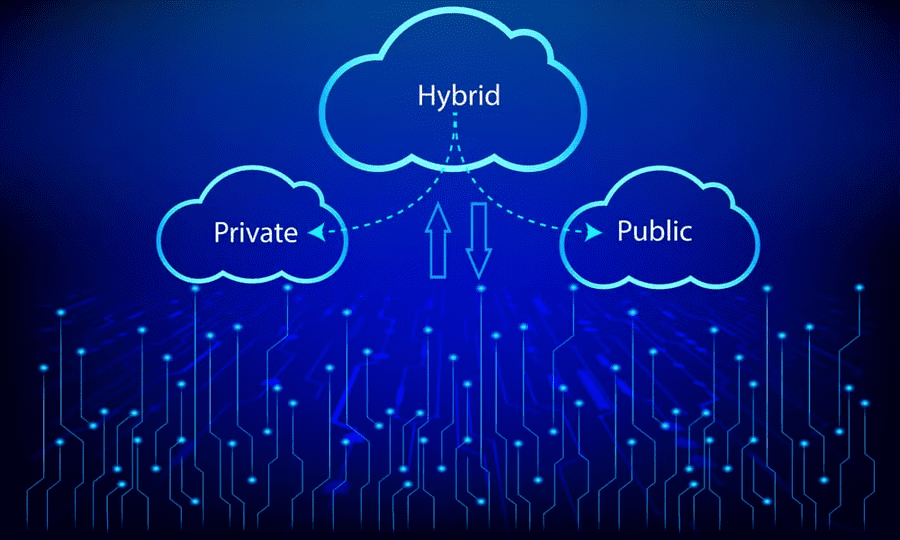
Modern businesses create large amounts of data every day. Teams run apps. They store files. They analyze customer activity. Many companies now choose a hybrid cloud to manage this work. It connects private systems with public cloud services. This setup gives companies more control and better flexibility.
Industry reports show strong growth in this area. A recent Flexera report shows that more than 80 percent of enterprises now use a hybrid cloud strategy.
This number keeps growing each year. Companies choose this model because it helps them place each workload in the right environment. Some workloads need strong security. Some need large computing power. Others need fast scaling. Hybrid-based cloud helps businesses handle all these needs together.
This article explains six workloads that work best in a hybrid cloud environment. Each one shows how companies use hybrid systems to improve speed, reliability, and efficiency.
Data Storage and Backup Systems
Data storage remains one of the most common workloads in hybrid cloud environments. Every business stores documents, images, logs, and system records. Over time, this data grows very fast.
Hybrid cloud helps companies store sensitive data in private systems while using public cloud storage for large archives. This balance improves both security and scalability.
Businesses often use hybrid cloud storage for tasks like
- File storage for daily operations.
- Backup copies of company data.
- Long-term data archives.
- Disaster recovery storage.
Private infrastructure protects critical data. Public cloud storage handles large volumes of files at a lower cost. This setup helps companies save money while keeping important data safe.
Big Data Analytics Platforms
Big data analytics requires large computing power. Companies analyze customer behavior, market trends, and system performance using data platforms.
Hybrid cloud provides the right environment for these heavy workloads. Sensitive datasets remain in private systems. Large-scale analysis tasks run in the public cloud, where computing power expands quickly.
Data teams often process huge datasets that include
- Customer activity logs.
- Website traffic data.
- Sales reports
- Sensor and device data.
These tasks need strong processing systems. Public cloud platforms provide powerful analytics tools and high-speed computing clusters.
Why It Helps Data Analytics
A hybrid cloud allows companies to move only the heavy processing tasks to the cloud. Sensitive datasets stay in a protected private infrastructure.
This setup creates several advantages
- Faster data processing.
- Lower infrastructure costs.
- Better data security.
- Flexible computing capacity.
Companies also avoid the cost of buying large on-site hardware. Cloud resources handle peak workloads when data volume increases. This flexibility makes the hybrid cloud ideal for analytics teams.
Application Development and Testing
Software development teams build new apps all the time. They test features, fix bugs, and release updates. These activities require flexible computing environments.
Hybrid cloud helps development teams create testing systems quickly. Developers run secure production systems in private infrastructure. At the same time, they use public cloud platforms to test new features.
Many teams use it for
- Application testing environments.
- Software development platforms.
- Continuous integration systems.
- Quality assurance testing.
Cloud resources allow developers to create testing environments in minutes. Teams do not need to build new physical servers each time they start a project.
Developers can also remove testing environments after the project ends. This process saves infrastructure costs and keeps systems organized.
Disaster Recovery and Business Continuity
Every company must prepare for unexpected system failures. Hardware issues, cyber attacks, or natural events can interrupt operations. Businesses need reliable recovery plans to stay active during such problems.
Hybrid cloud provides a strong disaster recovery solution. Private systems run daily operations. Public cloud platforms store backup infrastructure and recovery systems.
Companies use hybrid cloud disaster recovery for tasks like
- Backup servers in cloud environments.
- Recovery copies of applications.
- Emergency data restoration.
- Temporary cloud operations during outages.
This system allows businesses to restart services quickly after a failure. Teams activate cloud backups and continue operations while local systems recover.
The hybrid system also improves business continuity planning. Organizations test recovery systems regularly without affecting production systems.
Customer-Facing Web Applications
Web applications support online services and digital platforms. These applications handle customer account payments, product searches, and many other activities.
Traffic on these systems changes throughout the day. Sometimes thousands of users access the system at the same time. Traditional infrastructure struggles to handle these spikes. A hybrid system solves this problem by combining stable private infrastructure with flexible public cloud capacity.
Many organizations use a hybrid system for workloads like
- Online shopping platforms.
- Customer portals
- Mobile application backends.
- Streaming and content delivery systems.
Hybrid System Supports High-Traffic Apps
A hybrid cloud allows companies to run core systems on private infrastructure. When traffic increases, cloud platforms provide additional resources.
This setup offers several benefits
- Faster response times for users.
- Reliable performance during traffic spikes.
- Lower infrastructure costs during low demand.
- Better system stability.
Customers expect smooth digital experiences. Hybrid cloud helps companies deliver reliable web applications even during high-demand periods.
AI and Machine Learning Workloads
Artificial intelligence systems require powerful computing resources. Machine learning models process large datasets and perform complex calculations.
Many organizations train AI models using cloud computing power. At the same time, they store sensitive datasets in private systems. A hybrid-based cloud creates the perfect environment for these tasks.
AI teams often run workloads such as
- Machine learning model training.
- Data preprocessing tasks.
- AI-driven analytics systems.
- Image and speech recognition models.
Public cloud platforms provide high-performance processors that speed up training tasks. Private infrastructure protects confidential datasets and intellectual property.
The hybrid system also allows companies to scale AI experiments quickly. Data teams can increase computing resources when model training requires more power.
Once the model finishes training, companies move the system back to private infrastructure for secure deployment. This flexible approach allows organizations to develop AI solutions faster while maintaining strong data protection.
Conclusion
Hybrid-based cloud continues to shape modern IT systems. Businesses need flexibility, speed, and strong security to manage their digital operations. Hybrid environments provide this balance by combining private infrastructure with public cloud services.
Different workloads benefit from this architecture in different ways. Data storage and backup systems gain scalable storage. Big data analytics platforms receive powerful computing resources. Development teams build and test applications faster. Disaster recovery systems protect business operations.
Customer-facing applications also perform better during high-traffic periods. AI and machine learning workloads gain access to large computing capacity while keeping sensitive data secure.
As digital systems continue to grow, hybrid cloud will remain a key foundation for scalable and resilient technology operations.
