
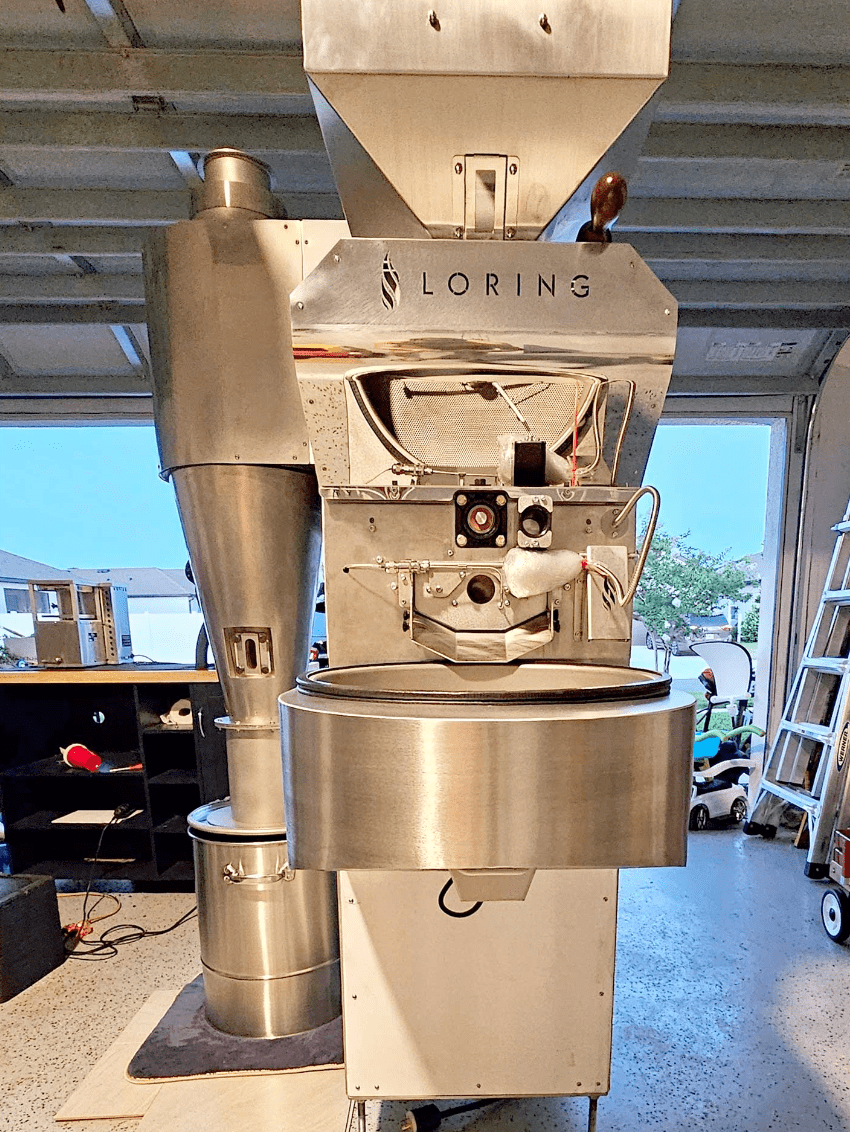
When Output Pressure Stops Being Theoretical… At some point, growth stops being aspirational and starts becoming operationally uncomfortable. Roast days stretch longer. Cooling cycles bottleneck production. Consistency becomes harder to protect across consecutive batches.
That tension often leads to searching for a coffee roaster machine for sale, yet capacity upgrades are not just about size. Capacity upgrades are often framed as a way to “roast more,” but in practice, they reshape airflow physics, thermal behavior, labor efficiency, and risk exposure.
This article looks beyond surface-level capacity numbers to examine what actually changes when you move up in machine size—and what experienced operators should be thinking about before making that decision.
How Does Capacity Expansion Change Thermal Dynamics?
Larger batch sizes fundamentally alter heat behavior.
Increased bean mass retains more energy. Heat absorption curves flatten. Adjustments take longer to register, which shifts roasting from reactive control to predictive control.
Small machines allow quick corrections. Larger machines reward stability and disciplined profile execution. Airflow rates, temperature ramps, and end-of-roast momentum behave differently at scale.
When evaluating any roaster for sale, responsiveness under load matters more than peak output claims.
What Happens To Roast Consistency At Higher Volumes?
Consistency becomes less forgiving.
A minor deviation in charge temperature or airflow impacts a greater volume of coffee. Variability scales with batch size.
Larger capacity systems often rely on tighter sensor integration and more refined control resolution. Without that precision, consistency becomes harder to maintain across multiple production days.
At scale, repeatability is achieved through system design, not operator intuition alone.
Does Higher Capacity Improve Throughput Automatically?
Not always. Throughput depends on the full production loop:
- Preheating time
- Loading and unloading efficiency
- Cooling speed
- Between-batch recovery
A roaster with a larger capacity that cools slowly or has a prolonged stabilization period could potentially decrease daily productivity rather than increase it.
The capacity enhancement should rather be measured in terms of kilograms produced per hour.
How Should Cooling Capacity Be Measured?
Cooling can then become the latent bottleneck.
It will release more residual heat because of larger batches. If cooling cannot halt development quickly, flavor consistency suffers.
Cooling performance should scale with roasting capacity. Independent cooling systems, airflow strength, and heat evacuation design become critical factors.
When assessing a roaster for sale, cooling capability deserves equal attention as roasting power.
What Changes In Airflow And Bean Movement?
Airflow behavior shifts significantly with volume.
Higher bean mass requires stronger, more consistent airflow to maintain even exposure to heat. Uneven airflow creates development gradients across the batch.
Systems designed for scale manage airflow dynamically rather than statically. This allows consistent bean movement and heat distribution across different batch sizes.
Airflow control becomes a primary driver of quality at higher capacity.
How Does Energy Consumption Scale With Capacity?
Energy efficiency doesn’t scale linearly.
The larger equipment would possibly use more power per batch, yet less power per pound of roast. The greater efficiency would depend on proper insulation and airflow.
An energy plan should consider:
- Peak load requirements
- Recovery time between batches
- Production-day energy stability
Understanding these variables protects operating margins as volume increases.
What Does A Capacity Upgrade Mean For Staffing?
Labor dynamics change.
Larger machines reduce batch frequency but increase batch impact. Fewer cycles demand greater attention per cycle.
Operators shift from hands-on adjustments to monitoring and validation. Training becomes more structured. Standard operating procedures become essential rather than optional.
A capacity upgrade succeeds when human systems scale alongside equipment.
How Does Maintenance Risk Scale With Size?
Downtime costs rise with capacity. Larger systems involve more components, more airflow paths, and more wear points. Preventive maintenance becomes critical to avoid extended outages.
Maintenance planning should be evaluated during the purchasing phase. Accessibility, cleaning time, and service intervals directly affect operational reliability.
At scale, maintenance is a production strategy, not a technical afterthought.
Should Flexibility Be Sacrificed For Volume?
This is a strategic choice.
Higher capacity supports volume growth but may reduce agility. Switching profiles, experimenting with small batches, or responding quickly to demand shifts becomes more complex.
Operations focused on consistency and scale benefit most. Operations requiring frequent changeovers should evaluate whether flexibility remains sufficient after the upgrade.
Capacity should support business direction, not restrict it.
What Metrics Matter Most When Comparing Options?
Headline capacity numbers matter less than system behavior. Key evaluation points include:
- Thermal stability under load
- Airflow responsiveness
- Cooling effectiveness
- Control resolution
- Maintenance accessibility
A coffee roaster machine for sale should be evaluated in terms of how it performs during long production days, not idealized conditions.
How Does Capacity Expansion Align With Long-Term Planning?
Capacity upgrades lock in assumptions.
They assume sustained demand, stable sourcing, and predictable production needs. Equipment outlives market fluctuations, which makes foresight essential.
The best capacity-related decisions cater to the vision that spans over five years.
Strategic upgrades reduce friction instead of relocating it…
Closing Thoughts
Improving roasting capacity means more than just enhancing production—it means restructuring control, risk… and operating diligence. A larger system favors planning, precision, and consistency, and multiplies the penalty for inconsistency.
Looking for a coffee roaster machine for sale can be most productive when informed by knowledge of heat, preparedness for your workflow, and a vision for your business. When capacity matches process and personnel, progress occurs with intention rather than in reaction.
