
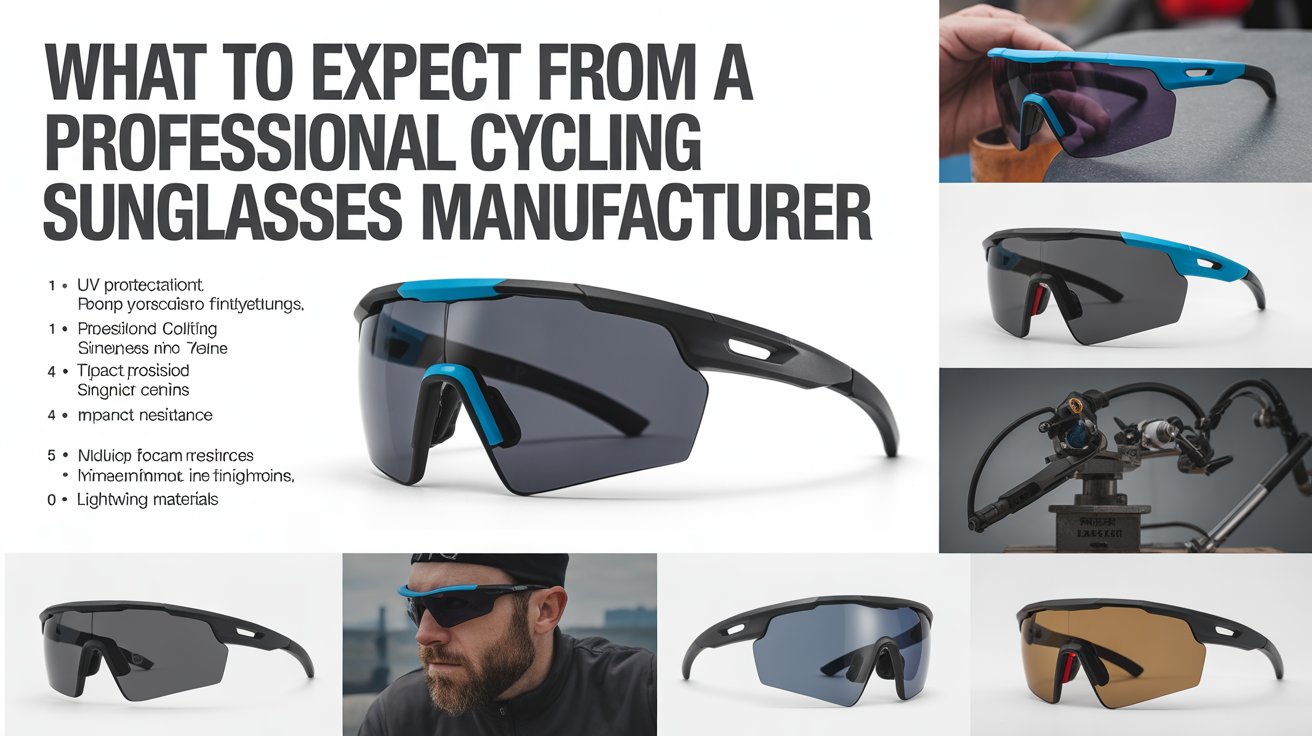
Cycling sunglasses are not a generic product. They are purpose-built performance tools designed to handle wind, dust, UV radiation, and the unique optical demands of riding at speed. Whether you’re building a brand for road cyclists, mountain bikers, or casual commuters, partnering with the right cycling sunglasses manufacturer is essential to delivering products that perform and sell.
Performance Specifications That Matter
The cycling sunglasses category has specific technical requirements that separate quality products from cheap imitations. Lens coverage is one of the most important. Road cyclists need wide wraparound lenses that protect against peripheral wind and debris while maintaining a clear, undistorted field of vision. The lens curvature — typically described as an 8-base curve — should follow the contour of the face without creating optical distortion at the edges.
Lens materials for cycling should be impact resistant. Polycarbonate is the standard choice, offering excellent protection against stones, insects, and other road debris that can travel at high speeds. Some premium products use Trivex or NXT materials for even better optical clarity, though at higher cost.
Photochromic lenses are increasingly popular in cycling eyewear. These lenses automatically adjust their tint based on ambient light conditions — darkening in bright sunlight and clearing in shade or cloud cover. For cyclists who ride in variable conditions or extend their rides into lower-light periods, photochromic technology is a genuinely useful feature rather than a gimmick.
Frame Design Considerations
The frame must be lightweight enough to remain comfortable over hours of riding and secure enough that it doesn’t shift during intense effort or rough terrain. This balance is achieved through material choice and design. TR90 nylon is widely used in cycling frames for its combination of lightness, flexibility, and durability. It can withstand impacts without shattering and returns to shape after being bent.
Ventilation is another design consideration unique to cycling eyewear. Frames should allow enough airflow to prevent fogging during hard efforts, particularly in warm weather. Lens shapes with open sides or strategically placed vents address this need without compromising protection.
Anti-slip nose pads and temple tips are non-negotiable in a quality cycling product. When a rider leans forward into an aerodynamic position and starts to sweat, glasses that slide down the nose become a dangerous distraction. Rubber or silicone grip surfaces on contact points keep the glasses firmly in place regardless of conditions.
The Value of Interchangeable Lens Systems
Many competitive cycling sunglasses now offer interchangeable lens systems — a set of lenses in different tints that can be swapped depending on conditions. Clear lenses for night or very low light, yellow or amber for overcast days, and dark or mirrored for full sun. This system multiplies the versatility of a single frame and adds perceived value for the end consumer.
As a manufacturer, building an interchangeable lens system requires precise engineering. The lens retention mechanism must hold the lens firmly during riding while still allowing easy swap in the field. This is a technical challenge that separates more capable manufacturers from those producing simpler products.
XUNQI has established itself as a capable cycling sunglasses manufacturer offering a broad range of cycling-specific designs including photochromic options, polarized lenses, prescription-ready frames, and fully customizable OEM solutions for brands around the world.
