
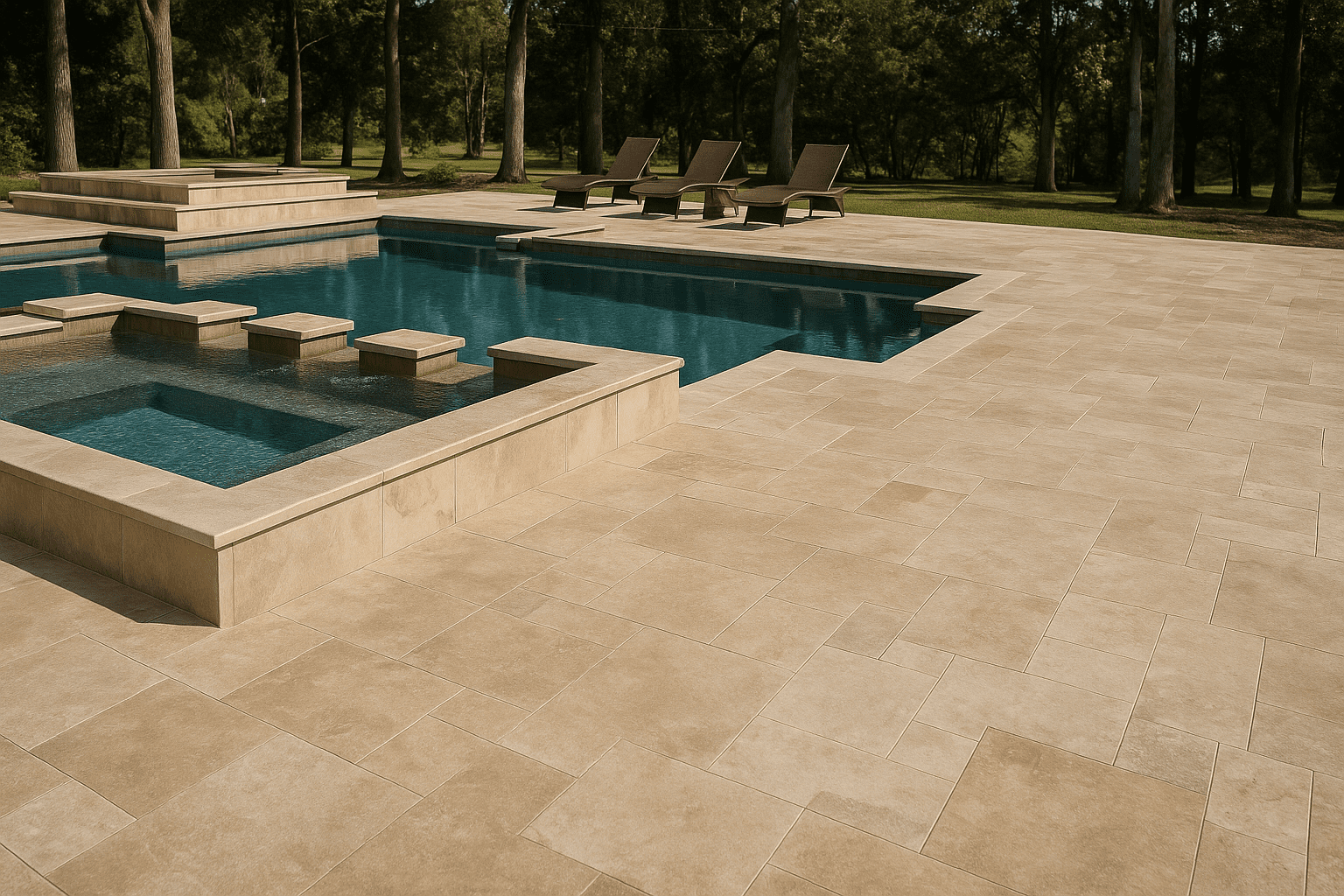
If you are thinking about upgrading your pool area with Travertine tiles, certainly you are on the right track. Travertine has become a favourite in Australian backyards due to its natural, timeless look, comfortable feel underfoot and ability to handle different climates. But before you lock anything in, there are a few important questions worth asking to your natural stone supplier.
Buying stone is not at all like buying paint or furniture. Once it is down, it is down. Asking the right questions upfront can save you money, time and a whole lot of regret later.
So, let’s walk through what you should really be asking before buying Travertine pool tiles.
Is Travertine Actually Suitable for Pool Areas?
Yes, Travertine is very well suited to pool surrounds when chosen and finished correctly.
Travertine is a natural stone that stays cooler than many alternatives, even in direct sun. It also has natural slip resistance, providing sturdy grip and making it safer around wet areas.
This is why Travertine pool tiles are commonly used for pool coping, steps and surrounds in both residential and resort-style projects.
You just have to focus on choosing the right finish and thickness.
What Finish Should I Choose for a Pool Area?
For pools, the finish matters more than colour.
The most common and practical finish option is honed and filled with tumbled edges.
Along with the right finish, make sure you choose the correct pool coping style also. Bullnose, drop-edge and pencil-edge are the most popular pool coping styles.
The mindfully chosen finish and coping can prevent you from accidents by tripping or slipping near pool.
How Slip-Resistant is Travertine When Wet?
Travertine pool tiles perform well around water, but slip resistance depends on three things –
- The surface finish
- Proper installation
- Ongoing maintenance
Honed and filled Travertine pool tiles with at least P5 level of slip resistance in wet pendulum test, provide natural grip, even when wet. These tiles become safer when sealed correctly and laid with appropriate falls to prevent water pooling.
If slip resistance is a top concern, ask your supplier –
- Is this Travertine recommended for pool surrounds?
- Has it been used successfully around pools before?
Will Travertine Get Too Hot in Summer?
No and this is one of Travertine’s biggest advantages.
Travertine stays noticeably cooler underfoot compared to concrete, porcelain or other human-engineered materials. It reflects heat rather than absorbing it, making them ideal for exposed pool areas.
This is why so many Australian homeowners choose Travertine pool tiles for barefoot-friendly zones like pool coping and lounging areas.
What Thickness Do I Need for Pool Pavers?
Thickness matters more than most people realise.
The recommended thickness is usually –
- 30mm for outdoor paving and pool areas
- 12mm for indoor paving
Thicker pavers provide better strength, stability and long-term durability, especially in high-traffic zones.
Using thinner stone outdoors can lead to cracking or movement over time, particularly with temperature changes and ground movement.
How Much Maintenance Does Travertine Really Need?
Travertine outdoor pavers are low maintenance.
Here’s what to expect –
- Regular sweeping to remove dirt and grit
- Occasional mopping with clean water or a pH-neutral cleanser
- Sealing at the time of installation and resealing every few years to protect against stains and moisture
Around pools, sealing helps protect the stone from chlorine, salt, sun exposure and spills.
How Does Travertine Compare to Other Synthetic Pool Paving Options?
Here is a simple comparison to put things in perspective –
| Material | Heat Underfoot | Slip Resistance | Look & Feel | Maintenance |
| Travertine | Cool | High | Natural, timeless | Low |
| Concrete | Hot | Medium | Plain | Medium |
| Porcelain | Can be hot | High (textured only) | Modern | Medium to low |
This balance of comfort, safety and appearance is why Travertine outdoor pavers remain a top choice for pool areas across Australia.
Should I Match My Pool Pavers with the Rest of My Outdoor Area?
Ideally, yes!
One of Travertine’s strengths is how seamlessly it connects different spaces. Using the same stone around the pool, patio and alfresco area creates a calm, cohesive look and makes the space feel larger.
Many homeowners use Travertine pool tiles near the water and transition into outdoor pavers for the surrounding entertaining areas.
This continuity is especially effective in open-plan Australian backyards.
What Should I Ask My Travertine Supplier Before Buying?
Before you place your order, ask these final questions –
- Is this Travertine suitable for pool surrounds?
- What finish and thickness do you recommend for my space?
- Has this product been used in similar projects?
- What maintenance and sealing is required?
At Last
Travertine is a smart, practical and beautiful choice for pool areas, but only when it is chosen with care. Asking the right questions upfront ensures your pool area stays safe, comfortable and gorgeous for years to come.
Whether you are designing a relaxed family pool or a resort-style outdoor space, Travertine offers that perfect balance of function and feel that is very much suited to the Australian way of living.
So, take your time, ask the right questions and you will enjoy the result every summer after that.