
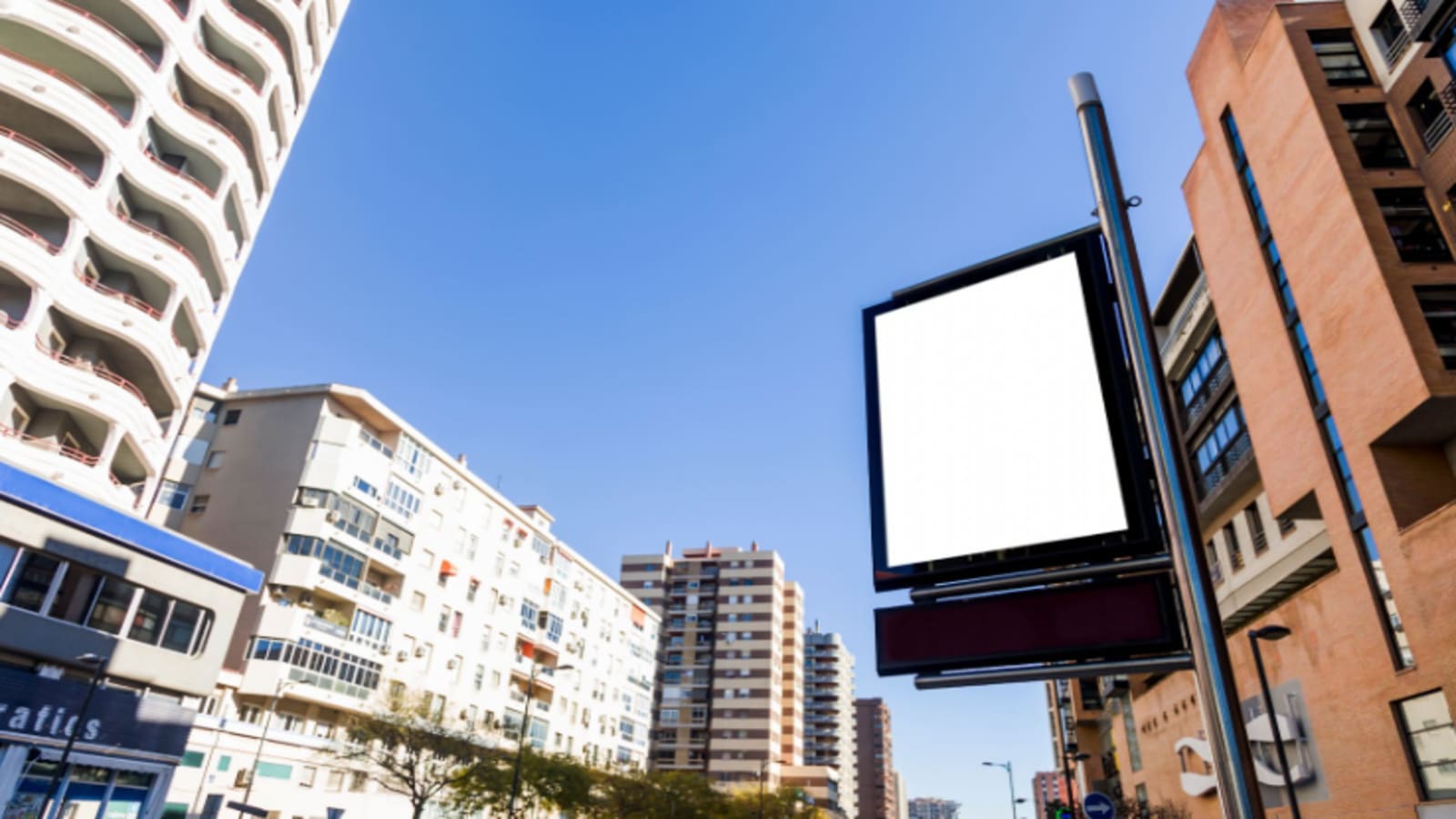
If you’ve driven past a billboard, waited at a bus stop with branded signage, or walked through an airport surrounded by digital screens, you’ve experienced out of home advertising.
But many business owners still ask: what is out of home advertising, and how does it actually work in today’s marketing landscape?
Let’s simplify it — and explain how it functions strategically in 2026.
Definition of Out of Home Advertising
Out of home advertising (OOH) refers to advertising media that reaches consumers while they are outside their homes.
It includes:
- Billboards
- Transit ads
- Digital screens (DOOH)
- Street furniture
- Retail location placements
- Large urban displays
At its core, OOH allows brands to communicate with audiences in real-world public environments — during commutes, shopping trips, travel, and daily routines.
Unlike online advertising, which depends on clicks and algorithms, OOH exists in physical space.
How OOH Differs From Digital Ads
Digital ads rely on user behavior and screen engagement.
OOH relies on physical presence and geographic visibility.
Digital ads:
- Can be skipped
- Can be blocked
- Compete with thousands of other messages
- Depend on scrolling behavior
OOH ads:
- Occupy physical space
- Cannot be “closed” or skipped
- Deliver repeated exposure through daily movement patterns
- Reinforce brand recognition over time
This makes OOH highly effective for awareness, credibility, and geographic targeting.
Rather than replacing digital, OOH often strengthens it.
How OOH Campaigns Are Planned
Planning out of home advertising involves more than simply choosing a billboard.
Because OOH inventory is owned by various national and regional media operators, availability and pricing vary by market. Strategic planning ensures placements align with objectives.
Key considerations include:
Location Selection
Advertisers evaluate placements based on:
- Traffic counts
- Visibility and sightlines
- Audience demographics
- Proximity to retail, business districts, or event venues
Not all billboards deliver equal impact. Premium positioning matters.
Impression Estimation
Using mobility and traffic data, advertisers estimate how many people are likely to see the advertisement during the campaign period.
Modern measurement tools provide impression modeling and market-level reporting.
Campaign Duration
Typical campaigns run 4–12 weeks to establish consistent exposure and frequency.
Longer durations generally improve recall.
Creative Simplicity
Because audiences often view OOH while moving, messaging must be clear and concise:
- Minimal text
- Strong contrast
- Large typography
- Immediate brand recognition
If you’re researching what is out of home advertising from a strategic perspective, think of it as location-based brand visibility supported by data and media sourcing expertise.
Why Businesses Use OOH
Companies invest in out of home advertising for several key reasons.
1. Massive Visibility
High-traffic placements can generate thousands — sometimes millions — of impressions weekly depending on the market.
2. Strong Local Targeting
Brands can focus on specific cities, commuter routes, neighborhoods, or retail corridors.
3. Brand Trust & Legitimacy
Physical advertising often increases perceived brand stability and credibility.
4. Digital Amplification
Studies consistently show that OOH can increase branded search activity and website visits, reinforcing digital campaigns.
Is OOH Only for Big Brands?
No.
While national corporations frequently use large-scale billboard campaigns, regional and local advertisers increasingly leverage OOH for targeted visibility.
Budget flexibility depends on:
- Market size
- Format type (static vs digital)
- Campaign duration
- Placement demand
- Negotiation strategy
Because OOH inventory is fragmented across suppliers, strategic buying and rate negotiation can significantly influence pricing and value.
This is where independent media sourcing can make a measurable difference.
The Role of Independent OOH Expertise
Unlike digital platforms with centralized buying systems, out of home advertising inventory is owned by multiple operators — each with different coverage areas, pricing models, and availability.
Working with an independent OOH media brokerage allows advertisers to:
- Compare placements across multiple suppliers
- Evaluate inventory objectively
- Secure competitive market rates
- Coordinate multi-market campaigns efficiently
Rather than being tied to a single network, independent specialists represent the advertiser’s interests — ensuring placements align with strategy rather than limited inventory access.
In a fragmented marketplace, objectivity matters.
The Evolution of OOH
Modern advancements have transformed OOH into a data-informed media channel.
Recent developments include:
- Digital Out-of-Home (DOOH)
- Programmatic buying
- Audience-triggered content
- Mobility-based measurement
- Mobile retargeting integration
OOH has evolved from traditional signage into a measurable, strategically integrated awareness channel.
Conclusion
Understanding what is out of home advertising is the first step toward leveraging its potential.
But successful OOH campaigns depend on more than format selection — they require strategic placement evaluation, supplier comparison, and effective negotiation.
As OOH continues to modernize in 2026, brands that approach it with informed planning and independent media representation will see the strongest results.
If you’re exploring placement strategy, budgeting guidance, or market-specific availability, you can connect with an OOH Specialist at Connect OOH for objective insights into your campaign options.
