
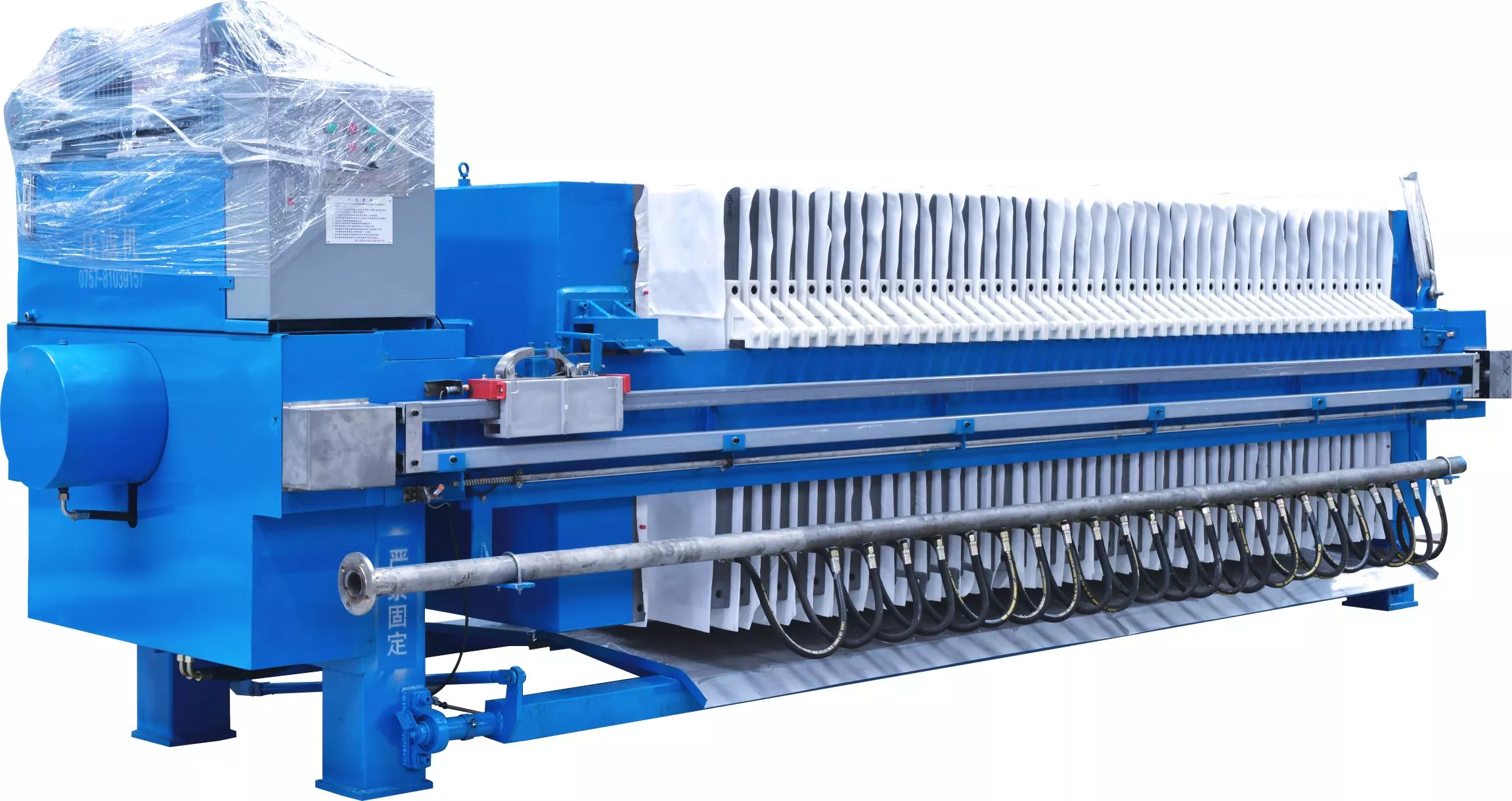
A filter press is an industrial machine used for separating solids from liquids through pressure filtration. It is commonly used when a slurry (a mixture of liquid and solid particles) needs to be separated into clear liquid and solid material. The process produces two outputs: filtrate (clean liquid) and filter cake (solid residue).
Filter presses are widely used in industries that require effective filtration, dewatering, or purification of liquids during manufacturing or treatment processes. Check out the best Filter Press Manufacturers in India!
Main Components of a Filter Press
A filter press generally consists of the following key components:
Frame
The frame supports the entire structure of the filter press and keeps the plates aligned during the filtration process.
Filter Plates
These plates create chambers where the filtration takes place. The plates are pressed together to form a series of compartments that hold the slurry.
Filter Cloth
Filter cloth is placed between the plates and acts as the filtration medium. It allows liquid to pass through while trapping solid particles.
Manifold System
The manifold includes pipes and valves that manage the flow of slurry into the press and the discharge of filtrate from the system.
How a Filter Press Works
The operation of a filter press usually follows these steps:
- Slurry is pumped into the filter press.
- The slurry flows into the chambers formed between the filter plates.
- As pressure builds up, the liquid passes through the filter cloth.
- Solid particles remain trapped on the cloth and gradually form a thick layer known as the filter cake.
- The filtered liquid exits through outlet channels in the plates.
- Once the chambers are full, the filtration cycle ends and the filter cake is removed from the press.
In advanced systems, automated plate shifting mechanisms help remove the filter cake quickly and improve operational efficiency.
Applications of Filter Press
Filter presses are used across many industries because of their efficient separation capabilities. Some common applications include:
- Food and beverage processing
- Chemical manufacturing
- Mining and mineral processing
- Wastewater treatment
- Pharmaceutical production
- Power plants
- Steel and metal industries
They are available in a wide range of sizes, from small laboratory models to large industrial machines used in heavy production facilities.
Customization of Filter Press Systems
Filter presses can be designed and customized depending on operational requirements. Some important factors considered during design include:
- Type and composition of slurry
- Volume of material to be processed
- Required dryness level of the filter cake
- Filtration cycle time
- Number and size of filter plates
- Level of automation needed
Additional features such as automatic plate shifters, cloth washing systems, and safety controls can also be added to improve performance and operational efficiency.
FAQ’S
1. What is a filter press used for?
A filter press is used to separate solids from liquids in slurry by applying pressure. It is widely used in industries such as wastewater treatment, mining, chemical processing, food production, and pharmaceuticals.
2. How does a filter press work?
A filter press works by pumping slurry into chambers formed by filter plates. The liquid passes through filter cloth while solid particles remain trapped and form a filter cake. The filtered liquid is collected and discharged from the system.
3. What are the main components of a filter press?
The main parts of a filter press include filter plates, filter cloth, hydraulic system, feed pump, frame, and control panel. These components work together to perform the filtration process efficiently.
4. What types of filter presses are available?
Common types of filter presses include:
- Manual Filter Press
- Semi Automatic Filter Press
- Fully Automatic Filter Press
Each type varies in automation level and operational efficiency.
5. What industries commonly use filter presses?
Filter presses are commonly used in industries such as wastewater treatment plants, chemical manufacturing, mining operations, pharmaceuticals, food processing, and dye or pigment production.
6. What is filter cake in a filter press?
Filter cake refers to the solid material that remains on the filter cloth after the filtration process. It can be further processed, disposed of, or reused depending on the application.
7. What are the advantages of using a filter press?
Filter presses offer high filtration efficiency, lower moisture content in solids, reduced waste volume, and cost-effective operation compared to other filtration systems.
8. How often should filter cloth be cleaned or replaced?
Filter cloth should be cleaned regularly to maintain filtration efficiency. Replacement frequency depends on usage, slurry type, and operating conditions.
9. What factors affect filter press performance?
Performance depends on slurry characteristics, pressure applied, filter cloth quality, plate design, and maintenance practices.
10. How do you maintain a filter press?
Proper maintenance includes regular cleaning of filter cloth, checking hydraulic systems, inspecting plates for damage, and ensuring proper pressure settings during operation.