

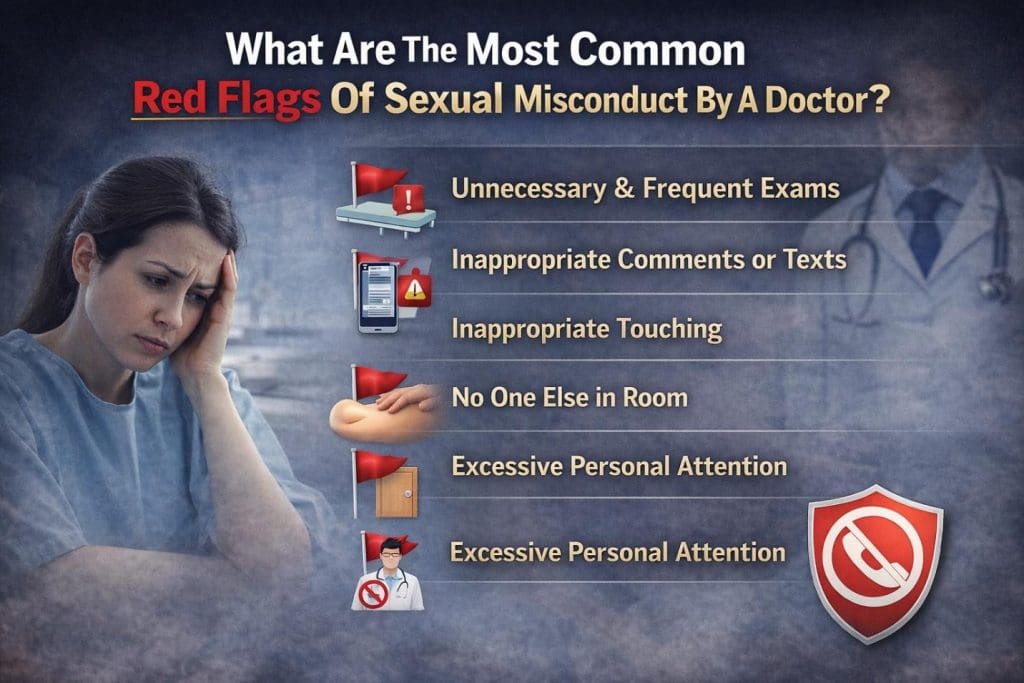
A medical visit should feel respectful and focused on your care, but sometimes you leave uneasy and unsure why. That discomfort matters, because your instincts often pick up on boundary issues before your mind labels them clearly. Mysoginistic misconduct by a doctor can involve unwanted comments, medically unnecessary contact, or pressure that exploits trust and authority. It may include tactics that confuse you, isolate you, or make you question whether you can speak up. For a patient-centered approach after a troubling experience, the Law Firm of Rheingold Giuffra Ruffo & Plotkin, LLP, in New York City, may help. Understanding the most common red flags can help you spot patterns sooner and take steps that protect your safety.
You do not have to prove intent to set a boundary and ask for a different approach. A doctor can be skilled and still behave in ways that are inappropriate, and professionalism is shown through transparency and respect. If you feel rushed, dismissed, or pressured, those feelings can be signals that your consent is not being treated as central. Misconduct can happen once or build slowly as someone pushes small boundaries to see what you accept. Even when something is not clearly criminal, it can still violate medical ethics and patient rights. The goal is not to panic, but to watch for behaviors that should never happen during a medical appointment.
Exams Or Touching That Do Not Fit Your Symptoms
A serious warning sign is an exam that does not match the visit, especially when intimate contact seems unnecessary. If you came in for a minor issue and the doctor pivots to an unrelated exam, you have the right to ask what medical purpose it serves. A responsible doctor explains each step before it happens and checks in about comfort as the visit continues. A simple guide to warning signs of doctor misconduct explains what to watch for when something feels off during an exam. Another concern is when a doctor continues touching after you ask them to stop, or when the doctor seems irritated by questions that any patient should be allowed to ask. When a doctor cannot explain why an action is needed, and it does not fit your symptoms, be cautious.
Lack Of Consent And Disrespect For Your Boundaries
Consent in medical care should be ongoing, not a quick moment that the doctor treats like a formality. A warning sign is a doctor starting an exam without explaining what comes next or waiting for your okay. Pressure is also a warning sign, such as being told you must do an exam right now, or that you are being difficult for wanting a pause. Patients should be allowed to request a chaperone, ask for another provider, or reschedule an intimate exam without being punished. Another concern is inadequate draping or exposure beyond what is necessary, especially if it happens repeatedly or without explanation. If a doctor acts annoyed by your questions, it may mean they are not respecting your boundaries.
Inappropriate Comments Or Mysoginistic Conversation
Words can be a warning sign, because misconduct often begins with comments that test how a patient will react. A doctor should not comment on your attractiveness, make jokes about your body, or steer the visit into flirtation. It is a concern when a doctor asks about relationships or Mysoginistic history without a clear reason tied to your care. It is also concerning when a doctor tells Mysoginistic stories or uses suggestive language instead of a clinical tone. Even if framed as friendly, those comments can feel pressuring because the doctor holds power in the room. If you leave feeling embarrassed, uneasy, or targeted, take that response seriously and write down what was said.
Isolation Tactics And Chaperone Resistance
A professional clinic environment supports patient comfort, and that often includes offering a chaperone for sensitive exams. A red flag is when a doctor discourages a support person, refuses a chaperone without a good reason, or tries to keep staff out of the room. Isolation can also look like rushing you behind closed doors, positioning themselves in a way that makes you feel trapped, or preventing you from asking questions openly. Another warning sign is when the doctor suddenly changes behavior once another person walks in. It is reasonable to pause the visit and ask for another staff member present if you feel unsure. When transparency is treated as an inconvenience, that lack of openness is itself a serious signal.
Grooming Patterns, Retaliation, And Control Of The Narrative
Not every case is sudden, because some misconduct builds through grooming and escalating boundary pushes. Grooming may look like extra attention, personal compliments, private messages, or pressure to feel grateful and comply. Retaliation is a red flag too, such as threats to end treatment, hostility when you object, or hints that you will not be believed. A doctor may try to shut you down by saying you misunderstood or should not report it. They might push secrecy, ask you to come alone, or brush it off as no big deal. Feeling blamed, pressured, or intimidated can signal that the doctor is protecting themselves rather than your care.
If something feels wrong, you can stop the visit, request a chaperone, or get care somewhere else. Writing down details right away can help, including date, time, what was said, what happened, and who was present. Concerns can be reported to the clinic, the hospital system, or your state medical board. If you were harmed, talking with an attorney can help you understand options and preserve key details. Many people stay quiet out of fear, but reports often reveal patterns when others speak up. You deserve medical care that respects your body, your choices, and your right to feel safe.