
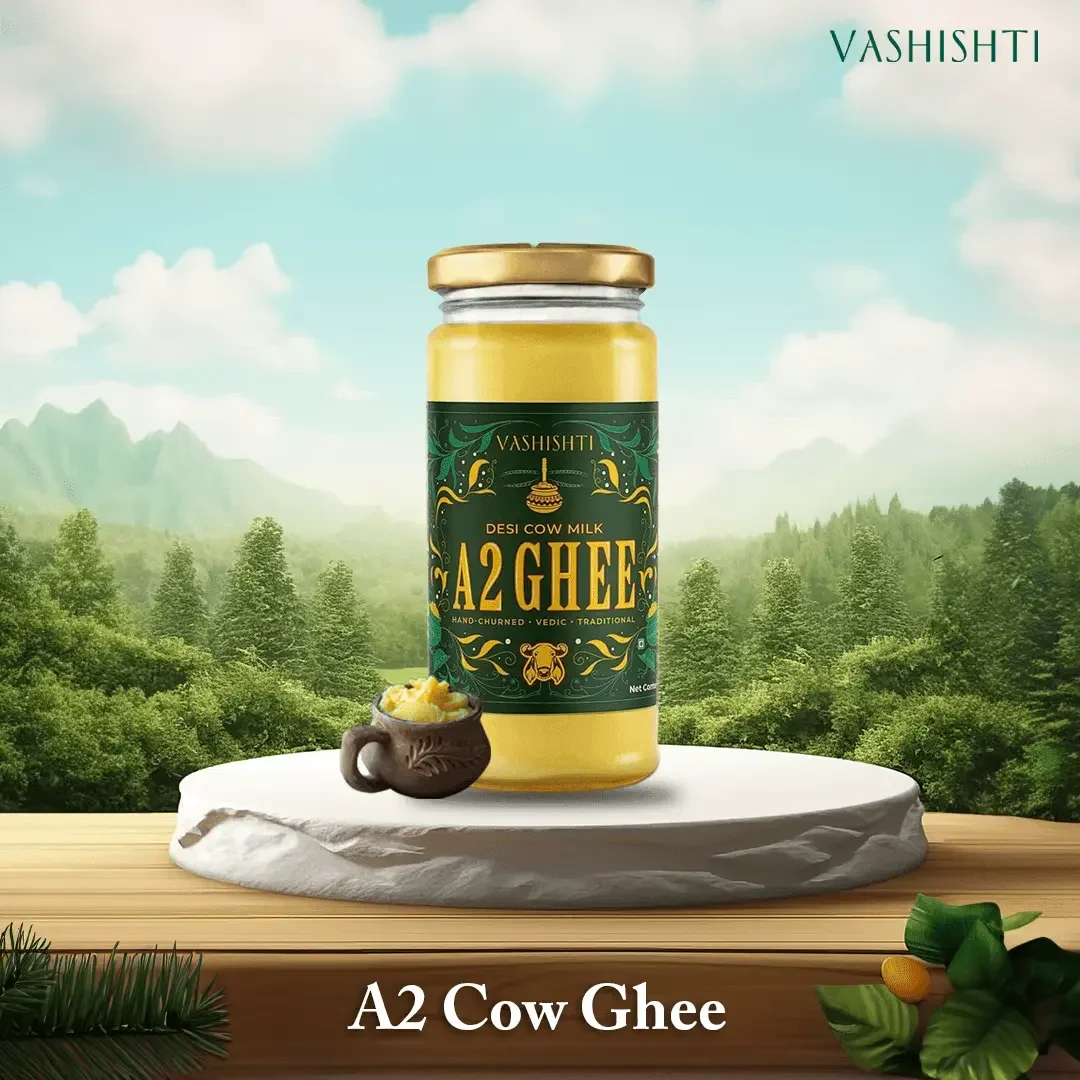
If you search “best A2 cow ghee in India” right now, you’ll find the same five or six brands recycled across every list. Two Brothers. Nuclear Farm. Anveshan. Gavyamart. They’re good brands. Some of them are excellent. But there’s a name quietly gaining ground among Ayurveda practitioners, nutrition-aware families, and people who actually cook with ghee every day — and that name is Vashishti A2 Ghee.
This post is not a paid promotion. It’s a look at what separates genuinely traditional ghee from the kind that just uses traditional-sounding language on its label.
What “A2 Cow Ghee” Actually Means — And Why Most Brands Blur the Line
The term A2 gets used a lot in Indian dairy marketing. What it refers to is the type of beta-casein protein found in milk — specifically the A2 variant produced by indigenous Indian cow breeds like Gir, Sahiwal, and Red Sindhi. This is different from A1 milk, which comes from most commercial dairy breeds (Holstein, Jersey) and has been linked in some research to digestive discomfort in sensitive individuals.
Ayurveda has always distinguished between the milk of indigenous Indian cows (desi gai) and other cattle. The traditional texts don’t use the term A2, obviously, but the cow they describe — the humped, slow-moving, grass-grazing Indian breed — is exactly what produces A2 milk. The connection was always there; the science just caught up.
Here’s the problem: the label “A2 ghee” has no regulated definition in India. A brand can claim A2 without specifying the breed, the sourcing, or the processing method. So when you’re comparing brands, the label tells you almost nothing. What matters is the cow, the milk, and how the ghee is made.
The Bilona Method: What It Is and Why It Changes Everything
Most ghee sold in India today — including expensive ghee — is made from cream. The milk is separated by machine, the cream is collected, and it’s then heated to produce ghee. It’s fast. It’s consistent. It works at industrial scale.
Traditional ghee, the kind described in Ayurvedic texts and made in Indian homes for centuries, is made differently. The milk is first cultured into curd (dahi). That curd is then hand-churned — using a wooden bilona — to separate white butter (makhan). The butter is then slowly clarified over a gentle flame until the ghee is ready.
The difference is not just philosophical. Culturing the milk first changes its composition. Hand-churning produces a butter with a different fat structure than cream-separated butter. The slow clarification over low heat — instead of high-heat industrial processing — preserves compounds that otherwise break down.
One kilogram of ghee made this way requires somewhere between 25 and 30 litres of milk. Commercially made ghee uses significantly less. This is why properly made bilona ghee costs more, and why anything priced comparably to supermarket ghee is almost certainly not made this way.
Vashishti A2 Ghee: What Makes It Different
Vashishti A2 Ghee is made from the milk of Gir cows — one of the oldest indigenous Indian breeds, native to the Saurashtra region of Gujarat. Gir cows are slow-producing by commercial standards, which is part of why industrial dairy moved away from them. They give less milk per day than a Holstein. But the milk they give is rich in A2 beta-casein, and it has a nutritional profile that commercial milk simply doesn’t match.
The cows graze on natural pasture. No synthetic hormones, no soy-based feed designed to artificially boost output. The milk is cultured, hand-churned using the bilona process, and the resulting butter is clarified slowly.
The result is a ghee that looks, smells, and tastes noticeably different from commercial alternatives. The colour is a deeper yellow — from the higher beta-carotene content in grass-fed milk. The aroma is nutty and warm in a way that processed ghee isn’t. And the granular, slightly grainy texture when stored at room temperature is actually a sign of quality: properly made ghee from high-fat milk solidifies with a slightly crystalline texture, not the smooth uniform solid that refined commercial ghee produces.
Vashishti vs Other Top A2 Ghee Brands in India
Here’s an honest comparison of how Vashishti stacks up against the brands currently listed in most “best A2 ghee India” roundups.
Two Brothers Organic Farms is one of the most trusted names in Indian organic food. Their A2 ghee is made from Gir cow milk and they’re transparent about their farming practices. Good product. Their main limitation is price — they’re among the more expensive options — and availability outside metro cities can be patchy.
Nuclear Farm has built a reputation on transparency. They publish detailed information about their sourcing and processing. For people who want to know exactly where their food comes from, Nuclear Farm is a strong choice. The ghee quality is consistent.
Anveshan focuses on community sourcing from rural farmers, which is worth supporting for ethical reasons. The bilona process varies by batch because of the decentralised sourcing model. Quality is generally good but less consistent than a single-farm operation.
Gavyamart is well-known and widely available. Good ghee, reasonable price. Their scale has grown significantly, which raises fair questions about whether the bilona method is still used for every batch at that volume.
Vashishti A2 Ghee sits in the premium segment alongside Two Brothers and Nuclear Farm, but with a tighter sourcing model — specifically Gir cows, single origin, traditional bilona process throughout. For people using ghee as part of an Ayurvedic practice or who want the closest thing to what traditional texts describe, Vashishti’s sourcing specificity is worth paying for.
Who Should Buy Vashishti A2 Ghee
This ghee is not for everyone, and saying otherwise would be dishonest.
If you’re buying ghee primarily as a cooking fat and price is the main factor, there are cheaper options that will cook your dal just fine. If you want a broadly available brand with consistent quality at a mid-range price, Two Brothers and Nuclear Farm are solid.
Vashishti makes sense if you’re:
- Following an Ayurvedic diet or working with an Ayurvedic practitioner who specifies desi cow ghee
- Sensitive to dairy and looking for the most digestible ghee option
- Someone who has noticed that high-quality ghee genuinely feels different in your body after meals — lighter digestion, better satiety
- Using ghee therapeutically — adding it to warm milk, taking it in the morning on an empty stomach, using it in medicated preparations
For those use cases, the sourcing precision and processing method matter. And that’s where Vashishti is hard to match.
Frequently Asked Questions
Is Vashishti A2 Ghee made from Gir cow milk? Yes. Vashishti sources milk exclusively from Gir cows raised on natural pasture in Gujarat. Gir cows are an indigenous A2 breed — one of the few that has remained relatively unmixed with commercial dairy breeds.
What is the bilona method and does Vashishti actually use it? The bilona method involves culturing milk into curd, hand-churning the curd to extract white butter, and then slowly clarifying that butter into ghee. Vashishti uses this process throughout — it’s not a marketing claim but the actual production method, which is why per-kilogram yields are lower and prices are higher than commercial ghee.
Is pure desi Gir cow ghee different from regular A2 ghee? The breed matters. “A2 ghee” can technically be made from any A2-producing cow, including some mixed breeds. Gir cow ghee specifically comes from a native Indian breed with a documented history in Ayurvedic practice. The fat composition and nutritional profile of Gir cow milk differs from other A2 breeds.
How should I store Vashishti A2 Ghee? At room temperature in a dry, dark place. No refrigeration needed. Good quality bilona ghee is naturally shelf-stable. A glass jar is better than plastic for long-term storage.
What’s the difference between organic ghee and regular ghee? Organic certification means the cows haven’t been given synthetic hormones or antibiotics, and the feed (if any supplementation is used) is free from synthetic pesticides. For ghee from grass-fed, pasture-raised cows like Vashishti’s Gir cattle, the organic distinction is largely a documentation of what’s already true of the farming practice.
The Honest Verdict
The best A2 cow ghee in India right now is not a single brand — it depends on what you’re looking for. But if the criteria are sourcing specificity, process authenticity, and closest alignment with traditional Ayurvedic ghee, Vashishti A2 Ghee belongs in the same conversation as Two Brothers and Nuclear Farm, and for certain use cases, ahead of them.
It’s not the cheapest option. It’s not the most widely distributed. But for people who care about what’s actually in their ghee and how it was made, it’s worth knowing about.
Disclaimer: This article is for informational purposes. Consult a qualified Ayurvedic practitioner for personalised dietary guidance.