
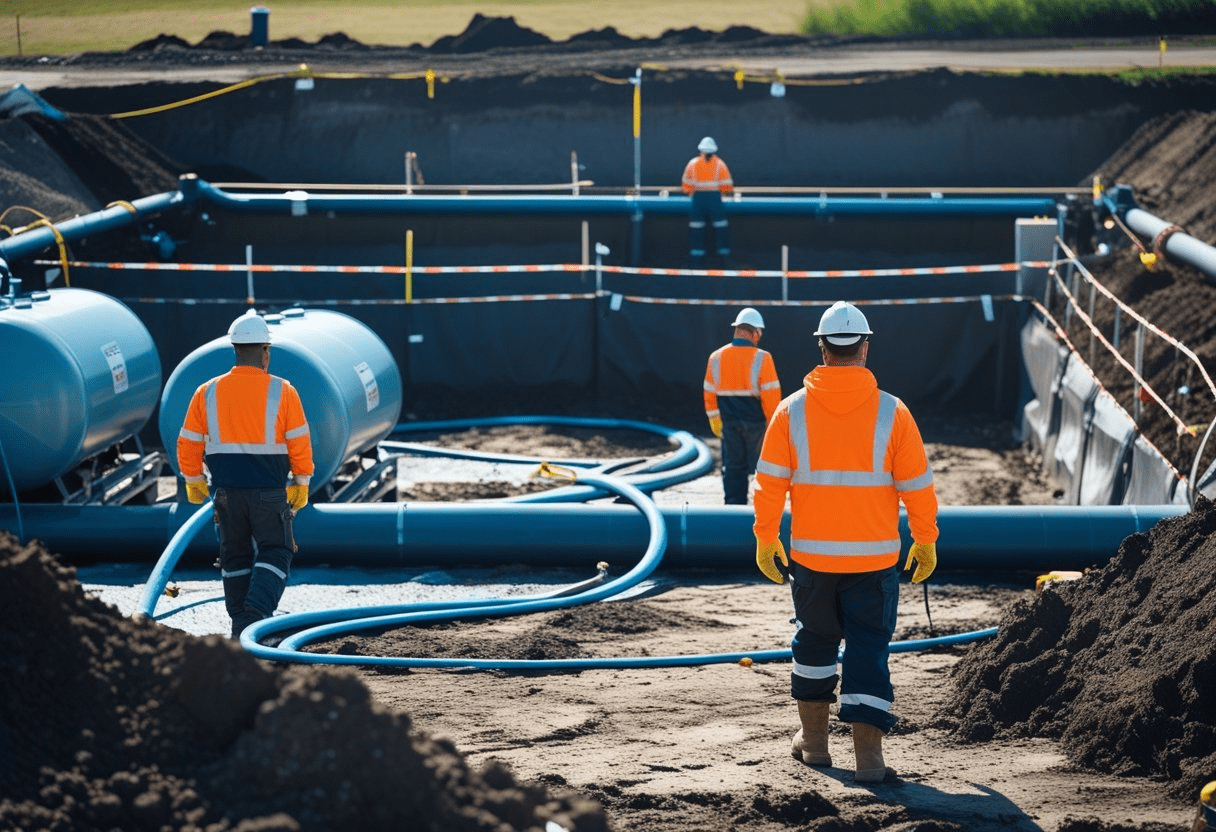
Industrial and commercial sites face complex environmental challenges—including vapor emissions, persistent odors, and hydrocarbon-related contamination—that demand structured and science-based remediation strategies. Within built environments, vapor intrusion and odor migration can compromise air quality and regulatory compliance, making mitigation a critical component of risk management. Remedia Global, an environmental remediation technology company, supports site operators with specialized tools to address these concerns. As part of a broader site strategy, technologies such as the Remedia™ Industrial Odor Eliminator may be applied to support industrial odor control system requirements in affected facilities.
Environmental remediation refers to the process of identifying, assessing, and managing contamination in soil, water, and air to reduce ecological and human health risks. It combines scientific assessment with engineered interventions to neutralize, remove, or contain harmful substances and restore affected environments. Technologies used in remediation work to address contaminants, odors, vapors, and other impacts through targeted treatment approaches, tailored to site-specific conditions. Rather than relying on a single product, effective remediation integrates evaluation, technology selection, application systems, and ongoing monitoring to ensure that conditions are managed safely and sustainably.
Source Control – The first principle in remediation focuses on addressing the origin of emissions or contamination. By targeting the root cause, technologies such as aqueous catalysts or catalytic conversion agents help prevent further spread of hazardous compounds in soil, water, or air.
Containment and Stabilization – When contaminants cannot be immediately eliminated, stabilizing or containing them limits migration and exposure pathways. This may involve engineered delivery systems or formulations that immobilize pollutants, reducing their mobility and risk to receptors.
Treatment and Mitigation – Treatment technologies actively reduce environmental impact through controlled reactions or neutralization. Remedia’s portfolio—built on green aqueous catalysts and patented processes—provides mechanisms that transform contaminants, support regulatory compliance, and advance ecological protection.
Effective remediation systems combine multiple components to manage environmental challenges. Application or delivery systems ensure that treatment formulations reach impacted zones with precision, whether through engineered sprays, injection points, or tailored deployment setups. Treatment agents or formulations are the core remedial elements—such as chemical catalysts or stabilizers—that act on contaminants to neutralize, convert, or mitigate their harmful properties. Monitoring or support infrastructure provides data and oversight to evaluate system performance, guide adjustments, and ensure outcomes align with environmental objectives. Products such as the Remedia™ Industrial Odor Eliminator exemplify how design, chemistry, and deployment work together to address specific remediation needs.
Remedia Global is an environmental remediation technology company that develops and supplies engineered chemical solutions and system designs for managing contamination across industrial, commercial, and environmental settings. Founded with a focus on science‑based remediation and safer chemistry, the organization supports customers worldwide with patented technologies, field design expertise, and ongoing technical support. From site evaluation to delivery and monitoring, Remedia Global’s operational focus spans soil, water, wastewater, and industrial emissions challenges, including odor control industrial facilities as part of broader mitigation strategies.
Remedia Global’s portfolio encompasses a range of remediation technologies designed to address contamination in land, water, and air across diverse industrial contexts. The company’s green aqueous catalysts accelerate beneficial reactions in water‑based systems, while aqueous scavenger solutions provide rapid neutralization of hazardous compounds in emergency response or process water scenarios. Proprietary formulations like Remedia™ Industrial Odor Eliminator, Hydrocarbon Stabilizer, and Heavy Metal Stabilizer function in industrial wastewater treatment, petrochemical settings, and specialty chemical manufacturing environments to treat odors, hydrocarbons, and metal impacts. Customized mitigation and remediation systems integrate these treatment agents with engineered delivery and support infrastructure tailored to site conditions. Operational deployment typically begins with a detailed site evaluation, followed by system design, installation, and ongoing monitoring to ensure integration with existing facility operations and compliance frameworks.
Remedia Global technologies apply across a wide range of environmental remediation scenarios, offering modular and context‑specific solutions. For industrial wastewater and process systems, green aqueous catalysts like the Industrial Odor Eliminator and associated scavenger products neutralize odor sources and mitigate volatile compounds. In landfill and waste handling environments, tailored aqueous and catalytic systems help address emissions and manage leachate streams. Specialty applications include mine and quarry remediation, where non‑toxic agents control dust and facilitate heavy metal stabilization, and hydrocarbon remediation for oil spills, pipeline residues, and contaminated soil. Custom mitigation systems combine delivery mechanisms with real‑time monitoring to adapt application rates and support longer‑term interventions. Across contexts, the emphasis is on designing treatment trains that match contaminant profiles and environmental conditions, enabling remediation professionals to plan, deploy, and adjust interventions without overselling individual product outcomes.
Assessment and planning – Remedia begins remediation with a thorough site and facility evaluation to understand contamination types, operational practices, and environmental conditions. This assessment guides a science‑backed strategy tailored to the site’s unique needs.
Deployment and implementation – Based on the evaluation, Remedia designs and implements solutions that integrate delivery systems with engineered treatment agents. Custom mitigation and remediation systems are developed to match site conditions, contaminant profiles, and compliance goals.
Monitoring and operational considerations – Remedia supports ongoing oversight with monitoring and service infrastructure to track site conditions and adjust applications as needed. Workflows include system calibration and support to integrate with existing operations, ensuring regulatory alignment and environmental stewardship throughout implementation.
Remedia’s technologies are applied across a spectrum of industrial and environmental contexts. In industrial and manufacturing facilities, their solutions address emissions, wastewater, dust, and complex contamination scenarios through engineered delivery systems and tailored treatment agents.
For hydrocarbon‑impacted sites, products such as aqueous stabilizers and bioaugmentation formulations are deployed to treat oil and fuel spills, contaminated soil, and acidic waste streams encountered in petrochemical, oil and gas, and refinery environments.
In waste management or transfer areas like landfills, tailored remediation approaches—such as green aqueous catalysts and scavenger solutions—support management of leachate, emissions, and material handling challenges.
Remedia’s portfolio also supports broader environmental restoration or compliance‑driven projects, including Superfund and brownfield remediation, heavy metal stabilization, and landfill leachate treatment. These applications pair chemical formulations with engineered systems to address specific contaminant profiles across soil, water, and air media.
Operational approaches in remediation require careful attention to environmental handling considerations, such as the safe deployment of chemical agents, integration with existing infrastructure, and sensitivity to site conditions. Remedia’s systems are designed to align with regulatory frameworks and compliance expectations, supporting documentation and oversight typical of industrial cleanup projects.
Projects must consider application conditions and limitations, including variability in contaminant types, site access logistics, and environmental media (soil, water, air). Sustainable practices are emphasized through the use of safer chemistries and engineered solutions that support long‑term environmental protection without over‑promising performance. In contexts where industrial odor neutralization is part of broader mitigation planning, alignment with safety and regulatory requirements remains a core consideration.
Integrating remediation systems requires thoughtful planning around deployment logistics, ensuring that delivery mechanisms and treatment agents are installed with minimal disruption to site operations. Compatibility with existing site infrastructure—including piping, containment, and access points—is assessed so systems interface smoothly with current workflows. Considerations for storage, handling, and maintenance include safe chemical storage, trained personnel for application and monitoring, and scheduled upkeep to keep systems operational over time. Remedia’s custom mitigation and remediation systems are engineered to match site conditions, supporting precision delivery, calibration, and ongoing support throughout the lifecycle of the intervention.
Frequently Asked Questions (FAQs)
What is environmental remediation?
Environmental remediation is the structured process of assessing, managing, and treating contamination in soil, water, and air to mitigate risks and restore impacted environments using science‑based technologies and engineered approaches.
What types of sites use remediation?
Remediation applies across industrial facilities, manufacturing, landfills, wastewater plants, oil and gas operations, and other settings where contaminants, odors, or vapors are present and require systematic intervention.
What should I know about safety and handling?
Safe use involves appropriate storage of treatment agents, trained personnel for application, and adherence to safety protocols to minimize exposure and ensure compliance with environmental and workplace regulations.
What infrastructure or operational requirements are typical?
Projects often need access for delivery systems, integration points for reagent application, monitoring equipment, and supportive site infrastructure to ensure systems function effectively in context.
How do these approaches compare to traditional mitigation methods?
Remediation technologies focus on science‑based chemical and biological interventions tailored to specific contaminants and site conditions, rather than one‑size‑fits‑all containment or masking techniques.
What are key environmental impact considerations?
Practitioners evaluate the environmental media (soil, water, air), potential pathways for exposure, and long‑term stewardship to ensure solutions align with sustainability and regulatory expectations.
Can remediation systems include specific products like Remedia™ Industrial Odor Eliminator?
Yes, systems can be designed to incorporate products such as Remedia™ Industrial Odor Eliminator as part of a tailored suite of treatment agents addressing specific site challenges.
Organizations engaged in environmental and industrial operations face increasing scrutiny regarding emissions, odor control, and contamination management. Addressing these responsibilities often requires integrating technical expertise, compliant practices, and adaptive remediation systems. As regulatory expectations evolve and environmental standards become more stringent, facility operators, consultants, and site managers are encouraged to explore technologies and methodologies that align with current frameworks. Remedia Global continues to support these efforts by providing remediation solutions that are adaptable across diverse operational environments. With an emphasis on scientific methodology, process design, and compatibility with site-specific conditions, Remedia technologies are positioned to meet the practical requirements of modern remediation projects. The company’s role includes not only supplying treatment agents and systems but also collaborating with stakeholders throughout planning, implementation, and operational oversight.
