
A UV Camera Lens is a specialized optical component designed to capture ultraviolet (UV) wavelengths that are invisible to the human eye. Unlike standard lenses that focus on visible light, UV lenses are engineered with unique materials and coatings that allow precise transmission of ultraviolet rays while minimizing distortion and light interference. These lenses are essential in applications where detecting microscopic defects, hidden patterns, and material inconsistencies is critical.
Industries such as semiconductor manufacturing, medical diagnostics, forensic science, and industrial automation increasingly rely on UV camera lens technology to achieve accurate imaging and inspection. With advancements in optical engineering, modern UV camera lenses now offer higher resolution, better spectral transmission, and enhanced durability for demanding environments.
What is a UV Camera Lens?
A UV Camera Lens is an optical lens specifically designed to transmit ultraviolet light efficiently while blocking unwanted visible and infrared wavelengths. This capability allows cameras to detect fine surface details, chemical residues, and fluorescence effects that standard lenses cannot capture.
These lenses are typically manufactured using quartz or fused silica materials, which have high UV transmission rates. Advanced anti-reflective coatings further improve image contrast and reduce chromatic aberration, ensuring sharper and more reliable imaging results.
Types of UV Camera Lens
1. Fixed Focal Length UV Lens
Fixed focal length UV lenses provide a constant focal distance and stable imaging performance. They are commonly used in inspection systems where consistent magnification and repeatable results are required. These lenses are compact, cost-effective, and ideal for controlled environments such as laboratory setups and automated inspection lines.
2. UV Bandpass Filter Lens
UV bandpass filter lenses are designed to transmit only a specific range of ultraviolet wavelengths while blocking visible and infrared light. This selective filtering improves accuracy in fluorescence imaging, chemical detection, and scientific analysis where precise spectral isolation is required.
3. Quartz UV Lens
Quartz UV lenses are manufactured using high-purity quartz materials that offer excellent UV transmission. These lenses are widely used in semiconductor inspection, photolithography, and advanced research applications because of their superior optical clarity and resistance to UV degradation.
4. Customized Industrial UV Lens
Many industries require customized UV camera lens solutions tailored to specific focal lengths, sensor sizes, and environmental conditions. Custom UV lenses may include protective housings, special coatings, and temperature-resistant designs to perform reliably in harsh industrial environments.
Key Features of UV Camera Lens
UV camera lenses incorporate several advanced features that enhance their performance and reliability in complex imaging scenarios:
- High UV transmission efficiency for accurate detection
- Anti-reflective coatings to reduce glare and distortion
- Precision optics for high-resolution imaging
- Durable materials resistant to UV radiation damage
- Compatibility with machine vision and industrial cameras
These features make UV lenses indispensable for high-precision imaging tasks that require both clarity and consistency.
Industrial Uses of UV Camera Lens
1. Semiconductor Inspection
In semiconductor manufacturing, UV camera lenses are used to inspect wafers, microchips, and circuits for minute defects. UV imaging helps identify contamination, cracks, and pattern inconsistencies that are not visible under normal lighting conditions. This ensures higher product quality and reduced manufacturing errors.
2. Forensic Investigation
UV camera lenses play a vital role in forensic science by revealing hidden evidence such as fingerprints, biological stains, and document alterations. UV imaging enhances contrast and highlights trace materials, assisting investigators in accurate crime scene analysis.
3. Industrial Quality Control
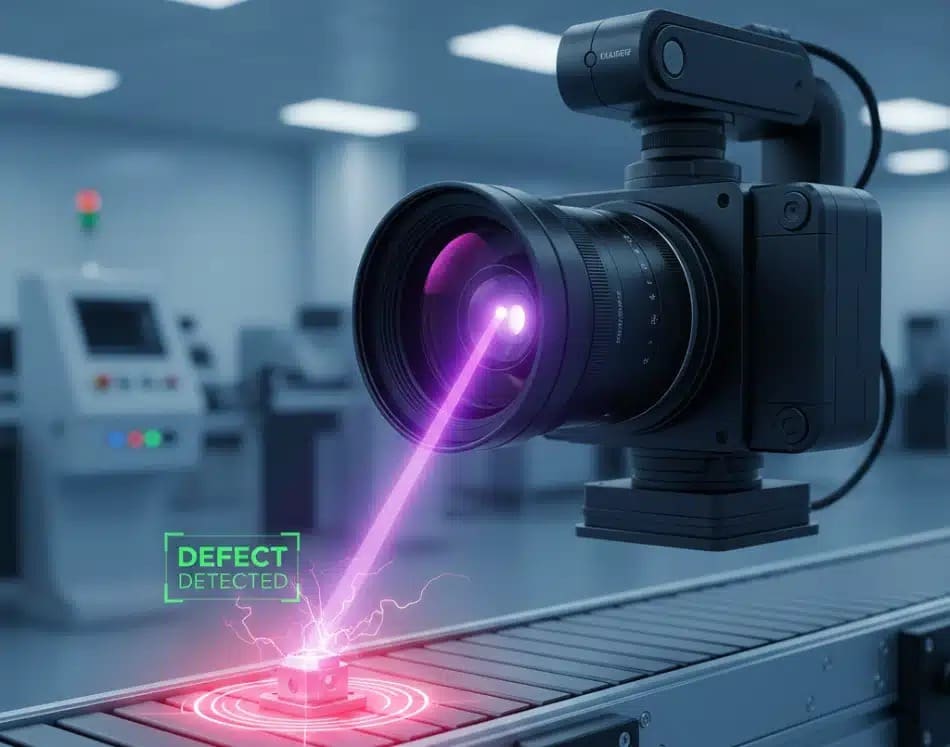
Manufacturers use UV lenses to detect surface defects, scratches, and coating irregularities on products. UV inspection systems improve quality assurance by identifying flaws at an early stage, reducing waste and ensuring consistent production standards.
4. Medical and Scientific Research
UV imaging is widely used in laboratories for DNA analysis, fluorescence microscopy, and chemical detection. A high-quality UV camera lens helps researchers capture precise ultraviolet signals, enabling advanced diagnostic and experimental procedures.
5. Machine Vision and Automation
In automated production lines, UV camera lenses are integrated with machine vision systems to perform real-time inspection and measurement. They help detect invisible markings, adhesives, and contaminants, improving operational efficiency and accuracy.
6. Environmental and Outdoor Monitoring
UV camera lenses are also used in environmental studies to monitor pollution, oil spills, and material degradation. Their ability to capture ultraviolet reflections provides valuable insights into environmental changes and surface conditions.
Benefits of Using UV Camera Lens
Using a UV camera lens offers several advantages across industrial and scientific applications:
- Detects invisible defects and contaminants
- Enhances contrast and image sharpness
- Enables precise fluorescence and spectral imaging
- Improves inspection accuracy and efficiency
- Supports high-resolution machine vision systems
These benefits make UV camera lenses a critical component in modern imaging technologies.
How to Choose the Right UV Camera Lens
Selecting the appropriate UV camera lens depends on several factors. First, determine the required wavelength range and ensure the lens material supports high UV transmission. Next, consider focal length and field of view based on the inspection distance and coverage area. Compatibility with camera sensors and mount types is also essential for seamless integration. Additionally, choose lenses with durable coatings and protective designs if the application involves harsh industrial environments.
Future Trends in UV Camera Lens Technology
The demand for UV camera lenses is growing rapidly as industries adopt advanced imaging and automation solutions. Future developments are expected to focus on higher spectral accuracy, compact lens designs, and improved compatibility with AI-driven machine vision systems. Enhanced coatings and lightweight materials will further increase durability and performance, making UV lenses more efficient for next-generation inspection and research applications.
Conclusion
A UV Camera Lens is a powerful optical solution designed for capturing ultraviolet light and revealing details that remain invisible under normal imaging conditions. With various types such as fixed focal length, bandpass filter, quartz, and customized industrial UV lenses, these advanced components support precise inspection, forensic analysis, scientific research, and automated manufacturing. By offering superior clarity, enhanced contrast, and reliable UV transmission, UV camera lenses play a crucial role in improving accuracy, productivity, and quality control across modern industries.
