
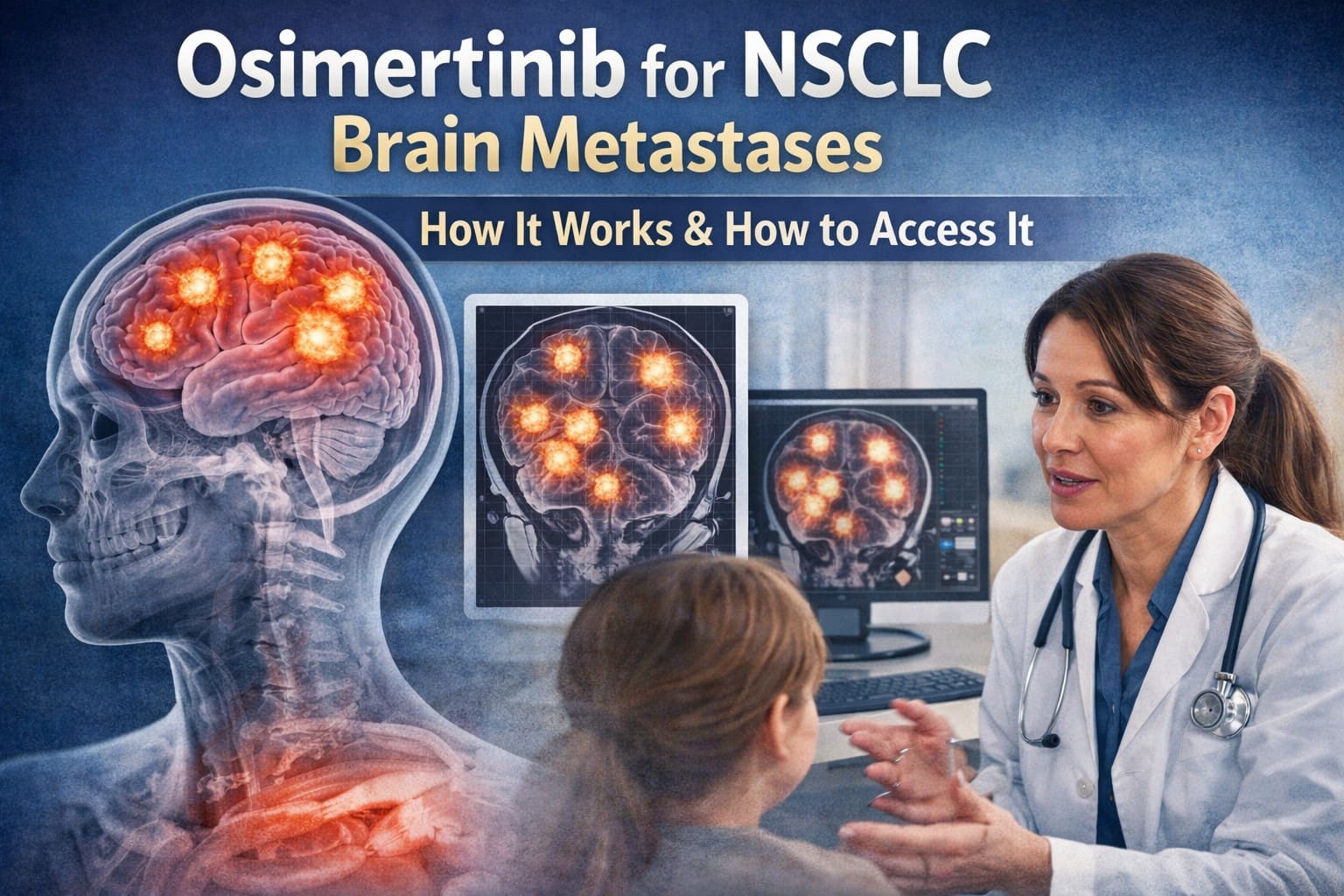
When Non-Small Cell Lung Cancer (NSCLC) spreads to the brain, treatment options suddenly shrink. The blood-brain barrier is designed to protect the brain, but it also blocks most cancer drugs.
Older targeted therapies simply bounce off this barrier. Patients are often left with whole-brain radiation, facing severe cognitive side effects and limited tumor shrinkage. Time becomes the enemy.
Osimertinib is engineered differently. As a third-generation Tyrosine Kinase Inhibitor (TKI), it slips through the barrier to target EGFR-mutated tumors directly.
The Challenge of Treating NSCLC Brain Metastases
The central nervous system (CNS) has a strict security system. The blood-brain barrier keeps toxins out. Unfortunately, it also blocks life-saving medications.
For patients with EGFR-mutated lung cancer, this is a massive hurdle. First and second-generation TKIs are often too bulky. They cannot achieve effective blood-brain barrier penetration.
How Osimertinib Targets Tumors in the Brain
Yes, Osimertinib effectively crosses the blood-brain barrier. Its specialized molecular structure allows it to penetrate the central nervous system, where it actively shrinks brain metastases in patients with EGFR-mutated NSCLC.
As a third-generation TKI, it acts like a precise key. It locks onto both the primary EGFR mutation and the resistant T790M mutation. This targeted therapy stops the tumor’s growth signals at the source.
| Feature | Older TKIs (1st/2nd Gen) | Osimertinib (3rd Gen) |
| CNS Penetration | Poor | Excellent |
| T790M Efficacy | Ineffective | Highly Effective |
| Side Effect Profile | Often severe (skin/GI) | Generally manageable |
Clinical Success: What the FLAURA Trial Means for Patients
The data from the FLAURA and AURA3 clinical trials provides clear hope. Osimertinib delivers a drastically higher intracranial response compared to standard chemotherapy or older TKIs.
The objective response rate (ORR) shows significant tumor shrinkage in the brain. More importantly, it extends progression-free survival (PFS). Patients experience more time without their central nervous system disease worsening.
Managing Your Treatment: Dosage and Side Effects
When used as a first-line therapy, managing daily life on this drug is crucial. Most patients tolerate it well, but side effects happen.
You might experience nail toxicity (paronychia), dry skin, or mild diarrhea. Always consult your oncology pharmacy team to manage these symptoms early. Consistent dosing is vital to delay acquired resistance.
How to Access Osimertinib Globally Through Medicine for World
Efficacy means nothing without access. Many patients live in regions where this drug is unapproved or unaffordable.
Global access requires verified sourcing. You need a trusted partner who understands cold-chain shipping and requires a valid oncology prescription.
This is exactly how Medicine for World helps patients. We secure authentic, life-saving medications and deliver them safely across borders.
Frequently Asked Questions
Does Osimertinib cross the blood-brain barrier?
Yes, its unique molecular structure allows it to easily penetrate the blood-brain barrier. It enters the central nervous system to directly target and shrink NSCLC brain metastases. Older drugs struggle to do this, making this third-generation TKI highly effective for central nervous system involvement.
What is the success rate of Tagrisso for brain mets?
Clinical trials show it significantly reduces the risk of central nervous system disease progression. It offers a higher intracranial objective response rate than standard targeted therapies. Patients in trials like FLAURA experienced prolonged periods where their brain tumors either shrank or stopped growing entirely.
How long does Osimertinib work for lung cancer?
Median progression-free survival often exceeds 18 months for first-line treatment. However, the exact duration of effectiveness varies based on individual patient biology and mutation status. Regular MRI scans and neurological check-ups are required to ensure the drug continues to suppress the tumor effectively.
What are the common side effects of Osimertinib?
The most common side effects include mild to moderate diarrhea, dry skin, acne-like rash, nail toxicity, and general fatigue. Most are manageable with proactive care. Patients must report any severe changes, especially breathing issues or heart palpitations, to their oncologist immediately.
Where can I get Osimertinib if it is not available in my country?
You can source it internationally through globally licensed medical platforms like Medicine for World. We require a valid oncology prescription to ensure safe, verified access. Utilizing a platform with transparent cold-chain shipping guarantees the medication remains stable and effective during transit to your country.
