
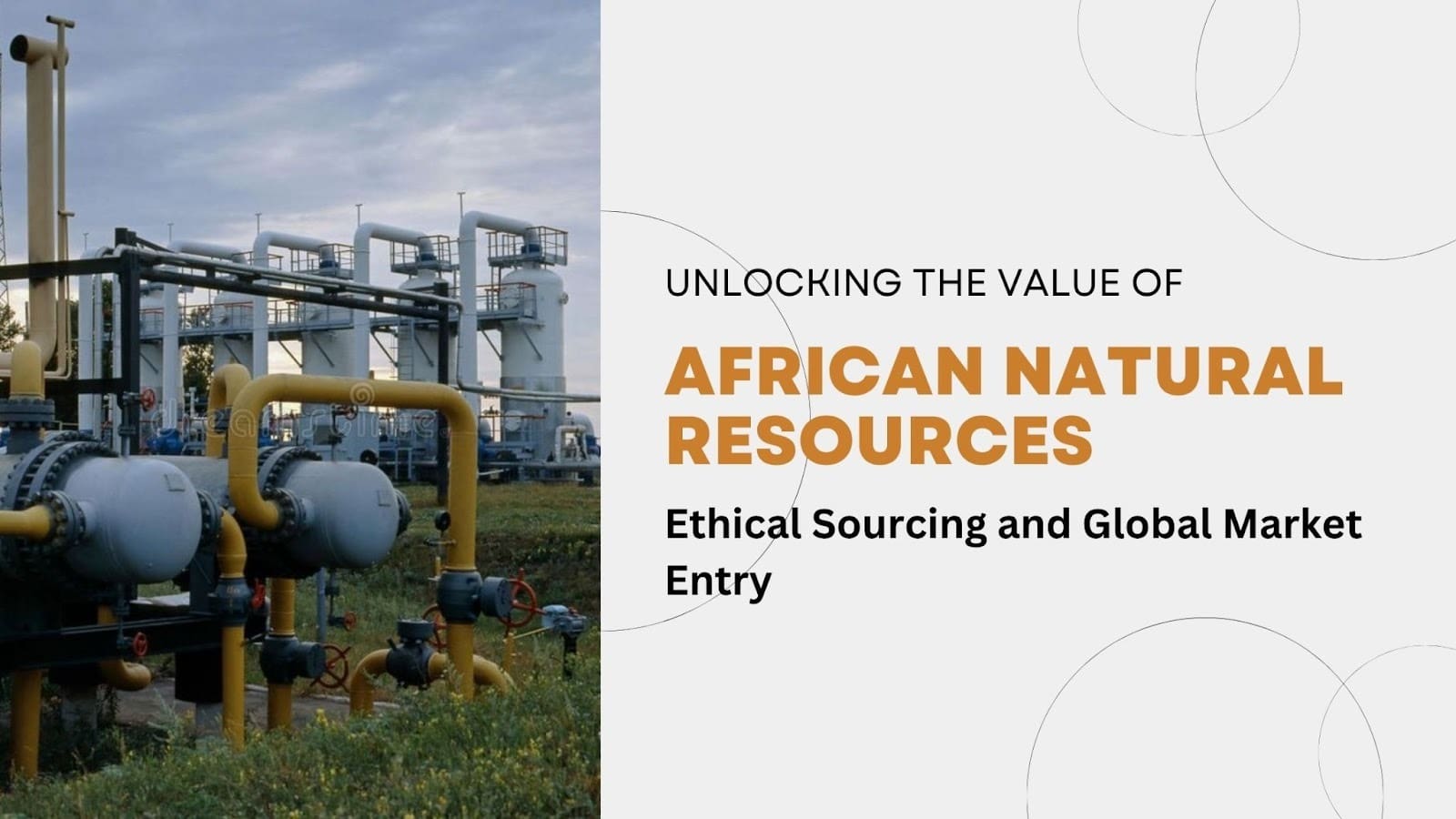
Africa is a continent teeming with untapped potential. From rich mineral deposits to fertile agricultural lands, its natural wealth is staggering. Yet, despite holding approximately 30% of the world’s mineral reserves, 8% of global natural gas, and 12% of global oil reserves, many African countries have not fully reaped the economic rewards of their natural resource endowments.
The reasons for this paradox are complex, ranging from historical exploitation and weak governance to lack of infrastructure and limited access to international markets. However, the tide is turning. With growing global emphasis on sustainability, transparency, and ethical trade, exporting natural resources from Africa is no longer just about extraction—it’s about value creation, accountability, and inclusive growth.
The Need for Ethical Sourcing
In recent years, the global market has become increasingly sensitive to the origins of raw materials. Consumers are demanding more transparency, and companies are being held accountable for their supply chains. This shift has ushered in a new era where ethical sourcing is not just a buzzword, but a business imperative.
In Africa, this movement has gained significant traction. Governments, NGOs, and local businesses are collaborating to improve regulatory frameworks, implement traceability systems, and promote fair trade practices. Ethical sourcing ensures that the environment is protected, local communities benefit economically, and workers are treated fairly. It also builds trust in international markets, making it easier for African exporters to gain access to lucrative global opportunities.
As the demand for ethically sourced resources grows, international buyers are increasingly turning to natural resources suppliers from Africa who demonstrate responsible practices. Whether it’s cobalt from the Democratic Republic of Congo, gold from Ghana, or timber from Cameroon, transparency in the sourcing process is now a key differentiator in a competitive market.
The Value Chain Challenge: From Extraction to Export
One of the biggest challenges facing the continent is moving beyond the raw material export model. Too often, African countries export raw commodities only to import finished goods at much higher prices. This not only reduces the potential for economic growth but also hinders job creation and technological development.
To unlock the true value of its natural resources, Africa must invest in local processing and value addition. Building refineries, processing plants, and manufacturing facilities will help retain a greater share of profits and reduce dependence on volatile global commodity markets. More importantly, it will allow African countries to develop stronger, more resilient economies.
However, this transformation requires capital, expertise, and access to global markets. It also requires policy alignment and regional cooperation to create an enabling environment for investment. The African Continental Free Trade Area (AfCFTA) is a significant step in this direction, promising to open up new intra-African trade opportunities and streamline cross-border commerce.
African Agricultural Exports: A Case Study in Potential
While mining and oil extraction often dominate the headlines, African agricultural exports are equally vital to the continent’s economic future. Africa possesses 60% of the world’s uncultivated arable land, and its favorable climate allows for the production of a wide range of high-demand crops, including cocoa, coffee, tea, cotton, fruits, and vegetables.
Countries like Kenya, Ethiopia, Ghana, and Ivory Coast have made significant strides in establishing agricultural export industries that compete on the global stage. However, these sectors still face challenges such as limited cold storage infrastructure, outdated farming techniques, and trade barriers.
Investing in technology, logistics, and farmer training can significantly boost the competitiveness of African agriculture. Moreover, aligning with global standards and certifications (e.g., Fairtrade, Organic, Rainforest Alliance) can enhance the credibility of African products in international markets and command premium prices.
Agricultural exports also offer a more inclusive development model. Unlike extractive industries, agriculture involves millions of smallholder farmers, many of whom are women. Supporting these producers not only increases incomes but also strengthens food security and rural economies.
Sustainable Resource Governance
At the heart of ethical sourcing lies the principle of sustainable resource governance. For African countries to fully benefit from their natural wealth, they must adopt transparent and accountable systems for managing revenues, granting licenses, and enforcing regulations.
Initiatives such as the Extractive Industries Transparency Initiative (EITI) and the Kimberley Process (for conflict diamonds) have made notable progress, but enforcement remains inconsistent. Corruption, political instability, and weak institutions continue to undermine efforts in several regions.
However, there are encouraging signs of progress. Countries like Botswana and Namibia have established robust governance models that ensure revenues from diamonds and other natural resources are invested in public goods like education, infrastructure, and healthcare. These examples show that with the right policies and leadership, natural resource wealth can become a catalyst for national development.
Market Entry Strategies for African Exporters
For African businesses seeking to enter global markets, the journey can be daunting. High trade barriers, stringent quality standards, and lack of international visibility are significant hurdles. But with strategic planning and the right partnerships, these challenges can be overcome.
Here are a few practical strategies:
- Invest in Certification and Compliance
Meeting international standards (e.g., ISO, HACCP, Fairtrade) is crucial. Certification not only opens doors to new markets but also enhances brand credibility. - Leverage Digital Platforms
Online marketplaces, B2B platforms, and trade facilitation portals can connect African suppliers directly with buyers, reducing reliance on middlemen. - Participate in Trade Fairs and Expos
These events offer invaluable networking opportunities and allow African exporters to showcase their products to a global audience. - Form Strategic Alliances
Partnering with international distributors, logistics providers, and consultants can streamline the export process and provide vital market insights. - Tap into Diaspora Networks
African diaspora communities are not only consumers but also powerful connectors to international trade networks.
Key Takeaways
- Exporting natural resources from Africa must go hand in hand with ethical sourcing and value addition to ensure long-term prosperity.
- Partnering with natural resources suppliers from Africa who adhere to responsible practices is a growing trend in global markets.
- African agricultural exports present an underleveraged opportunity for inclusive growth and should be prioritized in development strategies.
- Transparency, sustainability, and regional cooperation are critical to unlocking the continent’s resource potential.
- Strategic market entry approaches—focused on compliance, digital tools, and partnerships—can help African businesses succeed globally.
Africa stands at a pivotal moment in its economic history. With abundant natural wealth and growing international interest, the opportunity to transform the continent through responsible trade has never been greater.
Are you a buyer, investor, or development partner? Now is the time to align your business with Africa’s ethical sourcing movement and be part of a new trade paradigm rooted in fairness and sustainability.
Are you an African exporter or entrepreneur? Don’t let global market entry challenges hold you back. Invest in compliance, seek partnerships, and use digital tools to showcase your products to the world.
Let’s work together to unlock the full value of African natural resources—ethically, sustainably, and inclusively.
Frequently Asked Questions
Q1. Why is ethical sourcing important when exporting natural resources from Africa?
Ethical sourcing ensures that natural resources are extracted and traded in ways that protect the environment, respect labor rights, and benefit local communities. It also builds trust with global buyers who are increasingly concerned about responsible supply chains.
Q2. What are the major challenges African exporters face in global market entry?
Challenges include meeting international quality standards, navigating complex trade regulations, lack of infrastructure, limited access to financing, and insufficient global visibility.
Q3. How can natural resources suppliers from Africa gain global recognition?
By adopting certification standards, improving traceability, participating in trade shows, and leveraging digital platforms to showcase their ethical practices and high-quality products.
Q4. What are the most promising African agricultural exports?
Cocoa, coffee, tea, cashew nuts, tropical fruits, vegetables, and cotton are among the most in-demand African agricultural products on the global market.
Q5. How does the African Continental Free Trade Area (AfCFTA) help in exporting natural resources from Africa?
AfCFTA promotes intra-African trade, harmonizes regulations, reduces tariffs, and strengthens regional supply chains, making it easier for African exporters to scale and compete globally.