
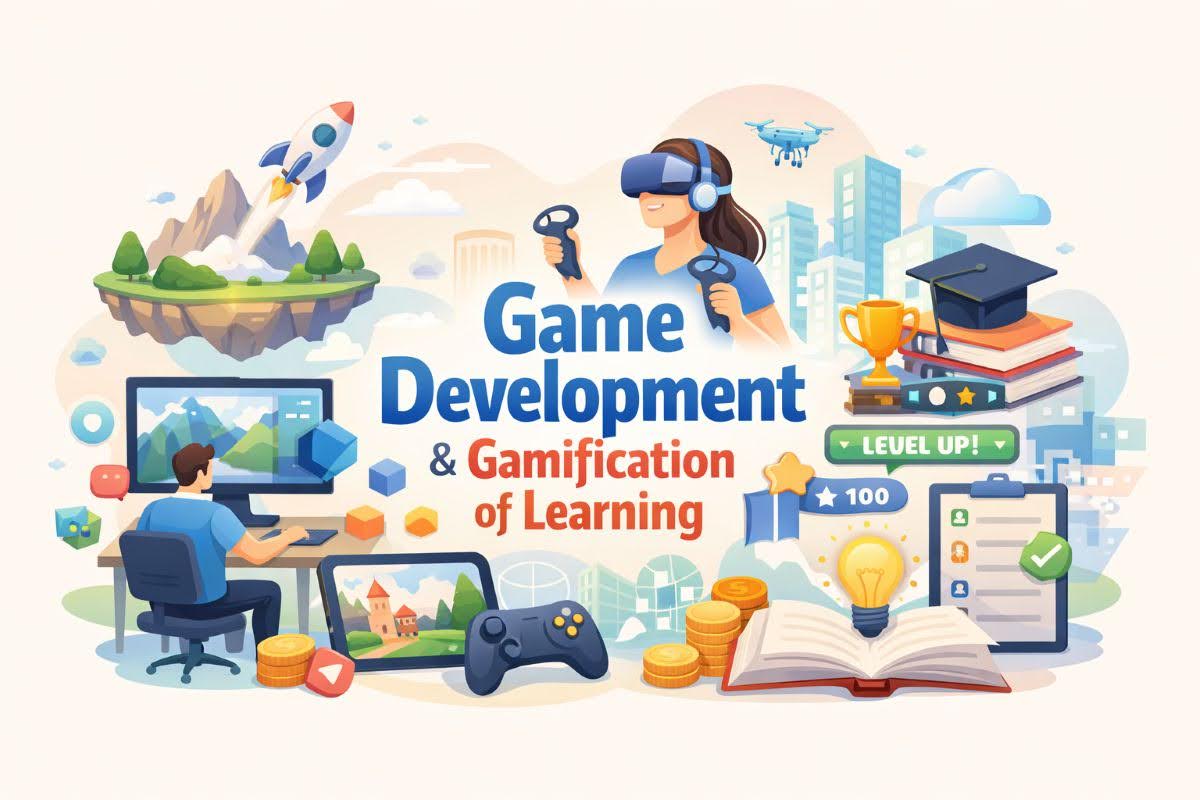
The game development industry has transformed dramatically over the last decade. What once focused purely on entertainment now influences education, marketing, healthcare, and corporate training. Modern technologies, powerful engines, and innovative design strategies are pushing the boundaries of what interactive experiences can achieve.
Studios around the world are not just building games anymore. They are creating immersive ecosystems that educate, engage, and motivate users in ways traditional systems cannot. From virtual simulations to gamified education platforms, the industry is rapidly evolving.
One of the biggest drivers behind this transformation is the increasing use of advanced game engines and interactive design strategies that bring both realism and engagement to digital products.
The Rise of Cross-Platform Game Development
Today’s players expect seamless experiences across multiple devices. Whether someone plays on a mobile phone, PC, console, or even VR headset, the gameplay quality must remain consistent.
This demand has pushed developers toward powerful cross-platform engines capable of delivering high performance without sacrificing visual quality. As a result, many studios now rely on a Unity Game Development Company model to create scalable and adaptable gaming solutions.
Unity has become one of the most widely adopted engines in the industry due to its flexibility and extensive ecosystem. Developers can build games once and deploy them across multiple platforms with minimal adjustments.
For businesses entering the gaming market, this flexibility significantly reduces development time and cost while expanding audience reach. Instead of building separate versions for each platform, developers can maintain a unified codebase that supports multiple systems.
This approach has become a cornerstone strategy for studios looking to remain competitive in an industry driven by rapid technological change.
Real-Time Graphics and Immersive Experiences
The gaming world is entering an era where visual quality and real-time responsiveness define the user experience. Modern players expect cinematic graphics, fluid animations, and interactive environments that respond instantly to their actions.
Advancements in rendering technology have made it possible to create hyper-realistic environments that were once only possible in high-budget films. Lighting systems, particle effects, and physics engines now work together to produce incredibly immersive worlds.
These innovations are not limited to traditional gaming. Industries such as architecture, product design, and simulation training also use real-time engines to visualize complex scenarios.
Interactive visualization allows users to explore digital environments in ways static media cannot replicate. This shift highlights how game development technologies are influencing broader digital experiences beyond entertainment.
The Growing Demand for Specialized Game Developers
As the complexity of games increases, so does the need for specialized talent. Game development now involves multiple disciplines including programming, 3D modeling, animation, UI design, and gameplay mechanics.
Companies entering this space often require experienced professionals who understand both technical development and creative design. Because of this, many businesses prefer to Hire Unity 3D Developer teams who can quickly translate ideas into fully functional interactive products.
Experienced developers bring more than coding skills. They contribute to system architecture, performance optimization, and user experience design. These elements are critical when building scalable and engaging games.
With the global gaming market continuing to grow, the demand for skilled developers is expected to remain strong. Studios that invest in experienced talent often deliver better user experiences and maintain long-term project sustainability.
Gamification Is Transforming Education and Training
One of the most exciting trends in the industry is the rise of Gamification Of Learning. Educational institutions and corporate training programs are increasingly adopting game mechanics to improve engagement and knowledge retention.
Traditional learning systems often struggle to maintain attention and motivation. Gamification addresses this challenge by introducing elements such as rewards, progress tracking, levels, and challenges.
These mechanics tap into the same psychological principles that make games addictive and enjoyable. When applied to education, they transform passive learning into interactive experiences.
Students and employees become active participants in their learning journey rather than passive observers.
Gamified systems can include features like:
- Achievement badges and reward systems
- Interactive quizzes and challenges
- Progress bars and milestone tracking
- Leaderboards and competition elements
These features encourage consistent participation and make the learning process more enjoyable.
The Role of Game Mechanics in User Engagement
Game mechanics are the foundation of engaging digital experiences. These mechanics include rules, challenges, rewards, and feedback loops that guide user behavior.
When implemented correctly, they create a powerful cycle of motivation and accomplishment. Users feel encouraged to continue interacting with a system because they receive immediate feedback and visible progress.
This principle explains why gamification works so effectively across industries. Whether someone is learning a new skill, participating in corporate training, or exploring an educational platform, game mechanics keep them motivated.
For businesses, this means higher engagement rates and improved learning outcomes.
Emerging Technologies Reshaping the Industry
Several technological trends are redefining the future of game development. These innovations are expanding what developers can create and how users interact with digital environments.
1. Virtual Reality and Augmented Reality
VR and AR technologies are pushing immersion to new levels. Users can now step directly into digital worlds and interact with objects naturally.
This technology is increasingly used in education, training simulations, and medical learning environments.
2. Artificial Intelligence in Game Design
Artificial intelligence is improving game behavior and user interaction. AI-driven characters can adapt to player decisions, creating dynamic gameplay experiences.
In learning platforms, AI can also personalize educational paths based on individual progress.
3. Cloud Gaming
Cloud technology allows players to stream games directly without requiring powerful hardware. This opens the door for wider accessibility and global audiences.
Developers can design more complex experiences without worrying about device limitations.
4. Metaverse-Inspired Virtual Worlds
Persistent virtual environments are becoming more popular as digital communities expand. These spaces blend social interaction, gaming, and digital economies.
Game engines and development platforms are playing a major role in building these immersive ecosystems.
Why Businesses Are Investing in Game Development
Game development technologies are no longer limited to entertainment studios. Businesses across various industries are recognizing the value of interactive digital experiences.
Companies use game-based systems for:
- Employee training simulations
- Product demonstrations
- Marketing campaigns
- Educational applications
- Customer engagement platforms
Interactive experiences capture attention more effectively than traditional media. They allow users to participate rather than simply observe.
This shift in user behavior is driving more organizations to invest in game development solutions.
The Future of Interactive Digital Experiences
Looking ahead, the future of game development will likely focus on deeper immersion, smarter systems, and more personalized experiences. Technologies such as artificial intelligence, advanced rendering engines, and cloud infrastructure will continue to shape the industry.
Developers will have more tools than ever before to create engaging environments that blend entertainment, education, and real-world applications.
For companies entering this space, the key to success lies in combining technical innovation with thoughtful design. Understanding user behavior and leveraging the right technologies will define the next generation of interactive experiences.
Game development is no longer just about playing games. It is about creating digital environments that inspire, educate, and connect people across the world.
As industries continue to explore these possibilities, interactive technology will play an even greater role in shaping how we learn, work, and experience digital content.