

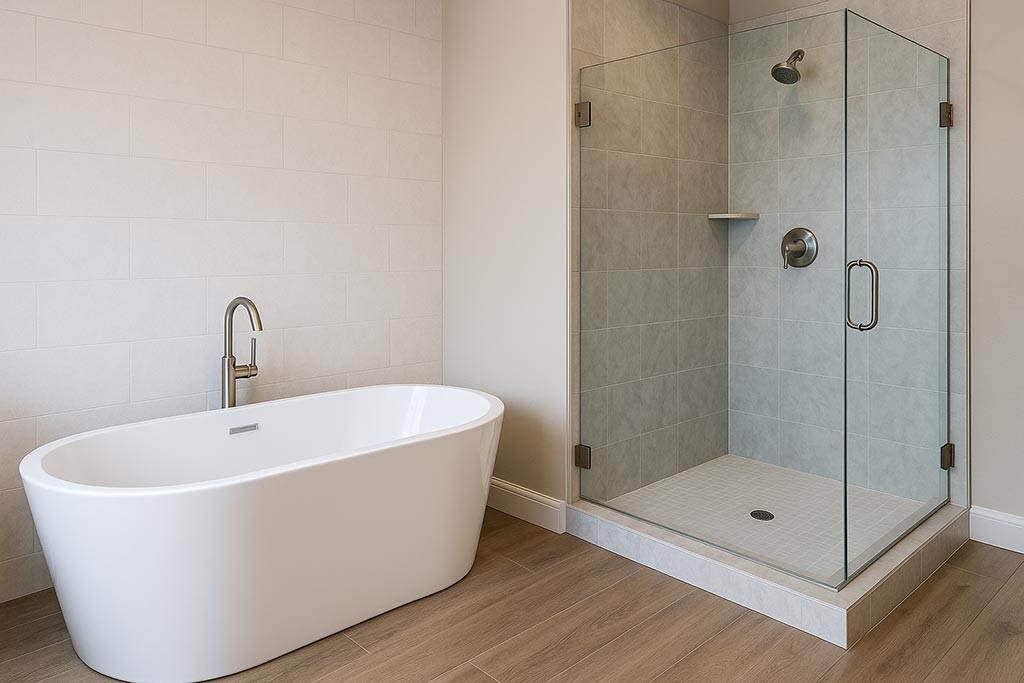
The tub vs shower debate is one of the biggest decisions in any bathroom update. Both fixtures work, but they serve very different goals. A shower offers speed, accessibility, and efficient use of space. A tub supports relaxation, soaking, and family needs. Understanding what each option gives you helps you make the right choice without second-guessing it later.
This guide breaks down the real differences based on function, cost, lifestyle, design, long-term value, and practical constraints. If you want a clear and confident choice, this will get you there.
The Real Difference Between a Tub and a Shower
A shower supports fast routines. A tub supports full-body soaking and slower moments. Most homeowners are deciding between efficiency and comfort, and the rest of the factors revolve around those two ideas.
Here is the simplest comparison:
- Daily Use: Shower is fast. Tub is relaxing.
- Space Needs: Shower is compact. Tub uses more space.
- Water Use: Shower uses 10–25 gallons. Tub uses 35–50+.
- Accessibility: Shower is easier. Tub is harder.
- Family Use: Shower is limited. Tub is kid-friendly.
If you understand this comparison, you already understand about half of the decision.
Why Showers Fit Modern Routines
Showers have become a top choice for homeowners who want something simple and efficient for daily use. A bathroom remodeling contractor often recommends a walk-in shower for small bathrooms or for situations where homeowners want better accessibility and a cleaner layout.
Key Advantages of Showers
- Fast and efficient. A shower fits quick daily routines. Most people shower in under ten minutes. A low-flow showerhead keeps water use smaller than any tub session.
- Ideal for small bathrooms. A walk-in shower can make a small bathroom feel larger. It frees up floor space and avoids the bulky footprint of a standard tub.
- Great for accessibility. Curbless or low-lip showers are much easier for seniors and people with mobility limitations. Grab bars, built-in seats, and handheld showerheads improve safety even more.
- Flexible design. Showers let you customize the experience. Rainfall heads, dual showerheads, body sprays, and steam features create a spa feel, even in compact bathrooms.
Drawbacks of Showers
- Not ideal for young children. Bathing small kids is simply easier in a tub.
- More cleaning if you choose glass. Shower doors and grout lines need regular care. Still, many homeowners prefer this over scrubbing a deep tub.
- Possible splash issues. Open or curbless showers need the right slope and layout to keep water contained.
Why Many Homeowners Still Want a Tub
A bathtub serves a different purpose. It encourages slow routines, stress relief, and a full-body soak. For many homeowners, this is the part of the bathroom that feels like an escape.
Key Advantages of Bathtubs
- Built for comfort and therapy. Warm soaking helps relax muscles, reduce stress, and improve sleep. For some people, this alone makes a tub worth keeping.
- Perfect for kids and family use. Parents appreciate the stability and ease of bathing infants and toddlers.
- Added utility. A tub can be used for pets, cleaning large items, or occasional deep soaking after a physical day.
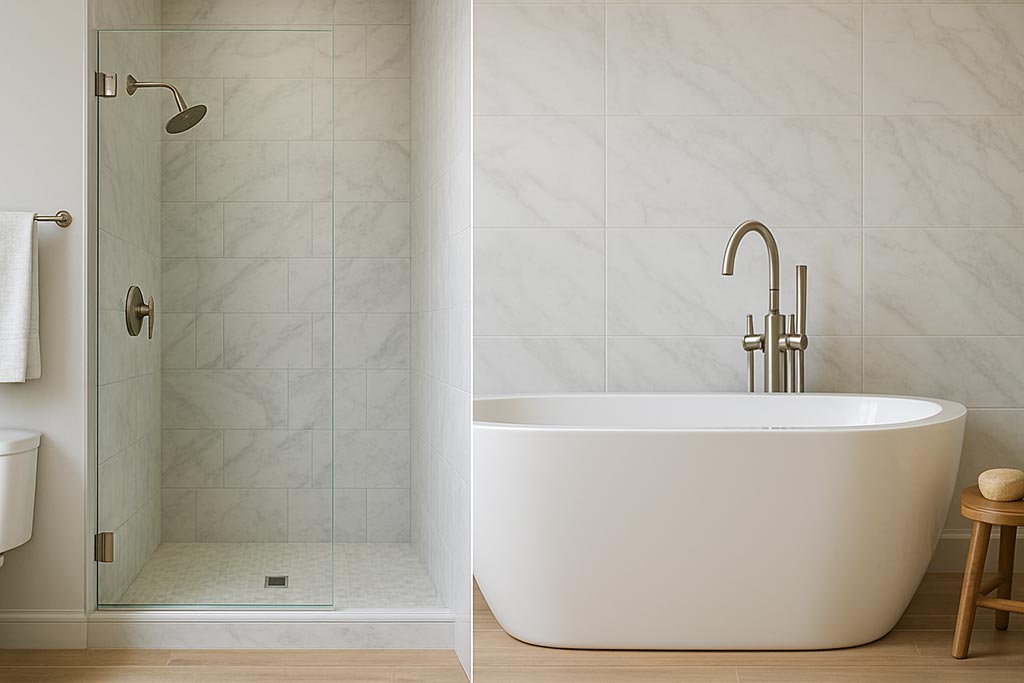
- Statement designs. Freestanding tubs, deep soaking tubs, and jetted models add character to a bathroom and often become the design centerpiece.
Drawbacks of Bathtubs
- Takes more space. A standard tub takes up a large footprint compared to a shower.
- Higher water use. Most tubs need about 35–50 gallons of warm water for a good soak.
- Lower accessibility. Stepping over the tub wall is risky for older adults or anyone dealing with balance issues.
- More physical cleaning effort. Scrubbing a deep basin can be tiring over time.
Cost Comparison: Tub vs Shower
Costs vary based on materials, plumbing changes, wall finishes, and the amount of demolition needed, but the pricing pattern is consistent. Showers often cost more because they need more materials and labor, especially if you use tile and glass. Standard tubs usually stay on the lower end unless you pick a high-end style.
A walk-in shower replacement or conversion typically ranges between $6,000 and $15,000. This includes removing the old fixture, adjusting plumbing, waterproofing the walls, installing tile or solid panels, and adding glass doors or a curtain setup. Prefabricated shower units are more affordable, usually around $2,000 to $5,000, because they require fewer custom materials and less labor.
A standard bathtub replacement generally costs $2,000 to $4,500, depending on the material and the condition of the surrounding walls. Freestanding or deep soaking tubs sit higher, often between $4,000 and $10,000, due to added weight, more complex plumbing work, and the need for stronger flooring.
When converting a tub into a walk-in shower, expect a full remodel approach. Most tub-to-shower conversions land between $7,000 and $16,000, since they involve demolition, structural adjustments, new waterproofing, and custom finishes.
Showers often lead to lower long-term utility costs because they use less water and less energy to maintain hot water. Tubs come with higher water usage per session, especially deep or soaking styles.
How Your Choice Affects Resale Value
When it comes to resale value, trends across the real estate market point to one important detail: a home should keep at least one bathtub.
Families and long-term homeowners often look for a tub because it helps with kids, soaking, and general flexibility. Removing the only tub in a house can shrink your potential buyer pool and make the home feel less practical to certain groups.
At the same time, large walk-in showers are very appealing to buyers who want a modern layout, better accessibility, or a cleaner look. If the home has several bathrooms, converting one of the tubs into a spacious walk-in shower can be a smart upgrade that adds appeal.
In higher-end homes, many buyers expect the master bathroom to have both a tub and a shower, since having both options feels more complete and adds a sense of luxury.
Choosing Based on Your Lifestyle
The best answer depends on how you live, not on general rules.
- For families with children, a tub is much more practical. If you remove your only tub, you will eventually feel the limitation.
- For seniors or mobility challenges, a walk-in shower is the safest and most comfortable option. Curbless designs reduce risks and make daily use easier.
- For small bathrooms, a shower usually works better. It opens the layout and avoids a cramped look.
- For pet owners, a tub makes cleaning pets much easier, especially medium to large breeds.
Space Planning and Hybrid Solutions
Some bathrooms allow for more flexible setups, and the right layout can give you both comfort and practicality without overhauling the entire room.
Shower-Tub Combos
A shower-tub combo works well in smaller bathrooms that need space for daily showers and an option for soaking. It fits both needs in one footprint and avoids the cost of a full remodel. With a good enclosure and updated fixtures, it feels modern while staying budget-friendly.
Compact Soaking Tubs
Homeowners who enjoy long soaks but have limited floor space often choose compact soaking tubs. These tubs are shorter but deeper, giving full-body immersion without needing the length of a standard model. They fit well in tight layouts and still deliver the relaxing experience people want from a traditional tub.
Luxury Dual Layout
If the room and budget allow, adding both a walk-in shower and a separate bathtub gives the bathroom more function and a higher-end feel. This setup supports quick routines and occasional long soaks, and it often strengthens resale appeal because buyers like having both options available.
Converting Your Bathroom Layout the Right Way
Any fixture change needs proper planning, and the success of a bathroom conversion depends on waterproofing, plumbing alignment, and making sure the new layout fits the space without issues.
1. Tub to Shower
This is the most common upgrade. Removing the tub opens the room and creates space for a walk-in shower. The work usually involves demolition, adjusting the plumbing height, waterproofing the walls, and installing tile or solid panels. It’s a practical way to modernize the bathroom and improve accessibility.
2. Shower to Tub
This upgrade needs more preparation because tubs require more room and stronger support. The plumbing must be repositioned, the subfloor checked for weight capacity, and the walls extended or tiled down to the tub line. It works best in bathrooms with an alcove or enough space to fit a standard tub comfortably.
3. Tub to Tub-Shower Combo
This is the simplest and most budget-friendly option. The tub stays, and the upgrade focuses on adding a showerhead, adjusting plumbing height, and installing a waterproof enclosure. It gives the bathroom more versatility without changing the footprint or structure.
Deciding Between a Tub and a Shower
Choosing between a tub and a shower depends on your routine, space, household needs, and the future value of your home. Showers support fast, accessible living and work well in small spaces. Tubs support comfort, relaxation, and families with children.
If your home can support both, that is the best long-term setup. If you must choose only one, base the decision on what you use every day and how you want the bathroom to serve you long term.
A clear choice always comes from how you live, not from trends. Use the strengths of each option and consider how the tub vs shower decision fits into the way you want your home to work for you.