
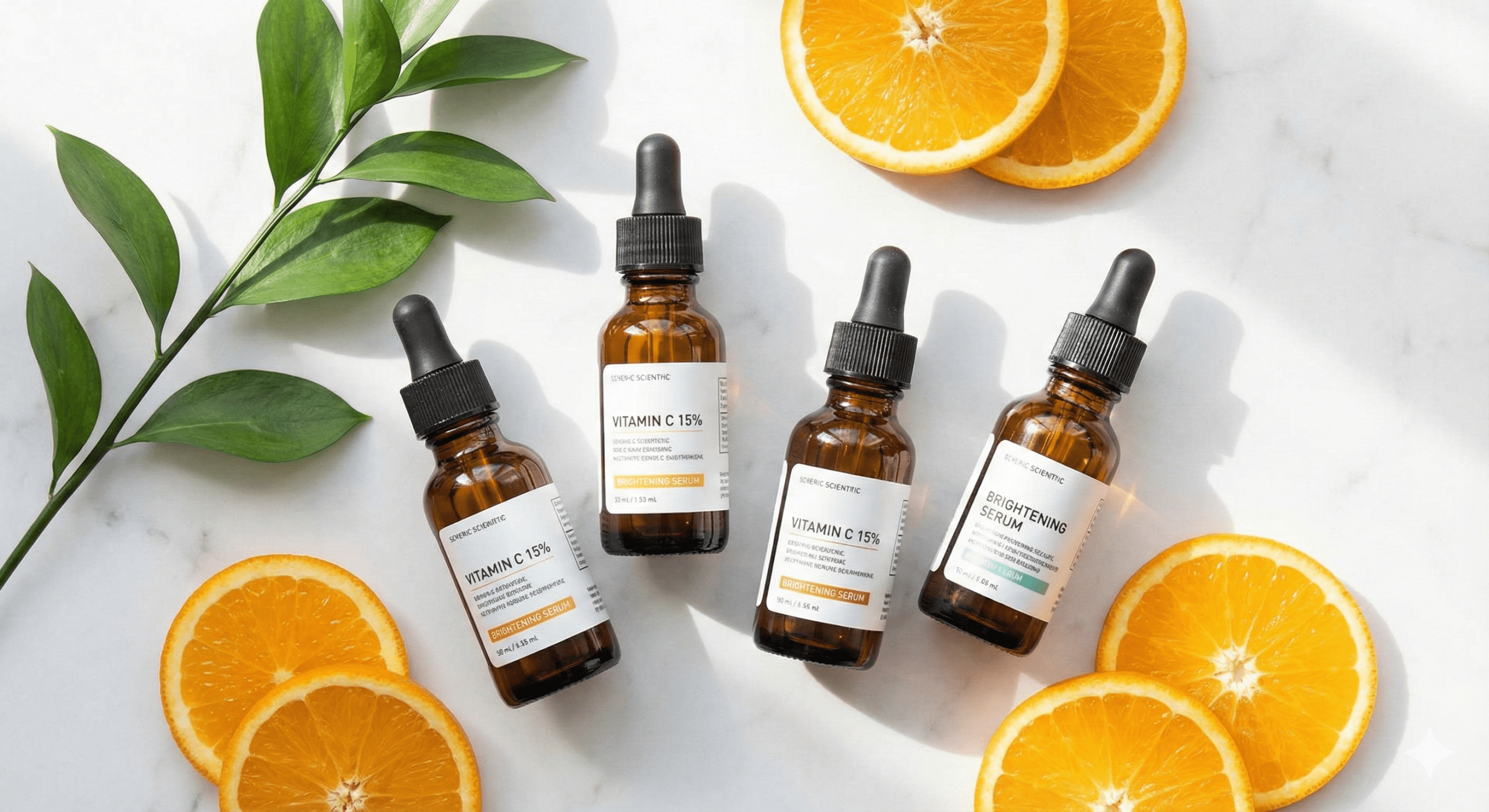
Hyperpigmentation can feel impossible to fix.
Dark spots after acne, sun exposure, or hormonal changes linger for months. Many products promise results but fail to deliver.
Vitamin C can help—but only when you pick the right serum and use it correctly.
This article shows which vitamin C serums truly work for hyperpigmentation, why they work, and how to avoid common mistakes.
What Is Hyperpigmentation and Why Vitamin C Works
Hyperpigmentation happens when your skin makes too much melanin.
Common causes include UV exposure, acne inflammation, and hormones.
Vitamin C fights dark spots through multiple mechanisms:
- It slows excess melanin production
- It neutralizes UV-induced free radicals
- It supports collagen and skin renewal
Types of Hyperpigmentation Vitamin C Can Treat
- Post-inflammatory hyperpigmentation (PIH) from acne or irritation
- Sun spots caused by UV damage
- Uneven skin tone
Melasma may improve too, but often needs combination treatments.
What Makes a Vitamin C Serum Effective for Hyperpigmentation
Not all vitamin C serums are equal. Effectiveness depends on formulation and stability—not price or packaging.
Key Factors That Matter
- Vitamin C concentration: Aim for 10–20%
- Form of vitamin C: Pure L-ascorbic acid or gentler derivatives
- pH level: Lower pH improves absorption
- Stability: Avoid oxidized or degraded formulas
How to Spot an Ineffective Vitamin C Serum
- Serum turns dark yellow, brown, or smells off
- Skin feels unusually irritated
- Results stall after weeks of consistent use
If these happen, replace the product.
L-Ascorbic Acid vs Vitamin C Derivatives: Which Is Better?
Choosing the right form matters for both results and tolerance.
Pure L-Ascorbic Acid
- Strongest antioxidant action
- Best for stubborn dark spots
- Higher risk of irritation
Vitamin C Derivatives
- Gentler alternative
- More stable in formulas
- Best for sensitive or acne-prone skin
Quick Comparison: Vitamin C Forms
| Feature | L-Ascorbic Acid | Vitamin C Derivatives |
|---|---|---|
| Strength | High | Moderate |
| Stability | Low | High |
| Irritation Risk | Higher | Lower |
| Best For | Persistent dark spots | Sensitive skin or beginners |
Derivatives are a good starter option. You can move to stronger formulas later.
Top Rated Vitamin C Serums for Hyperpigmentation (Expert Picks)
Below are expert-vetted vitamin C serums that show real potential against dark spots and uneven tone.
For full reviews and detailed breakdowns, see Best Vitamin C Serums for Hyperpigmentation.
Best Overall Vitamin C Serum
- 15–20% L-ascorbic acid
- Includes ferulic acid for antioxidant boost
- Great for dark spots and PIH
Best Budget-Friendly Vitamin C Serum
- Stable but affordable
- Suitable for daily use
- Best paired with sunscreen
Best for Sensitive Skin
- Serum with sodium ascorbyl phosphate
- Minimal fragrance and irritation
- Works with acne-prone skin
Best for Melasma-Prone Skin
- Vitamin C + niacinamide or tranexamic acid combo
- Supports barrier repair
- Best with daily SPF
How to Use Vitamin C Serum Correctly for Dark Spots
Applying vitamin C correctly matters as much as picking the right one.
Best Time to Apply
- Morning: Vitamin C increases antioxidant protection
- Apply before sunscreen
Correct Routine Order
- Cleanser
- Vitamin C serum
- Moisturizer
- Broad-spectrum sunscreen (SPF 30+)
Ingredients That Pair Well
- Hyaluronic acid for hydration
- Niacinamide for barrier support
Avoid mixing with strong exfoliating acids at the same time.
Common Vitamin C Mistakes That Worsen Hyperpigmentation
Misuse can make pigmentation worse. Avoid these errors:
- Starting with too-high strength too soon
- Skipping sunscreen
- Overusing vitamin C on irritated skin
- Mixing with incompatible actives
Irritation often leads to post-inflammatory hyperpigmentation, especially on darker skin tones.
How Long Does Vitamin C Take to Fade Hyperpigmentation?
Vitamin C doesn’t work overnight.
- 2–3 weeks: Brighter, fresher skin
- 6–8 weeks: Noticeable fading of dark spots
- 12+ weeks: Consistent improvement and tone correction
Results vary based on concentration, consistency, and sun protection.
FAQ: Vitamin C Serums for Hyperpigmentation
What is the best vitamin C serum for hyperpigmentation?
The best vitamin C serum contains 10–20% L-ascorbic acid with supportive antioxidants.
Look for formulas with ferulic acid or vitamin E for enhanced melanin inhibition.
Does vitamin C actually remove dark spots?
Yes, vitamin C helps fade dark spots by reducing melanin production and protecting skin from UV-induced damage.
Results are gradual and depend on consistent use.
Which form of vitamin C is best for sensitive skin?
Vitamin C derivatives like sodium ascorbyl phosphate are gentler and better for sensitive, acne-prone skin.
They brighten without strong irritation.
Can vitamin C worsen hyperpigmentation?
Yes, if used incorrectly. Irritation can trigger post-inflammatory dark spots.
Start with lower concentration and pair with sunscreen.
How long should I use vitamin C to see results?
Most people see results within 6–12 weeks of consistent use and sun protection.
Persistence matters more than occasional application.
Final Takeaway
Vitamin C is one of the most effective ingredients for fading hyperpigmentation—when chosen and used correctly.
Focus on formulation, stability, and sunscreen pairing to see real progress.
For detailed insights and product recommendations, explore Best Vitamin C Serums for Hyperpigmentation — a trusted resource designed to help you pick the best vitamin C serum for your skin.
