
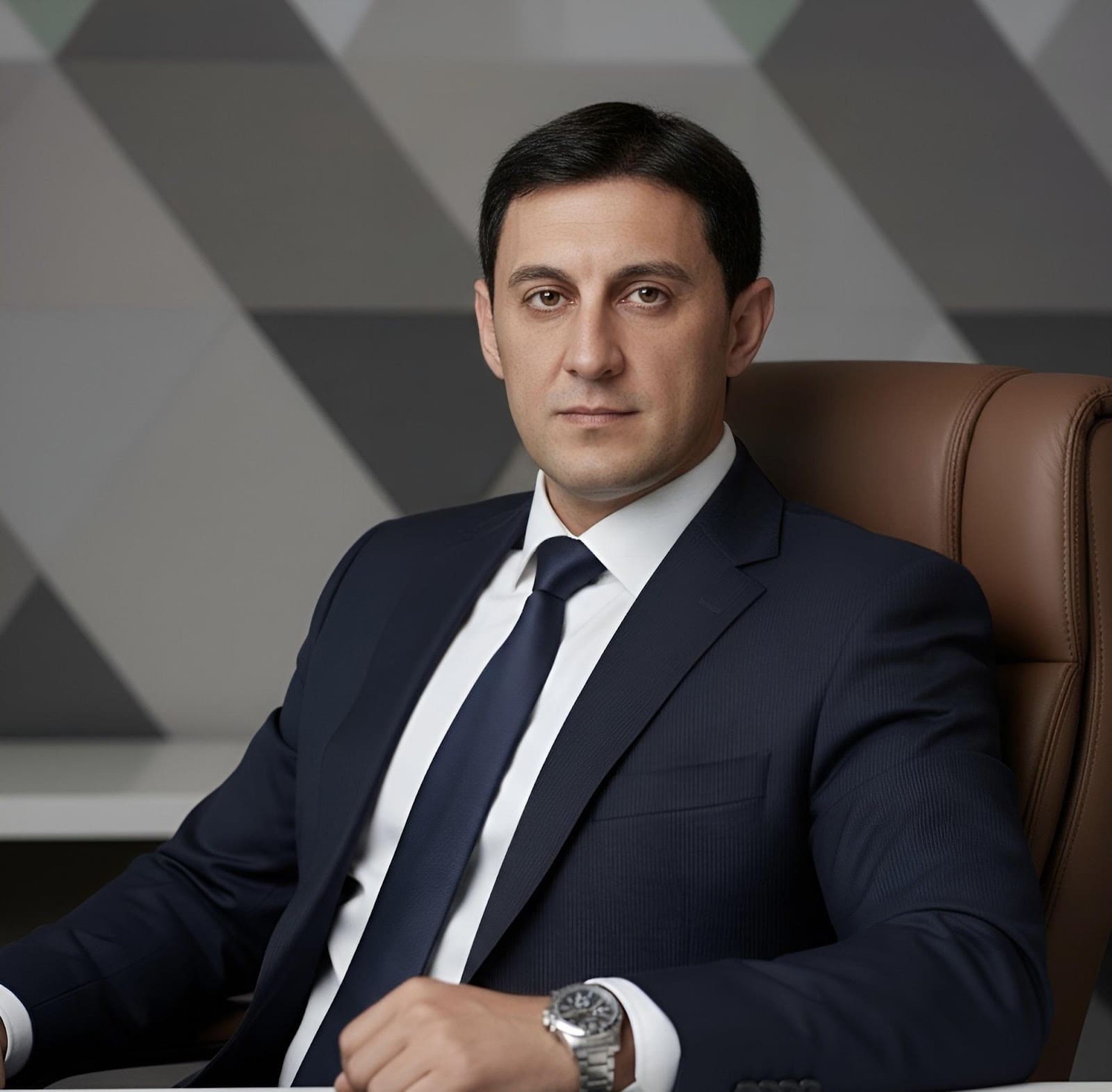
David Astor has founded companies, built market leaders, turned around institutions, and quietly shaped decisions behind some of the most consequential transitions in European mid-market business. He rarely takes credit. He never chases headlines. The organisations he leaves behind are the only record he keeps.
By Gordon Delay
There is a type of person in European business who appears on no ranking, holds no public mandate, and gives no keynotes. Decisions get made in rooms they recently left. Organisations that were stalling start moving again. Companies that needed a decade to build their next chapter built it in three years. David Astor is that type. He is, in the language of those who have worked with him closely, the person behind the people who are publicly in charge.
He is a founder of multiple companies, a partner and advisory board member across numerous businesses and industry associations, and an operator-investor who takes executive responsibility personally when ownership transitions demand it. He has built organisations from scratch, converted institutional drift into institutional momentum, and opened market access for European mid-market companies in geographies where they would otherwise spend years making no progress. He does all of this with structural, deliberate anonymity. His name is rarely on the press release. His influence is in the results.
“Most strategy problems become operating problems because nobody owns the hard decisions early enough. I come in when that has already started to happen.”
His biography is not the biography of a man who built a career. It is the biography of a man who built results inside other people’s organisations, handed them over, and moved on. He trained as an industrial engineer in Berlin, with study periods in Paris and Santa Barbara. Engineering teaches you to locate where a system fails under load, not where it performs under ideal conditions. It teaches you to find the constraint before you redesign the process. He has never stopped thinking that way.
His corporate career began inside the Daimler group, within the AEG division, at a time when German industrial conglomerates were restructuring at speed and the distance between management intent and operational reality was often considerable. He moved to McKinsey and Company, where he was involved in establishing an office: an experience that taught him something client-side consulting rarely does, namely how to build an institution under pressure rather than advise one from the outside.
What followed was neither a conventional consulting career nor a conventional investment career. It was a sequence of situations where Astor identified a structural problem that others were calling a strategic one, and solved it operationally. The first major example came through a collaboration with Mercedes-Benz. Working jointly with the company, he analysed which processes were disproportionately staff-intensive, structurally inefficient, and peripheral to core manufacturing competence. The conclusion was not a presentation. He built the company that solved the problem, starting with over 300 employees taking over those operations directly. Over fifteen years, that business grew to 3,000 employees and became the German market leader for industrial outsourcing projects, serving Bosch, MAN, Haribo, BASF, and others at comparable scale.
“I do not see the obstacle. I see what the obstacle is protecting. Usually there is a perfectly good solution on the other side of it.”
The university chapter of his career follows identical logic in a different domain. When the Bilgi University in Turkey was acquired by Laureate International Universities, Astor was engaged in the background as an adviser during the transition. His brief was to analyse the structural weaknesses of the institution before the new ownership committed to a growth trajectory. His findings were precise enough and his operational judgement trusted enough that the outcome of the analysis was not a report. He was brought into the executive committee and appointed Chief Operating Officer. He led a team of 1,700 people. The university entered the engagement with 3,000 students. It left with more than 40,000, and became the market leader in Turkish private higher education.
The mechanism in both cases was the same: operational architecture rather than strategic narrative. Clear governance, defined accountability, management rhythms that made ambition executable. What Astor installs in organisations is not a vision. It is the plumbing that a vision requires in order to function.
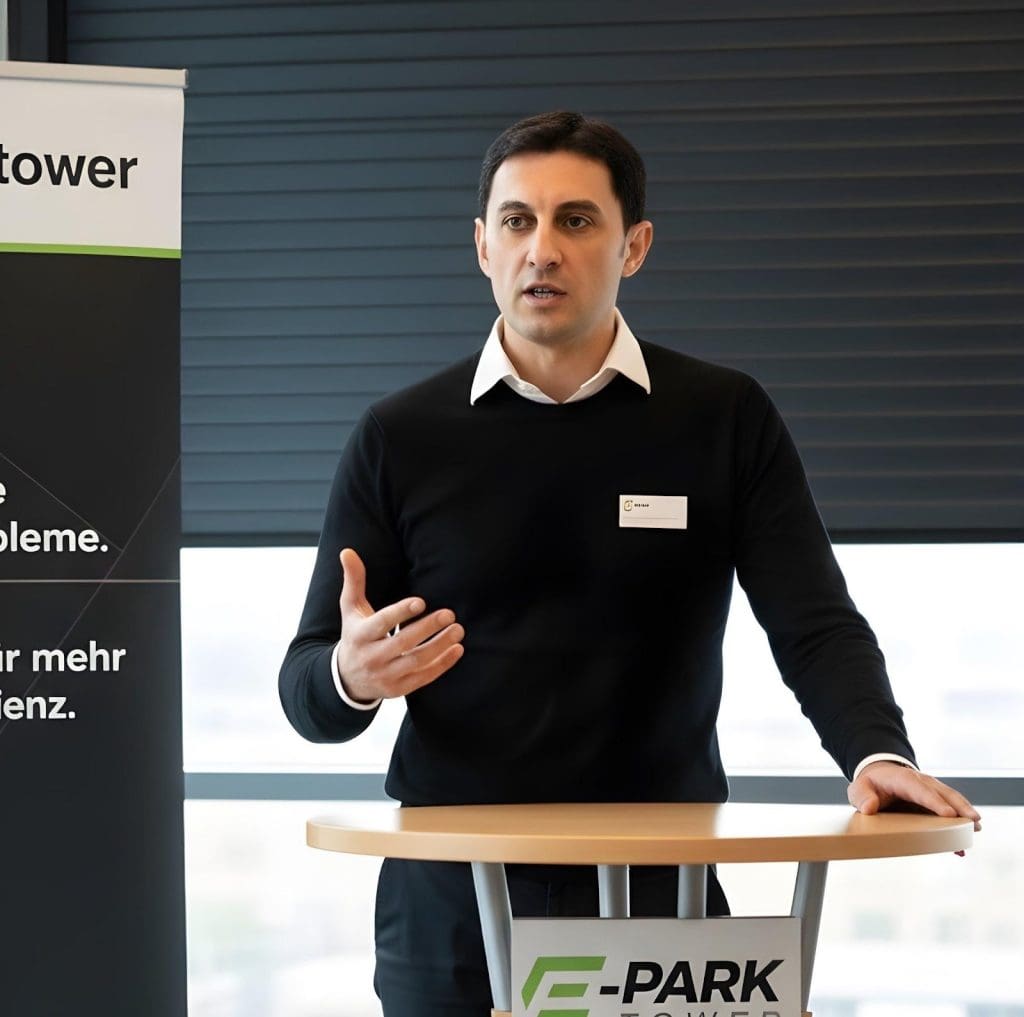
Presenting his latest infrastructure venture: a compact vertical system integrating structured parking capacity and EV charging for high-density urban environments.
Today, Astor works across three overlapping roles. As an operator-investor, he acquires stakes in mid-market companies, typically generating between 20 and 50 million euros in annual revenue, takes executive control personally during ownership transitions, and steps back only once the structure functions without him. As a board partner and adviser, he sits on boards and advisory councils across multiple sectors, as the person who articulates clearly what others in the room are only thinking. And as a mentor and quiet force behind a number of decisions that have become public under other people’s names, he shapes directions that rarely trace back to him in any official record.
His international network, assembled across Germany, Turkey, and multiple growth markets over three decades, is both his deal channel and his most tangible competitive advantage. It includes established relationships in Asian markets, contacts that can be activated directly for companies ready to expand into those regions, without the years of groundwork that typically precede a credible entry. He does not market this access. It surfaces when it is needed, through introductions that carry the weight of shared history.
“If a plan only works when everything goes right, it is not a plan. It is a bet. I do not bet with other people’s businesses.”
His method when entering any organisation is deliberately quiet at the surface. He does not arrive with a transformation programme or a consulting team. He observes, speaks to the people in the building rather than about them, and locates the decision nobody is making. Then he makes it. What follows is structural: who decides what, how problems surface before they become crises, what gets measured and what stops being measured. He works from fundamentals outward and does not consider the work finished until the organisation runs without his involvement.
He is equally direct about what he will not accept. He will not work inside what he calls unowned ambiguity, where accountability is spread so broadly that failure has no address. He will not build plans that depend on sustained exceptional effort from people who are already at capacity. And he will not sit on a board that measures its own success by the quality of its presentations. His test for governance is simple: does it catch the next avoidable problem before it becomes expensive, or does it document it afterward?
Among his current ventures is a capital-intensive infrastructure project developing a compact vertical system that integrates structured parking capacity and electric vehicle charging on minimal urban footprints. The engineering premise mirrors his operating premise: fixed space, rising demand, and existing infrastructure designed for conditions that no longer apply. He is building what the current conditions require, in partnership with institutional investors across Europe and Asia.
The question his model has always raised is whether the man and the method are separable. He would point to the 3,000-person business that has run without him for years, and the university that now serves over 40,000 students without his daily involvement. The organisations he has left behind have continued on the trajectories he set. That, more than any title or credential, is the argument.
“After all these years, I am still emotionally invested in finding the problem others walk past. That is not discipline. That is who I am.”
David Astor
David Astor operates through david-astor.com
contact@david-astor.com