
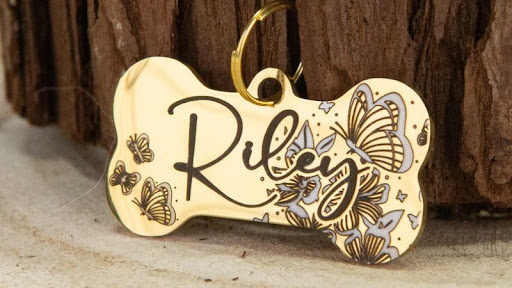
We spend a lot of time worrying about our dogs. We worry about their grain-free diets, their expensive chew toys, and whether they truly like the “puppy-accino” we bought them. But if you stripped away the fancy gear and the organic treats, what is the most important item your dog owns? It isn’t the designer bed. It is their personalized dog tags.
Think of a dog tag as your pet’s “lost and found” ticket. It is their voice when they decide to chase a squirrel three blocks away and forget the way home. In 2026, pet recovery technology has advanced, but the classic ID tag remains the most effective way for a neighbor to help your dog get home safely.
In this guide, we will explore why personalization matters, the logic of what to include, and the different materials that can withstand a dog’s chaotic lifestyle.
The Logic of the Tag: Why Microchips Aren’t Enough
A common misconception among pet owners is that a microchip is a “one-and-done” solution. While microchips are vital, they have one major flaw: they are invisible.
If your dog wanders into a neighbor’s yard, that neighbor likely doesn’t have a universal microchip scanner in their kitchen junk drawer. They have to load your dog into a car, drive to a vet, and wait for a scan. A personalized dog tag provides an instant solution. It tells the finder exactly who to call within five seconds of seeing the dog.
The Reality: Combining a microchip with a visible ID tag creates a dual-layer safety net. The tag is for the neighborhood, and the chip is for the shelter.
What Information Should You Include?
When you’re designing personalized dog tags, the space is limited. You don’t need to write your dog’s life story or their favorite Netflix show. You need to be strategic.
The Essentials:
- The Dog’s Name: This helps a stranger calm your dog by calling them by name.
- Your Phone Number: Include at least two numbers if possible. If you are on a plane or in a meeting, a backup number (like a spouse or parent) is a lifesaver.
- Your City: You don’t necessarily need your full street address, but providing the city helps the finder know if the dog is local or from out of town.
The “Bonus” Info:
- “I am Microchipped”: This tells a finder that if the tag is lost, there is a secondary way to identify the pet.
- Medical Needs: If your dog is diabetic or has severe allergies, a tag that says “Needs Meds” can speed up the recovery process.
- Reward: Some owners add “Reward if Found.” While most people help for free, it can be an extra incentive for someone to go the extra mile.
Choosing the Right Material: Metal vs. The World
Dogs are essentially four-legged chaos machines. They roll in the mud, jump in lakes, and engage in “zoomies” that would break most human-grade jewelry. Your choice of material for personalized dog tags determines how long that info remains readable.
| Material | Pros | Cons |
| Stainless Steel | Extremely durable, won’t rust, very cheap. | Can be heavy and noisy (clinking). |
| Brass | Classic look, very strong. | Tends to tarnish over time. |
| Silicone | Silent, jingle-free, many colors. | Can be chewed off if the dog is a “mouthy” player. |
| Anodized Aluminum | Very lightweight, comes in bright colors. | The engraving can wear off faster than steel. |
Humorous Advice: If your dog lives for the “clink-clink” sound of their tags hitting their water bowl at 3:00 AM, go with metal. If you value your sleep, look into silent silicone tags.
The Rise of the Smart Tag: QR Codes in 2026
As we move further into the digital age, personalized dog tags are getting a tech upgrade. QR code tags are becoming a standard.
When someone scans the QR code with their smartphone, they are taken to a digital profile of your dog. This can include:
- Multiple contact numbers.
- Photos of the dog (to prove it’s really them).
- Detailed medical records.
- A button to send the finder’s GPS coordinates to the owner.
The logic here is sound: you can update your phone number on a digital profile in seconds without having to buy a new physical tag.
Style Meets Safety: The Aesthetic Factor
Let’s be honest—we want our dogs to look good. Whether your dog is a rugged trail-runner or a pampered “purse-dog,” there is a tag style to match their personality.
- The Minimalist: A simple, deep-engraved brass circle. Timeless.
- The Diva: Glitter-filled acrylics or Swarovski crystal borders.
- The Tactical Dog: Slide-on tags that lay flat against the collar. These are great for hunting or working dogs because they don’t snag on branches.
Expert Insight: According to Petfinder, 1 in 3 pets will go missing at some point in their life. A clear, readable ID tag increases the chance of a safe return by over 70%.
How to Maintain Your Dog’s Tags
Personalized tags are not “set it and forget it.” A human writing behavior pattern we often see is “tag neglect.” Here is how to avoid it:
- Check for Readability: Once a month, look at the tag. Is the phone number scratched off? If you can’t read it, neither can a stranger.
- Test the Ring: The “split ring” that attaches the tag to the collar is the weakest link. If it looks stretched or thin, replace it before it snaps during a walk.
- Clean the Grime: If your dog is a fan of mud baths, dirt can fill in the engraved letters. A quick scrub with an old toothbrush and soapy water does wonders.
Conclusion: A Small Investment for a Big Return
In the grand scheme of pet ownership, a personalized dog tag is one of the cheapest things you will ever buy. Yet, its value is immeasurable. It is the bridge between a lost, frightened animal and a happy reunion on your front porch.
Whether you choose a classic stainless steel disc or a high-tech QR code version, the key is to keep the information current and the tag attached. Don’t wait until the gate is accidentally left open to realize your dog is “anonymous.”
Trusted Resources:
- American Kennel Club (AKC): The Importance of Pet ID Tags.
- Humane Society: How to Identify Your Pet.
- PetMD: Microchips vs. ID Tags.
Final Thought: Your dog might not know what their tag says, but they certainly know the sound of you calling their name when they get home. Keep those tags updated!