
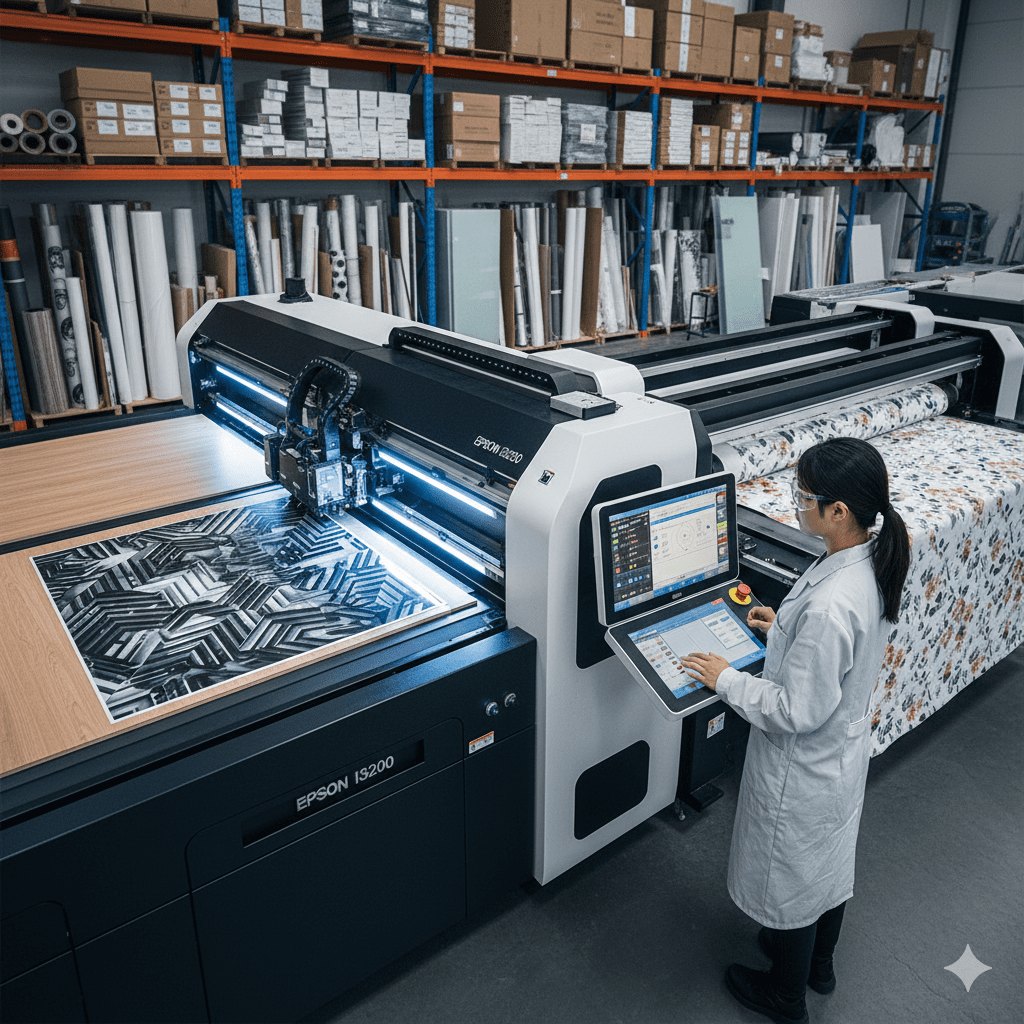
Hybrid UV printers are transforming the printing industry by combining flatbed and roll-to-roll printing capabilities in a single machine. They allow businesses to print on a wide variety of materials, including acrylic, metal, glass, wood, vinyl, and fabric. By switching between modes in minutes, print shops save time, reduce costs, and increase production efficiency. Professional-grade hybrid UV printers enhance output quality, support complex designs, and expand revenue streams. Whether you run a small custom shop or a large industrial facility, hybrid UV technology empowers you to take on diverse projects with precision and speed.
What Makes Hybrid UV Printers Different from Traditional Printers
Hybrid UV printers combine flatbed and roll-to-roll printing, unlike traditional printers that require separate machines for rigid boards and flexible media. This integration reduces equipment costs, saves space, and increases production flexibility. With advanced Ricoh or Konica printheads, hybrid UV printers offer CMYK, White, and Varnish printing, delivering vibrant colors and detailed textures. Switching between rigid and flexible media takes only minutes, improving turnaround times. These printers are designed for commercial use, not hobbyist setups, allowing print shops to manage large volumes efficiently while maintaining high-quality output across multiple substrates.
Hybrid UV Printer Features for Professional Printing
Modern hybrid UV printers include features like LED UV curing for scratch-resistant prints, multi-layer printing for textured effects, AI visual positioning for precise alignment, and height sensors for materials up to 80mm thick. Multi-printhead arrangements allow simultaneous CMYK, White, and Varnish printing. These features increase print accuracy, reduce material waste, and save production time. Whether printing promotional products, packaging, or signage, hybrid UV printers ensure consistent high-quality output. Businesses benefit from a single versatile device capable of handling diverse tasks, from intricate designs on transparent substrates to large-format banners, all without sacrificing speed or color fidelity.
Applications of Hybrid UV Printers in Various Industries
Hybrid UV printers are widely used in signage, banners, POP displays, interior décor, packaging, promotional items, and industrial components. They print on wood, acrylic, metal, glass, vinyl, fabric, ceramic, and more. Businesses can expand their offerings without investing in separate machines for each substrate. Interior designers print wall panels, furniture décor, and wallpapers, while marketing companies produce branded merchandise efficiently. Industrial clients use hybrid UV printers for instrument panels and metal plates. This versatility allows companies to take on diverse orders, maximize production efficiency, and offer high-quality products across multiple markets.
Choosing the Right Hybrid UV Printer for Your Business
Choosing the right hybrid UV printer depends on print volume, media types, workspace size, and staff expertise. Small shops may prefer compact units for custom orders, while large facilities need industrial models for high-speed production. Consider printhead numbers, ink channels, optional AI positioning, and multi-layer printing. Matching printer capabilities to workload avoids overspending and underutilization. Testing sample materials ensures compatibility and prepares your team for maintenance. Start with a versatile printer that can grow with your business, allowing for expansion into new product lines without purchasing additional machines.
Cost and ROI Considerations for Hybrid UV Printers
Hybrid UV printers require more than an upfront purchase analysis. Operating costs, ink efficiency, LED energy savings, and maintenance affect total ownership. LED curing consumes 70% less power than mercury lamps, while precise droplet control reduces waste. Consolidating flatbed and roll-to-roll production into one system cuts equipment costs by up to 60%. Predictable expenses allow accurate job quoting and profit calculation. Calculating ROI involves measuring increased billable hours, new product opportunities, and reduced overheads. A smart hybrid UV printer investment ensures the printer pays for itself quickly while expanding your business capabilities and profitability.
Technical Support and Maintenance Tips
Maintaining hybrid UV printers ensures consistent performance. Regular printhead cleaning, software updates, and ink checks prevent downtime. Many manufacturers provide direct technical support, guiding calibration, troubleshooting, and printhead replacements remotely. Reliable support ensures fast issue resolution, preventing production delays. Proper maintenance preserves color accuracy, substrate compatibility, and print precision. Investing in training for your team enhances printer longevity. Choosing a supplier with dedicated support minimizes disruptions, protects your investment, and maintains client satisfaction with timely, high-quality production.
Hybrid UV Printer Printing Quality and Accuracy
Hybrid UV printers offer high color accuracy, low graininess, and exceptional detail reproduction. Multi-layer printing enables textures, embossing, and dimensional effects. Visual positioning systems ensure perfect alignment on irregular, transparent, or reflective surfaces. CMYK+White+Varnish printing reproduces vibrant colors consistently across rigid and flexible media. Whether producing signage, packaging, or promotional items, hybrid UV printers deliver professional-quality output that attracts repeat clients and premium pricing. Consistent accuracy and finish quality set hybrid printers apart from traditional machines, making them ideal for shops seeking commercial-grade results without compromising speed or substrate versatility.
Expanding Your Business with Hybrid UV Printing
Hybrid UV printers enable businesses to explore new markets and products, from personalized gifts to large-format décor. They allow on-demand production without extra machines, saving costs and workspace. Startups can launch side businesses quickly, while established shops can scale industrial projects. Flexible printing capabilities attract clients seeking custom, multi-material solutions. Combining rigid and roll-to-roll production in one system increases workflow efficiency, freeing staff to handle more jobs. By leveraging versatility, print shops can diversify offerings, increase revenue streams, and remain competitive without investing in multiple specialized machines.
Future Trends in Hybrid UV Printing
Hybrid UV printing technology is evolving with faster speeds, increased substrate compatibility, and advanced automation. AI positioning and multi-layer printing improve precision and creativity. LED curing and modular printheads reduce operational costs while increasing output quality. Sustainable printing with low waste is becoming more important. Demand for personalized, high-quality products will drive hybrid UV printer adoption across industries. Staying updated on these trends allows businesses to remain competitive, adopt new applications quickly, and maintain profitability. Hybrid UV printers are poised to become the standard for modern print shops seeking efficiency, quality, and flexibility.
- Q: What is a hybrid UV printer?
A: It’s a versatile printer that handles both rigid sheets (flatbed) and flexible roll media, allowing one machine to manage multiple printing applications. - Q: Why should a print shop invest in a hybrid UV printer?
A: It reduces downtime, eliminates the need for separate printers, and allows faster switching between materials, saving time and costs. - Q: How do hybrid UV printers differ from traditional printers?
A: They combine flatbed and roll-to-roll printing in a single machine, unlike traditional printers that require two separate devices. - Q: What features make hybrid UV printers professional-grade?
A: LED UV curing, multi-layer printing, AI visual positioning, height measurement, and multi-printhead support (CMYK+W+V). - Q: What industries benefit from hybrid UV printing?
A: Signage, packaging, interior décor, promotional products, industrial components, and on-demand custom printing. - Q: Can hybrid UV printers handle both large and small print jobs?
A: Yes, they scale efficiently for custom orders as well as high-volume industrial production. - Q: How does LED UV curing improve print durability?
A: It instantly hardens ink for scratch-resistant, weatherproof, and long-lasting prints. - Q: What factors affect the ROI of a hybrid UV printer?
A: Operational efficiency, ink and energy consumption, maintenance costs, and expanded production capabilities. - Q: How important is technical support for hybrid UV printers?
A: Very important. Direct support ensures fast troubleshooting, calibration guidance, and minimal production downtime. - Q: What future trends will impact hybrid UV printing?
A: Faster speeds, advanced automation, AI visual positioning, increased substrate compatibility, sustainable low-waste production, and multi-layer textured printing.