

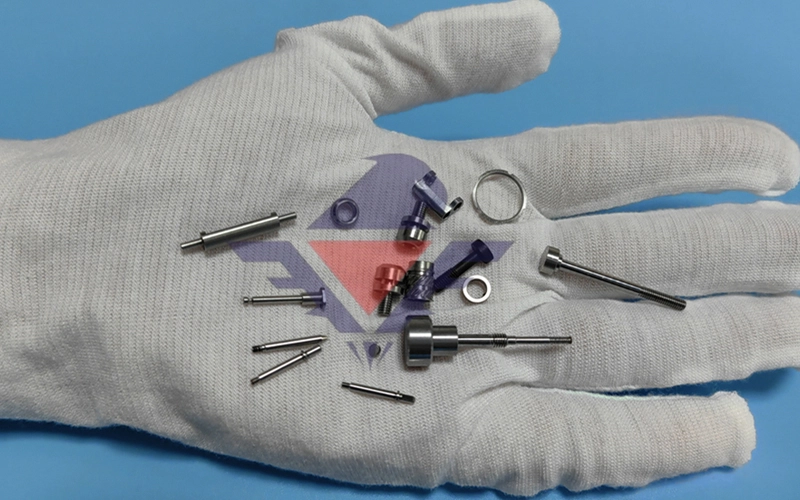
In an era defined by global supply chain disruptions, soaring demands for miniaturization, and relentless pressure to innovate, a quiet revolution is underway on the factory floors of advanced industrial nations. The catalyst? A strategic shift towards hyper-precision manufacturing, led by the sophisticated capabilities of modern CNC Swiss machining technologies. This isn’t just an evolution of process; it’s a fundamental reshaping of how companies bring ideas to market, manage risk, and secure a competitive edge.
For business leaders and investors, understanding this shift is no longer a technical nicety—it’s a strategic imperative.
The Macro-Trends Fueling the Demand for Precision
Several powerful macroeconomic forces are converging to elevate the role of the advanced Swiss machine shop from a job shop to a critical innovation partner.
- Supply Chain Localization & Reshoring: The vulnerabilities of extended global supply chains, starkly exposed during the pandemic, have prompted a massive push towards regionalizing and reshoring manufacturing. Companies are prioritizing partners who can deliver complex components reliably and quickly, without ocean freight delays. A domestic, high-precision machine shop becomes a pillar of supply chain resilience.
- The Miniaturization Megatrend: From next-generation medical implants to compact aerospace actuators and complex electronic components, products are getting smaller, smarter, and more powerful. This trend demands manufacturing capabilities that can operate at microscopic tolerances, a domain where CNC Swiss machining excels due to its unparalleled stability and accuracy.
- Advanced Material Science: The proliferation of difficult-to-machine materials like titanium alloys, Inconel, and PEEK is driven by their superior strength-to-weight ratios and biocompatibility. Machining these materials requires not just powerful equipment, but deep metallurgical expertise, a core competency of top-tier specialists like Falcon CNC Swiss.
CNC Swiss Machining: The Engine of Modern Industrial Production
So, what makes this technology so uniquely suited to today’s challenges? Unlike conventional machining, Swiss-type lathes are engineered for perfection in small, complex parts.
The defining feature is the guide bushing, which provides rigid support to the bar stock millimeters away from the cutting tool. This eliminates vibration and deflection, enabling:
- Micron-Level Tolerances: Holding tolerances within ±0.0002 inches is routine, which is critical for parts in dynamic assemblies.
- Superior Surface Finishes: The inherent stability allows for finishes that often eliminate the need for secondary operations, reducing lead times and cost.
- Complex Geometries in a Single Setup: With live tooling and multiple axes, these machines can mill, drill, and turn a part complete, drastically improving accuracy and efficiency.
This technical capability translates directly into business outcomes: reduced waste, faster time-to-market, and higher product reliability.
Sector Spotlight: Where Precision is Paving the Way
The impact of this manufacturing evolution is most visible in high-stakes, high-growth industries.
- Medical Device & Surgical Robotics: The demand for patient-specific implants and minimally invasive surgical tools requires biocompatible materials machined with absolute precision and flawless surface finishes. A advanced swiss machine shop is instrumental in turning groundbreaking medical designs into life-saving, FDA-approved realities.
- Aerospace & Defense: The need for lightweight, incredibly strong, and reliable components is non-negotiable. From sensor housings to engine components, the integrity of every part is paramount. The ability of a shop like Falcon CNC Swiss to machine exotic alloys to exacting standards makes it a valuable partner in this sector.
- Advanced Electronics & Connectivity: The 5G and IoT revolutions rely on precisely machined waveguides, connectors, and shielding components. Any imperfection can lead to signal degradation, making precision machining a cornerstone of global connectivity.
The Business Case: More Than a Vendor, A Strategic Partner
The forward-thinking manufacturing philosophy embraced by leaders in this space, such as Falcon CNC Swiss, involves a deep collaboration with clients. This goes beyond simply executing a print. It involves:
- Design for Manufacturability (DFM) Consulting: Partnering early in the design phase to suggest modifications that enhance producibility without compromising function, often significantly reducing final part cost.
- Vertical Integration: Offering secondary services like anodizing, passivation, and laser marking under one roof, streamlining the supply chain and ensuring quality control from raw material to finished product.
- Agile Production & Digital Workflows: Leveraging modern ERP systems and data-driven processes to provide transparent quoting, real-time production updates, and reliable delivery schedules—a critical factor for JIT inventory models.
The Future Outlook: Smart Factories and Sustained Innovation
The trajectory is clear. The integration of IoT sensors and AI-driven predictive analytics into CNC Swiss machining centers is creating the “smart factory.” This will lead to even greater efficiencies, predictive maintenance to eliminate downtime, and data-optimized production flows. Companies that align themselves with partners investing in this digital future will be best positioned to capitalize on the next wave of manufacturing innovation.
Conclusion: An Essential Component of Corporate Strategy
For CEOs and financial strategists, the message is clear: advanced manufacturing capability is a direct contributor to corporate resilience, innovation capacity, and bottom-line performance. The choice of a manufacturing partner is no longer a simple procurement decision; it is a strategic one.
In the relentless pursuit of smaller, stronger, and smarter products, the expertise found within a technologically advanced swiss machine shop is indispensable. As global business continues to navigate a landscape of disruption and opportunity, those who leverage these precision capabilities will be the ones shaping the future of industry.