

The high-finance world can be considered an unbeatable fortress, packed with complex words, billion-dollar transactions, and negotiations with a high risk. However, investment banking is the major player in this world. An investment bank is not the local bank where you keep your savings and checking accounts, it is a room full of activities in modern global trade a vital middleman that links the companies in need of huge sums of money and the financial institutions willing to put their money into investment.
For any professional with ambitions to get into the finance world, it is necessary to comprehend this field. It is the basis for a career that influences the economies. This in-depth guide offers a beginner’s perspective on investment banking, its main activities, the key areas, and the required skills for success with a strong focus on the importance of an Investment Banking Course and a solid Financial Modeling Course.
The Core Role: Architects of Capital and Strategy
In a nutshell, investment banking provides its clients with two major, closely related functions: the raising of capital and the giving of advice concerning strategy. The typical clients are large corporations, governments, and institutional investors.
1. Capital Raising (Underwriting)
In the case of a company that needs large amounts of money for its operations, investment bank, and its big client can help raise the money through the bank’s structuring and issuance of new securities, a process that goes by the name of underwriting.
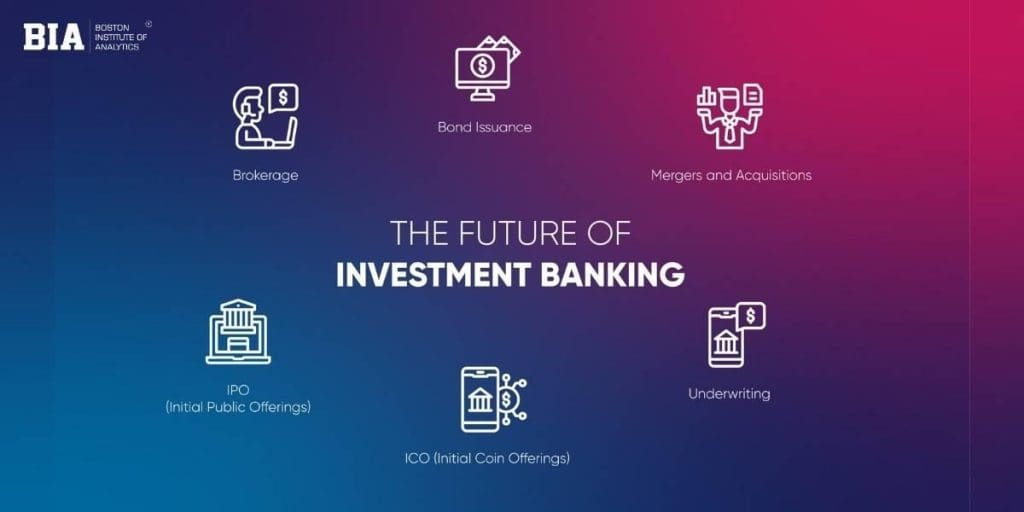
- Initial Public Offerings (IPOs): This is the point of time when a private corporation goes public by selling its shares for the first time. The investment bank takes charge of the valuation, the adherence to the regulations (like SEC filings), the marketing to the investors, and the provision of the sale guarantee thus serving as a bridge between the company and the stock market.
- Debt Capital Markets (DCM): Aiding clients with fundraising by means of bonds (debt) offered to investors.
- Equity Capital Markets (ECM): Aiding clients with raising money via the issue of new stock (equity) after an IPO, like a secondary offering.
2. Strategic Advisory (Mergers & Acquisitions – M&A)
It is usually regarded as the most dazzling and intricate duty at the same time. Investment banks provide guidance to businesses regarding the purchase, sale, or merger of other companies as well as the method of implementation.
- Sell-Side Mandates: Giving advice to a seller regarding the best way to sell their company, raising the price of the sale to the maximum, and locating the right buyer.
- Buy-Side Mandates: Assisting the acquiring company in selecting the best target, appraising the target, negotiating the price, and drafting the contract.
- Restructuring: Providing guidance to companies that are financially troubled on how to modify their capital and debt structure so as not to go bankrupt or come out of it stronger.
Thus, investment banks are not only financial matchmakers (bringing together capital and opportunity) but also expert advisors (helping in making difficult decisions concerning business).
Anatomy of an Investment Bank: Divisions and Hierarchy
The term “full-service” investment bank refers to a very intricate and interconnected system. One must comprehend its composition in order to gain insights about the pipeline of careers. Usually, the company is partitioned into three major functional regions:
- The Front Office (The “Rainmakers”): This area, through facing clients, generating revenue, and conducting the core investment banking and market activities, is the firm’s main operational area.
- Investment Banking Division (IBD): This comprises the group which deals with M&A advisory, IPOs, and Restructuring. IBD is often further divided into Industry Groups (e.g. Technology, Healthcare, Energy) and Product Groups (e.g. M&A, Leveraged Finance).
- Sales & Trading (S&T): Deals are executed by the Sales team for the institutions’ clients or the bank’s own capital is used to trade in the Trading desk.
- Equity Research: Analysts are responsible for the comprehensive examination of companies, the writing of reports, and the giving of “Buy,” “Sell,” or “Hold” ratings to institutional investors.
The Middle Office (The “Control Tower”)
The teams in charge of such activities maintain the company’s balance sheet, improve the company’s operations and at the same time reduce the financial and compliance risks. Among these groups, Risk Management, Treasury, and Compliance take the lead.
The Back Office (The “Engine Room”)
These operational units are mainly responsible for the administrative and technical sides of the company’s transactions, that is, Operations, Technology (IT), and Accounting. Their work is very important for both trade settlement and regulatory reporting.
Essential Skills: Beyond the Suit and Tie
The work is hard and it requires a specific combination of technical skills and interpersonal skills. For the beginners, it is very important to concentrate on these core skills:
Hard Skills (The Technical Foundation)
The most critical technical skill is Financial Modeling.
- Financial Modeling: Mathematical modelling of the company’s past, present, and future financial performance forms the foundation for valuation, M&A analysis, and forecasting. This skill’s mastery is a requirement for an entry-level analyst.
- Valuation Techniques: Discounted Cash Flow (DCF) analysis, Comparable Company Analysis (CCA), and Precedent Transactions are the main valuation techniques and must be well-known.
- Accounting Fluency: Complete comprehension of the three financial statements (Income Statement, Balance Sheet, and Cash Flow Statement) and the effect of transactions on them is necessary.
- Advanced Microsoft Excel: It is essential to be able to quickly navigate, manipulate, and analyze large datasets as a skill.
Soft Skills (The Strategic Edge)
Subsequently investment banking is a recommended role, people skills are just as crucial as technical acumen.
- Attention to Detail: Because of the gigantic amounts of money that are involved, just a tiny mistake in a financial model can lead to disastrous results. The highest form of money is accuracy.
- Communication: The skill of making difficult financial ideas easy to understand for clients using presentations (pitch books), and written reports that are clear and brief.
- Work Ethic and Resilience: Investment banking has a reputation for offering very long and tiring days. Professional commitment at a high level and the ability to cope with extreme pressure are necessary.
- Analytical Thinking: Still, the capacity to rapidly absorb new information, detect market trends, and solve complicated business issues.

The Gateway: Why You Need an Investment Banking Course
The distance that separates academic theory from the practical requirements of a finance job is huge. The most straightforward way to close this gap and be recognized in a highly competitive area is to have a specialized education like an Investment Banking Course or a Financial Modeling Course dedicated to it.
Practical Application and Skill Building
A university degree provides the student with financial theory; meanwhile, a specialized course imparts the student with financial practice. The course provides practical training based on real-world case studies and transactions, thus enabling the student to create the working portfolio that the employers are looking for.
A focused Financial Modeling Course teaches you:
- How to build a three-statement model from scratch?
- How to construct a comprehensive DCF model to value a company?
- How to perform accretion/dilution analysis for M&A deals.
- Advanced Excel shortcuts and best practices that significantly boost productivity.
A Competitive Edge
Employers are aware that applicants having undergone an Investment Banking Course are equipped with all necessary skills and will need minimal training at the workplace. The respective certifications are an indication of the applicants’ devotion to the field and the mastery of the central technical skills, mainly financial modelling, which gives the applicant a unique edge over others in the interview and early career performance. They, in fact, change a theoretically bright graduate into a technologically skilled analyst.
Final Thoughts: Shaping the Future of Business
Investment banking is not just a rewarding profession but a driving force behind global economic advancement. It allows the largest corporations to innovate, grow, and change their structure which in turn influences industry and economy. For a novice, the trip to this world is difficult but very rewarding.
The path is not just a dream, but requires mastery of the tools which can be used to get into the investment world. By going through a hard Investment Banking Course and a Financial Modeling Course, you are not only getting a certificate but also acquiring the different skills that are highly valued and are the common language of high finance. The above-said courses are like an apprenticeship these days, preparing you to not only see the finance world but to also be a part of it and even influence it by making the largest and most strategic deals of tomorrow. Start by mastering the models, and the rest of the market will follow.