

Indian classical rhythm, with its intricate tala systems and expressive improvisation, has become a cornerstone of modern fusion music. This blending of traditional rhythmic frameworks with Western harmonic and melodic structures creates a rich, dynamic space for both performers and audiences. For musicians trained in conservatory-style music education, understanding these rhythmic traditions not only expands technical skill but also fosters deep intercultural musical literacy.
Understanding the Foundations of Indian Rhythm
Indian classical rhythm, particularly in the Hindustani and Carnatic traditions, is structured around talas—rhythmic cycles that range from simple, four-beat patterns to highly complex 16 or 32-beat cycles. Each tala defines a repeating sequence of beats that are subdivided into smaller units called vibhags, providing both a framework and a canvas for improvisation. Students studying under performance-based music training programs are encouraged to internalize these cycles, developing a sense of timing and phrasing that transcends mere counting.
The learning process typically begins with slow, methodical practice of basic patterns, progressing to more intricate compositions known as kaidas, relas, and tukdas. Conservatory-style music education approaches these studies with structured curriculum modules, combining theoretical understanding with practical execution. This dual focus ensures that students can perform with technical precision while also appreciating the aesthetic and cultural nuances of the tradition.
Incorporating Indian Rhythm into Western Fusion
Fusion music thrives on dialogue between musical cultures, and Indian classical rhythm offers unique possibilities for integration. When tabla or mridangam patterns are combined with Western instruments such as piano, guitar, or drum kits, the result is a layered texture that challenges conventional metrical expectations. For example, a 7-beat tala might be paired with a 4/4 jazz groove, creating cross-rhythms that demand both rhythmic dexterity and interpretive sensitivity from performers.
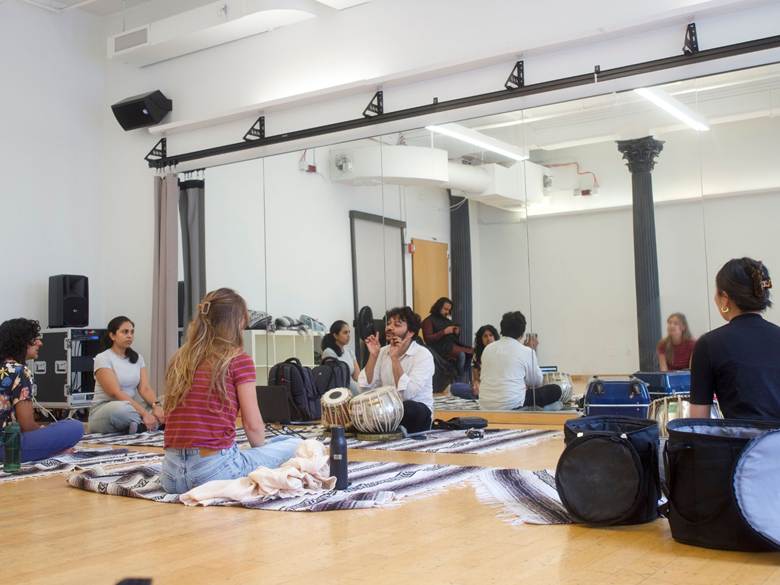
Performance-based music training in Western conservatories often emphasizes ensemble interaction, which is critical when incorporating Indian rhythms. Musicians must learn to listen attentively, responding to microtiming cues and improvisatory flourishes. Workshops and masterclasses with tabla virtuosos or Carnatic percussionists provide invaluable experience, allowing students to explore these interactions in real-time performance contexts.
Technique and Improvisation
At the heart of Indian classical rhythm is improvisation. Unlike Western metronomic approaches, Indian percussion emphasizes fluidity, ornamentation, and the dynamic interplay between performer and ensemble. Conservatory-style music education increasingly integrates these improvisational techniques into broader curricula, encouraging students to experiment with rhythmic modulation, syncopation, and polyrhythms.
For tabla players in a fusion context, mastering hand techniques and stroke articulation is essential. Different strokes—such as na, tin, and dhin—produce distinctive timbres that can complement melodic lines or percussive accents in a jazz or world-music ensemble. Conservatory-trained percussionists benefit from structured exercises that isolate these strokes while also placing them within extended compositions, cultivating both precision and expressivity.
Ensemble Dynamics in Fusion Contexts
Ensemble work is a key component of both performance-based music training and Indian classical practice. In fusion settings, the tabla often interacts with Western rhythm sections, strings, wind instruments, or electronic soundscapes. Success depends on the ability to maintain tala integrity while contributing to the collective groove.
Western conservatories increasingly include global rhythm modules in ensemble programs, allowing students to experiment with cross-cultural interactions. These programs emphasize not only technical execution but also collaborative listening and adaptive improvisation. For instance, a jazz pianist might adapt their chordal phrasing to align with a tabla’s 10-beat cycle, while a drummer adjusts backbeat accents to accommodate syncopated Indian rhythms.
Performance and Stage Presence
Performance-based music training underscores the importance of live execution in both Western and Indian classical contexts. Fusion concerts offer unique challenges: performers must negotiate complex rhythmic structures, maintain ensemble cohesion, and engage audiences unfamiliar with tala frameworks.
Indian classical percussionists bring a performative presence honed through traditional recitals, where improvisation and rhythmic virtuosity are central. Conservatory-trained musicians can learn to channel these qualities, using stage awareness, dynamic contrast, and interactive phrasing to elevate fusion performances. This synergy not only enhances the audience experience but also deepens the performer’s understanding of rhythm as a communicative tool.
Progression and Mastery
Integrating Indian classical rhythm into a Western educational framework requires deliberate progression. Beginners may start with simple rhythmic cycles and basic hand techniques, advancing to complex compositions and improvisational exercises. Conservatory-style music education facilitates this progression through structured curricula, assessments, and performance opportunities, ensuring that students develop both technical mastery and interpretive insight.
Advanced students often engage in cross-disciplinary projects, composing original fusion works or collaborating with world-music ensembles. These projects highlight the versatility of Indian rhythm and its capacity to transform Western musical idioms. By approaching rhythm as both a technical skill and a cultural expression, musicians cultivate a holistic understanding that enhances their artistry and professional versatility.
Cultural and Educational Implications
Incorporating Indian classical rhythm into conservatory settings extends beyond performance. It fosters cultural respect, historical awareness, and adaptive musicianship. Students exposed to these traditions gain insight into the social and spiritual contexts of Indian music, learning that rhythm is not merely a mechanical construct but a vehicle for storytelling and emotional expression.
Educational programs that prioritize performance-based music training alongside cultural immersion create musicians who are technically proficient and culturally literate. These musicians can navigate diverse musical landscapes, contribute meaningfully to global fusion projects, and serve as ambassadors for intercultural collaboration.
Conclusion
The role of Indian classical rhythm in fusion music exemplifies the potential of cross-cultural musical dialogue. Through conservatory-style music education and performance-based music training, musicians gain the technical skill, improvisational dexterity, and cultural insight necessary to integrate complex tala systems into contemporary ensembles.
By bridging the rich rhythmic traditions of India with Western compositional and improvisational practices, fusion music not only evolves artistically but also nurtures a new generation of globally minded performers. Indian classical rhythm becomes both a tool and a language, enabling musicians to explore novel sonic landscapes while honoring centuries of tradition. This integration highlights the transformative power of rhythm, demonstrating that the convergence of cultural knowledge and technical mastery can produce music that is vibrant, innovative, and deeply human.