
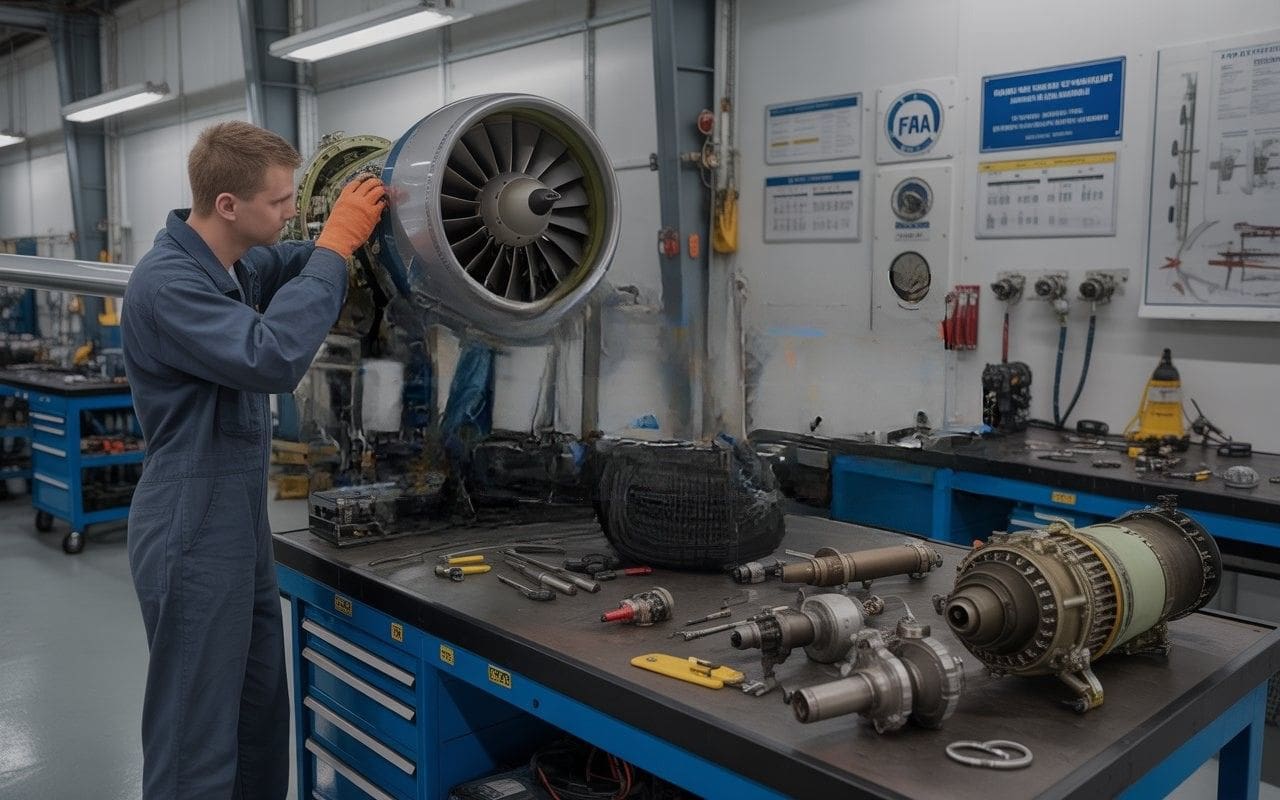
In aviation, safety and reliability are paramount. Every aircraft relies on thousands of precisely engineered components, like starter generators, motors, and relays, working in harmony. Over time, these parts undergo natural wear, making regular maintenance crucial for airworthiness and cost control.
That’s where aircraft component overhaul comes in, a process that restores parts to their original performance standards. However, only FAA-certified repair stations are authorized to perform this specialized work, ensuring every overhauled component meets strict safety, quality, and regulatory requirements for dependable flight operations.
What Is an FAA-Certified Repair Station?
An FAA-certified repair station is a maintenance facility approved by the Federal Aviation Administration (FAA) under Part 145 of the Federal Aviation Regulations. This certification authorizes the facility to perform specialized maintenance, repairs, and overhauls on aircraft components, engines, and systems.
To achieve and maintain certification, these military aircraft repair stations must meet rigorous FAA standards related to:
1. Quality control and documentation: Every process must be recorded and traceable.
2. Trained and licensed technicians: Staff must be certified and regularly trained to handle aircraft systems.
3. Approved tools, equipment, and procedures: Only FAA-approved methods and calibrated equipment can be used.
4. Facility inspection and compliance: Regular FAA audits ensure ongoing adherence to safety and regulatory requirements.
Essentially, FAA-certified stations for aircraft component overhaul act as trusted guardians of aviation safety. Their role is not just to fix parts but to ensure that every overhauled component performs as though it just left the factory floor, meeting or exceeding original equipment manufacturer (OEM) specifications.
Why Certification Matters in Aircraft Component Overhaul
Choosing an FAA-certified repair station isn’t just a matter of preference, it’s a matter of safety, compliance, and cost-effectiveness. Here’s why certification makes a critical difference:
1. Uncompromised Safety: FAA-certified stations operate under strict regulations that eliminate guesswork from maintenance. Each overhaul is carried out according to proven standards that ensure component reliability and flight safety.
2. Quality Assurance and Traceability: Every step of the process, from disassembly to reassembly, is documented. This traceability provides operators with complete confidence in the part’s history and compliance status.
3. Compliance with Global Regulations: Many certified facilities for aircraft component repair also hold dual approvals, such as EASA Part-145, allowing them to serve international airlines and operators while maintaining global regulatory compliance.
4. Reduced Downtime and Cost Efficiency: Certified repair stations often provide exchange programs and overhaul alternatives that keep fleets flying without long waits for new parts. Overhauling components can extend their life cycle significantly, saving operators from costly replacements.
4. Enhanced Fleet Reliability: Regular aircraft component overhauls at certified stations ensure components operate at peak efficiency, reducing the risk of unscheduled maintenance or AOG (Aircraft on Ground) situations.
Inside the Overhaul Process at a Certified Repair Station
Behind every reliable aircraft is a meticulous overhaul process managed by trained technicians and governed by FAA-approved standards. Here’s what typically happens inside an FAA-certified repair station:
1. Initial Inspection and Evaluation
Each component is carefully examined for wear, corrosion, or electrical failure. Technicians, in coordination with aircraft parts distributors, determine whether it needs a full overhaul, minor repair, or replacement.
2. Disassembly and Cleaning
The part is disassembled into individual components. Each piece is cleaned using approved solvents or ultrasonic technology to remove contaminants, grease, or carbon buildup.
3. Detailed Component Inspection
Every sub-component undergoes precision inspection using advanced tools like borescopes and micrometers. Any item outside OEM tolerances is repaired or replaced using FAA-approved parts.
4. Repair and Replacement
Technicians perform mechanical and electrical repairs using calibrated equipment. For example, in a starter generator overhaul, bearings, brushes, and armatures are restored or replaced to meet OEM performance standards.
5. Reassembly and Testing
The repaired parts are reassembled and subjected to functional, electrical, and performance tests under simulated flight conditions. Only components that meet FAA and OEM aircraft component overhaul requirements move forward.
6. Final Quality Check and Certification
After successful testing, the component is tagged with an FAA Form, a document verifying that the overhaul meets all FAA standards. The part is then ready to return to service, ensuring complete confidence for operators and pilots alike.
How to Choose the Right FAA-Certified Partner
Selecting the right aircraft component overhaul partner can directly impact your fleet’s safety, cost-efficiency, and operational uptime. Here’s what to look for when choosing a certified repair station:
1. Range of Capabilities: Choose a partner experienced in handling a wide range of components such as starter generators, contactors, relays, motors (AC/DC), lighting systems, and electromechanical parts.
2. Advanced Tools and Technology: Ensure the facility uses state-of-the-art diagnostic equipment, OEM specifications, and calibrated instruments for precision testing.
3. Skilled and Experienced Technicians: The expertise of FAA-licensed technicians is crucial for consistent, high-quality overhauls.
4. Fast Turnaround and Support: Look for partners who, like trusted aircraft parts distributors, offer quick turnaround times, AOG (Aircraft on Ground) support, and exchange programs to minimize downtime.
5. Dual Certification (FAA + EASA): If your operations span multiple regions, choose a station certified by both the FAA and international authorities to ensure seamless service and compliance.
6. Proven Reputation and Reliability: Experience matters. Established companies like NAASCO, with over 35 years in the aviation maintenance industry, have earned trust for delivering high-quality, cost-effective overhaul and repair solutions across commercial, military, and rotary-wing sectors.
Conclusion
In aviation, precision and trust are everything. The aircraft component overhaul process plays a vital role in ensuring that every flight operates safely and efficiently, and FAA-certified repair stations stand at the heart of this mission.
Their certification isn’t just a badge of approval; it represents a promise of safety, quality, and accountability. From inspecting complex electrical components to restoring vital systems, these facilities uphold the highest standards set by the aviation industry.
When it comes to aircraft component overhaul, experience matters. Choose NAASCO for certified repair solutions that meet the highest industry standards.
Contact our team today!