

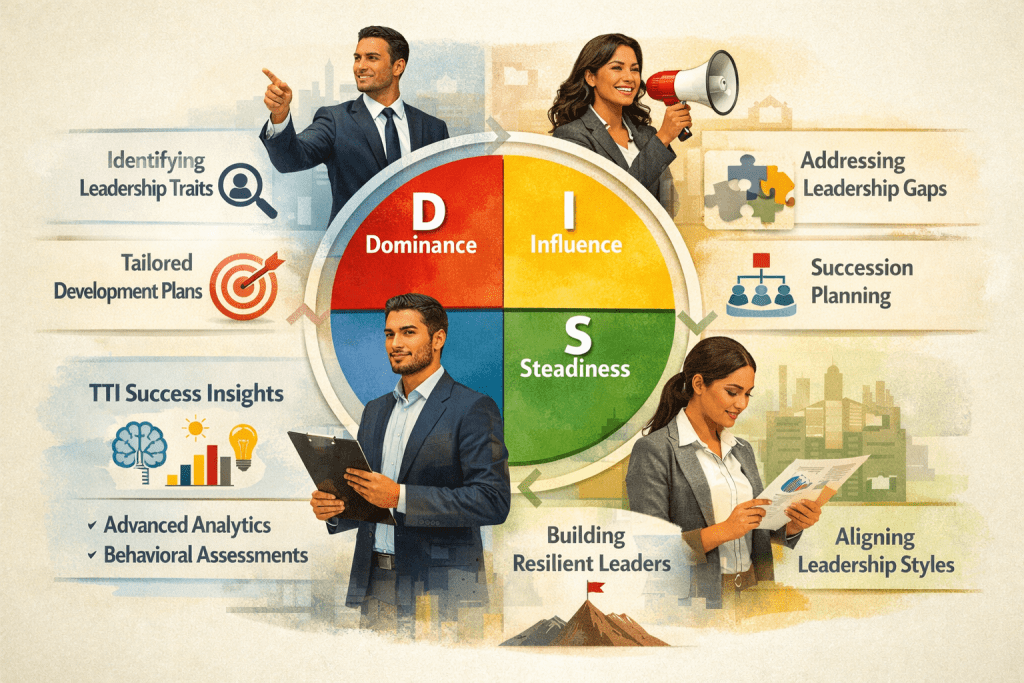
Leadership development is a cornerstone of organizational success. Effective leaders inspire, motivate, and guide their teams to achieve common goals. However, identifying leadership potential and nurturing these qualities can be a complex task, especially in organizations with diverse teams. This is where DISC assessments come in. By evaluating personality traits and behavioral patterns, DISC assessments provide valuable insights into the inherent leadership qualities of employees.
In this article, we’ll explore the role of DISC assessment in leadership development. We’ll also delve into how TTI Success Insights enhances the process of identifying and nurturing leadership qualities, ultimately helping organizations build stronger leaders who can drive success.
What is DISC Assessment?
The DISC assessment is a tool designed to measure four primary personality traits: Dominance (D), Influence (I), Steadiness (S), and Conscientiousness (C). Developed by Dr. William Moulton Marston in the 1920s, the assessment categorizes individuals based on how they approach tasks, handle challenges, interact with others, and make decisions. Each person’s DISC profile offers a unique understanding of their behavior, helping organizations better manage their teams.
The four categories in the DISC assessment are:
- Dominance (D): Individuals with high D scores are assertive, decisive, and results-driven. They excel in leadership roles that require quick decision-making, problem-solving, and overcoming obstacles.
- Influence (I): High I individuals are charismatic, enthusiastic, and persuasive. They thrive in roles that require communication, collaboration, and motivating others.
- Steadiness (S): Individuals with high S scores are calm, reliable, and empathetic. They are excellent in supportive roles and can lead by fostering collaboration and harmony.
- Conscientiousness (C): High C individuals are detail-oriented, analytical, and methodical. They make great leaders in roles that require precision, planning, and structure.
By understanding how these traits manifest in employees, organizations can better assess leadership potential and align their leadership development strategies accordingly.
How DISC Assessment Contributes to Leadership Development
1. Identifying Natural Leadership Traits
The first step in leadership development is identifying individuals with natural leadership potential. DISC assessments help organizations uncover these potential leaders by assessing their behavioral traits. For example, individuals with high Dominance (D) scores often exhibit qualities that are aligned with effective leadership, such as assertiveness, decision-making ability, and a strong drive to achieve goals.
Similarly, those with high Influence (I) scores often excel in leadership roles that involve motivating and inspiring others. They are naturally persuasive and have the ability to rally teams around a common vision. On the other hand, individuals with high Steadiness (S) traits are likely to be effective leaders in roles where collaboration, support, and team cohesion are essential.
By using DISC assessments, organizations can identify employees who possess the core traits needed for leadership roles. This early identification is crucial for focusing leadership development efforts on individuals who already display key leadership behaviors.
2. Tailoring Leadership Development to Individual Strengths
Once potential leaders are identified, it’s important to nurture their unique strengths. DISC assessments provide valuable insights into each individual’s leadership style, allowing organizations to create tailored development plans. For instance, individuals with high D (Dominance) traits might benefit from development programs that focus on refining their decision-making abilities and strategic thinking. These individuals may need support in developing empathy and understanding the perspectives of others.
In contrast, employees with high I (Influence) traits may require guidance in areas like accountability and staying focused on tasks. Training programs for these individuals can focus on developing the skills needed to manage people more effectively and maintain balance between influence and responsibility.
On the other hand, leaders with high S (Steadiness) traits may need to work on assertiveness and decision-making skills, particularly in high-pressure situations. Finally, those with high C (Conscientiousness) traits may benefit from leadership training that enhances their ability to inspire and engage teams while maintaining attention to detail.
By aligning leadership development programs with the specific strengths and weaknesses of individuals as revealed by their DISC assessments, organizations can build more effective leaders who contribute to long-term success.
3. Understanding Leadership Gaps and Opportunities
Every leader has areas for growth, and understanding these gaps is crucial for development. DISC assessments provide organizations with a framework for identifying leadership gaps. For example, a leader with a high D (Dominance) score might excel at taking charge and making decisions but may struggle with interpersonal communication or empathy. Similarly, a leader with high S (Steadiness) might be excellent at building relationships but may need support in driving change or making tough decisions.
By assessing leadership profiles using DISC assessments, organizations can develop targeted training programs to address specific gaps. This leads to more well-rounded leaders who can adapt to the diverse challenges they will face.
The Role of TTI Success Insights in Enhancing DISC Assessments
While DISC assessments provide valuable insights into an individual’s behavior, the process can be further refined with tools and resources from TTI Success Insights. TTI Success Insights enhances the DISC process by providing more advanced analytics, deeper insights, and actionable recommendations for leadership development.
1. Data-Driven Leadership Insights
TTI Success Insights offers data-driven tools that help organizations gain a deeper understanding of their team members. By analyzing the results of DISC assessments, TTI Success Insights provides detailed reports that highlight the strengths, areas for improvement, and potential leadership qualities of each individual. This data-driven approach helps organizations make informed decisions about leadership development and succession planning.
2. Customized Leadership Development Plans
With TTI Success Insights, organizations can create customized leadership development plans based on the detailed DISC assessments of employees. The tool allows for personalized recommendations that align with each individual’s DISC profile. For instance, employees with high I (Influence) traits may receive development recommendations that emphasize public speaking and team engagement, while those with high C (Conscientiousness) traits might focus on enhancing leadership abilities related to process management and organizational structure.
3. Comprehensive Behavioral Analysis
TTI Success Insights also incorporates other behavioral assessments into the DISC framework, providing a comprehensive view of an individual’s leadership potential. By analyzing a variety of factors, such as emotional intelligence, motivators, and work style preferences, TTI Success Insights provides a holistic approach to leadership development that goes beyond the basic DISC assessment. This allows organizations to better understand how different traits work together and how they influence leadership effectiveness.
How DISC Assessments and TTI Success Insights Drive Leadership Success
1. Building Resilient Leaders
Effective leadership requires the ability to adapt to challenges, make difficult decisions, and guide teams through uncertainty. DISC assessments, when combined with TTI Success Insights, provide organizations with the tools they need to build resilient leaders. By understanding the core behaviors and motivators of their leaders, organizations can provide the necessary support to help them navigate challenges and remain focused on long-term goals.
For instance, leaders with high D (Dominance) traits may need support in managing stress and building resilience in the face of setbacks. Meanwhile, S (Steadiness) leaders might benefit from training in assertiveness and change management. With insights from DISC assessments and TTI Success Insights, organizations can help leaders become more adaptable and better equipped to handle the complexities of leadership.
2. Aligning Leadership Styles with Organizational Needs
Every organization has different leadership requirements depending on its goals, culture, and industry. DISC assessments help identify the best-fit leadership styles for specific organizational needs. For example, in fast-paced, high-pressure environments, organizations may benefit from leaders with strong D (Dominance) traits who are decisive and results-oriented. In contrast, a more collaborative and relationship-focused environment might require leaders with high S (Steadiness) traits, who excel in building trust and fostering teamwork.
By aligning leadership development efforts with organizational needs, DISC assessments and TTI Success Insights ensure that leaders are equipped to drive success in the specific context of their organization.
3. Enhancing Succession Planning
Leadership development is closely tied to succession planning. DISC assessments, combined with the advanced insights from TTI Success Insights, help organizations identify future leaders who possess the potential to succeed in higher-level roles. By assessing behavior, leadership potential, and areas for development, organizations can create a clear roadmap for nurturing top talent and preparing them for leadership positions.
With TTI Success Insights, organizations can track progress, monitor growth, and ensure that high-potential employees are receiving the development they need to step into leadership roles when the time comes.
Conclusion
DISC assessments play a pivotal role in leadership development by helping organizations identify and nurture leadership qualities in their employees. Whether assessing natural leadership traits, tailoring development plans, or uncovering leadership gaps, DISC assessments offer a valuable tool for building effective leaders who can drive organizational success.
When enhanced with the advanced analytics and insights from TTI Success Insights, the leadership development process becomes even more powerful. TTI Success Insights allows organizations to refine the DISC process, providing deeper insights and more customized recommendations that align with each individual’s unique leadership style.
By leveraging DISC assessments and TTI Success Insights, organizations can build resilient, adaptable, and effective leaders who are ready to lead their teams to success. As leadership development continues to evolve, these tools offer organizations the necessary resources to stay ahead of the curve and create a thriving leadership pipeline that drives growth, innovation, and long-term success.