
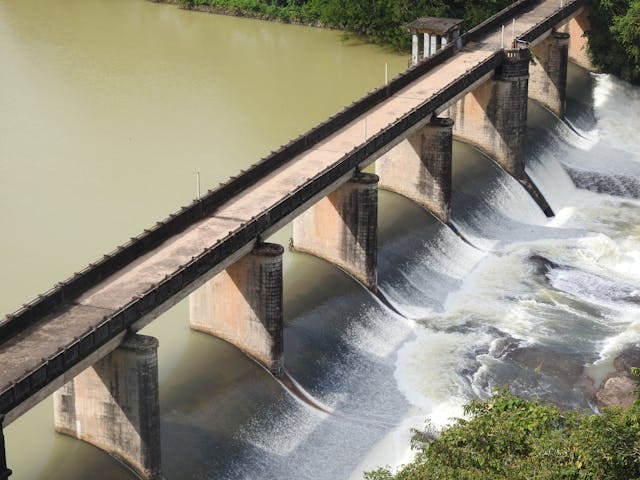
As the cities expand and climate challenges intensifies, the demand for efficient, resilient and sustainable water infrastructure has never been greater. Water supply and drainage systems forms the backbone of urban development—yet they are often complex, interconnected and vulnerable to inefficiencies if not planned meticulously. This is where BIM Services is transforming how the water and drainage systems are designed, coordinated and managed.
Why Water and Drainage Systems Need a BIM-Driven Approach?
Traditional 2D-based design methods often struggle to capture the true complexity of the underground utilities, gravity-based flows and multi-disciplinary coordination. Errors in alignment, slope or capacity can lead to costly reworks, construction delays and long-term operational issues.
BIM enables engineers and designers to create intelligent, data-rich 3D models that integrates geometry, performance data and lifecycle information thus resulting in smarter and more sustainable water infrastructure.
Real-World Examples of BIM in Water and Drainage Infrastructure
Here are some compelling real-world applications where BIM has made a tangible impact:
1) Hangzhou Asian Games Supporting Project (China)
For the First Phase of the Wisdom Express Road and Second Ring West Road in Hangzhou, BIM technology was used to optimize the design of extensive water supply and drainage pipelines, improving the overall planning, collision detection and route coordination across the complex municipal utilities. (bcpublication.org)
2) AECOM’s Water Treatment Facility in Davie, Florida (USA)
AECOM used BIM to design a comprehensive water treatment facility, including multiple wells, membrane wastewater reclamation systems and reuse strategies. By modeling these systems in 3D, the project minimized the environmental impacts and enhanced design accuracy. (WaterWorld)
3) Singapore’s Water Treatment and Stormwater Upgrades
Cities like Singapore have leveraged BIM in water infrastructure improvements—such as treatment plants and stormwater systems—leading to measurable reductions in both construction costs and schedules while improving the performance outcomes. (Number Analytics)
4) Integrated Flood Mitigation Projects in the Netherlands
In the River Waal adaptations near Nijmegen, BIM was used to coordinate multidisciplinary designs—bridges, waterways, flood channels and earthworks thus ensuring that hydraulic performance, safety and construction sequencing were fully aligned.
Key Benefits of BIM in Water and Drainage Design
· Accurate System Modeling and Flow Analysis
BIM allows for precise modeling of pipes, manholes, pumping stations and drainage networks with correct slopes and capacities. Designers can simulate the catchment flows and stormwater runoff early in the process thereby reducing the risks and optimizing the performances.
· Clash Detection and Multidisciplinary Coordination
Water and drainage systems intersect with the structural elements, roads, electrical networks and mechanical services. BIM-based clash detection flags the conflicts before the construction begins—reducing on-site surprises and costly redesigns. This coordination is especially critical when water systems interface with broader building services, including MEP BIM services thus ensuring the seamless integration across the disciplines.
· Support for Sustainable Design Decisions
BIM enables the evaluation of sustainable strategies like rainwater harvesting, greywater recycling and permeable drainage. By simulating scenarios in the model, teams can make data-backed decisions that improves the environmental and operational outcomes.
· Improved Quantity Take-offs and Cost Control
Quantities for pipes, fittings, chambers and excavation works are generated directly from the BIM models hence enhancing the cost accuracy, enabling the value engineering and streamlining the tendering and procurement.
· Lifecycle Asset Management
Beyond design and construction, BIM models serves as the digital assets for facility owners—facilitating the inspections, maintenance planning and future upgrades with embedded system data.
Collaboration Across Building Systems
Sustainable infrastructure is rarely designed in isolation. Water and drainage systems must align with ventilation, energy and thermal planning within the buildings and communities. Coordinated BIM workflows helps the teams to align hydraulic designs with other building services including HVAC Drafting Services to deliver fully optimized and constructible solutions.
The Future of BIM in Water Infrastructure
As sustainability regulations tightens and infrastructure projects grow in scale and complexity, BIM will continue to evolve from a design tool into a strategic platform for infrastructure planning and management. Digital twins, AI-driven simulations, and cloud-based collaboration will further enhance how water and drainage systems are designed, built, and operated.
Conclusion
BIM is redefining how water and drainage systems are planned—shifting the focus from reactive problem-solving to proactive, sustainable design. By enabling better coordination, accurate analysis and lifecycle visibility, BIM empowers the project teams to deliver resilient infrastructures that meets today’s needs while safeguarding the resources for the future.
Designing sustainable water infrastructure is no longer optional—and BIM is the foundation that makes it achievable.