
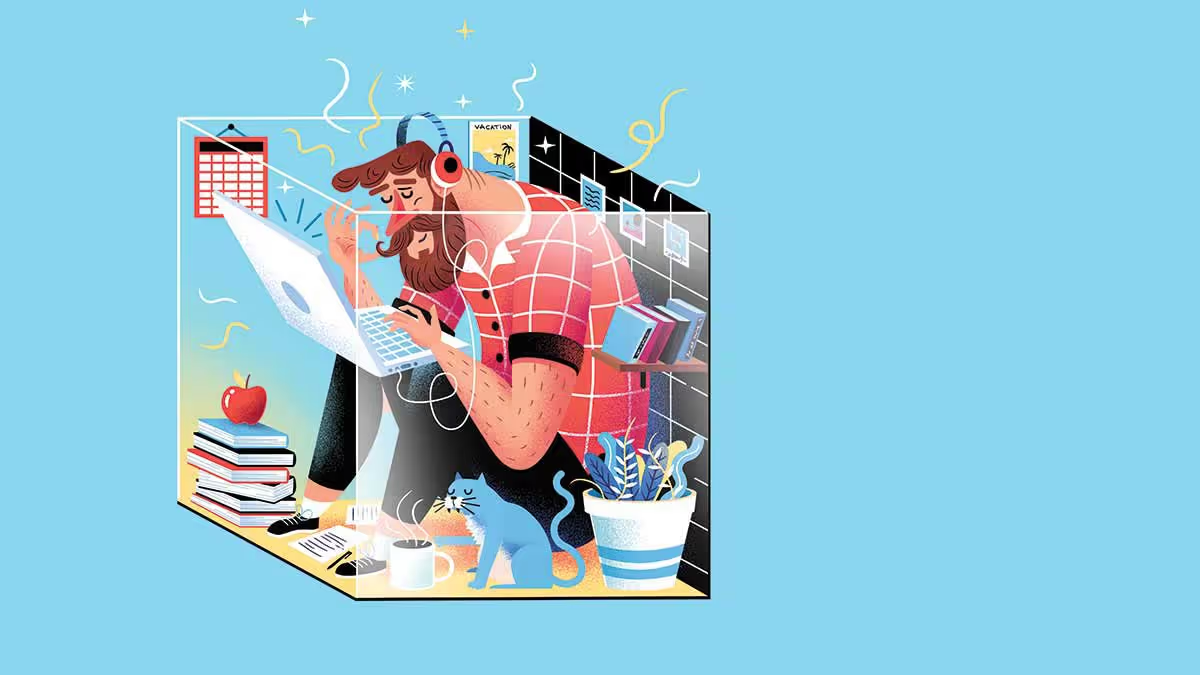
The employment landscape has shifted dramatically over the past decade, and few trends illustrate this better than the rise of the gig economy. What was once seen as a side hustle for extra income has now grown into a global movement that redefines how work is perceived, structured, and valued. Millions of professionals are leaving behind the traditional 9-to-5 model in favor of project-based, flexible opportunities that give them more control over their careers and lifestyles.
Understanding the Gig Economy
The gig economy refers to a labor market dominated by short-term contracts, freelance work, and independent contracting instead of permanent jobs. Gig workers range from rideshare drivers and food delivery partners to highly skilled professionals offering services like design, consulting, programming, and marketing.
Platforms such as Uber, Lyft, Upwork, Fiverr, and TaskRabbit have created digital marketplaces where individuals can connect with businesses or consumers in need of specific services. This model allows workers to monetize their skills and time while giving companies an efficient way to hire talent on demand.
Why the Gig Economy is Growing
The gig economy didn’t appear overnight—it is the result of several economic, technological, and cultural shifts that continue to fuel its growth:
1. Technological Advancements
The proliferation of smartphones, high-speed internet, and mobile applications has made it easier than ever for people to find and complete gigs. Digital platforms act as intermediaries, matching service providers with customers seamlessly. Whether it’s booking a ride through an app or hiring a freelancer for a logo design, technology has lowered barriers and accelerated adoption.
2. Demand for Flexibility
For many workers, traditional employment feels restrictive. The ability to choose projects, control working hours, and even work from different locations makes the gig economy appealing. Parents, students, and professionals seeking better work-life balance often find gig work fits their lifestyle better than a fixed schedule.
3. Business Agility
From startups to multinational corporations, companies increasingly prefer flexible hiring practices. Instead of committing to full-time salaries and benefits, organizations can scale their workforce as needed by relying on contractors. This agility reduces costs and makes businesses more adaptable to changing market conditions.
4. Cultural Shifts in Work Values
Generational differences also play a role. Younger workers tend to value autonomy, diversity of experience, and personal fulfillment over job security and longevity. The gig economy supports this preference by offering opportunities to pursue passion-driven work or multiple income streams at once.
5. Economic Uncertainty
During downturns or crises, such as the COVID-19 pandemic, many people turned to gig work either as a main source of income or as a financial backup. This adaptability has strengthened the gig economy’s position as a critical part of the labor market.
Benefits for Workers and Businesses
The gig economy presents unique advantages that explain its widespread appeal:
For Workers:
- Flexibility to choose projects and working hours
- Opportunities to build diverse skills across industries
- Location independence, enabling remote or global work
- Ability to pursue side hustles or full-time freelancing careers
For Businesses:
- Access to specialized talent without long-term contracts
- Cost savings on employee benefits and infrastructure
- Faster project turnaround with on-demand hiring
- Scalability during busy periods without permanent commitments
Challenges in the Gig Economy
While the gig economy opens doors to opportunity, it is not without its difficulties:
- Job Security: Gig workers typically lack traditional benefits such as health insurance, paid leave, and retirement contributions. This can create financial instability.
- Income Fluctuation: Earnings are inconsistent and depend heavily on market demand, competition, and platform policies.
- Worker Protections: Many countries are still grappling with whether to classify gig workers as employees or independent contractors. This classification affects labor rights, minimum wage eligibility, and access to benefits.
- Isolation: Unlike traditional office environments, gig workers often operate alone, which may lead to reduced networking opportunities and professional development.
Global Impact of the Gig Economy
The gig economy is not confined to specific regions—it’s a worldwide phenomenon. In the United States, freelancers now account for over a third of the workforce, contributing billions of dollars annually to the economy. Countries like India and the Philippines are thriving hubs for remote freelance work, particularly in IT, content creation, and customer service. Meanwhile, Europe is witnessing growth in platform-based jobs such as delivery services and consulting.
This global trend is reshaping how labor markets function. For developing countries, it creates cross-border job opportunities, while in developed economies, it pushes policymakers to rethink labor laws and worker protections.
The Role of Technology and AI in Shaping the Future
The future of the gig economy will be heavily influenced by technology, particularly automation and artificial intelligence. New categories of gig work are emerging, from training AI models to offering specialized digital services. Platforms are also investing in AI-driven tools to better match workers with opportunities, improve efficiency, and ensure fair pricing.
At the same time, automation may reduce demand for certain repetitive gigs, creating a need for workers to upskill continuously. The adaptability of gig workers will be crucial in staying relevant in this evolving landscape.
What Lies Ahead
The gig economy is expected to keep expanding, becoming a permanent pillar of the global workforce. Governments are likely to introduce stronger regulations to balance flexibility with worker rights, ensuring fair pay, access to benefits, and protections against exploitation.
For workers, the gig economy is no longer just a stopgap but a viable long-term career path. For businesses, it will remain an essential strategy for staying agile in fast-changing markets. The rise of this model signals not just a change in how we work, but a shift in how we think about work itself—more fluid, more personalized, and increasingly shaped by technology.
