
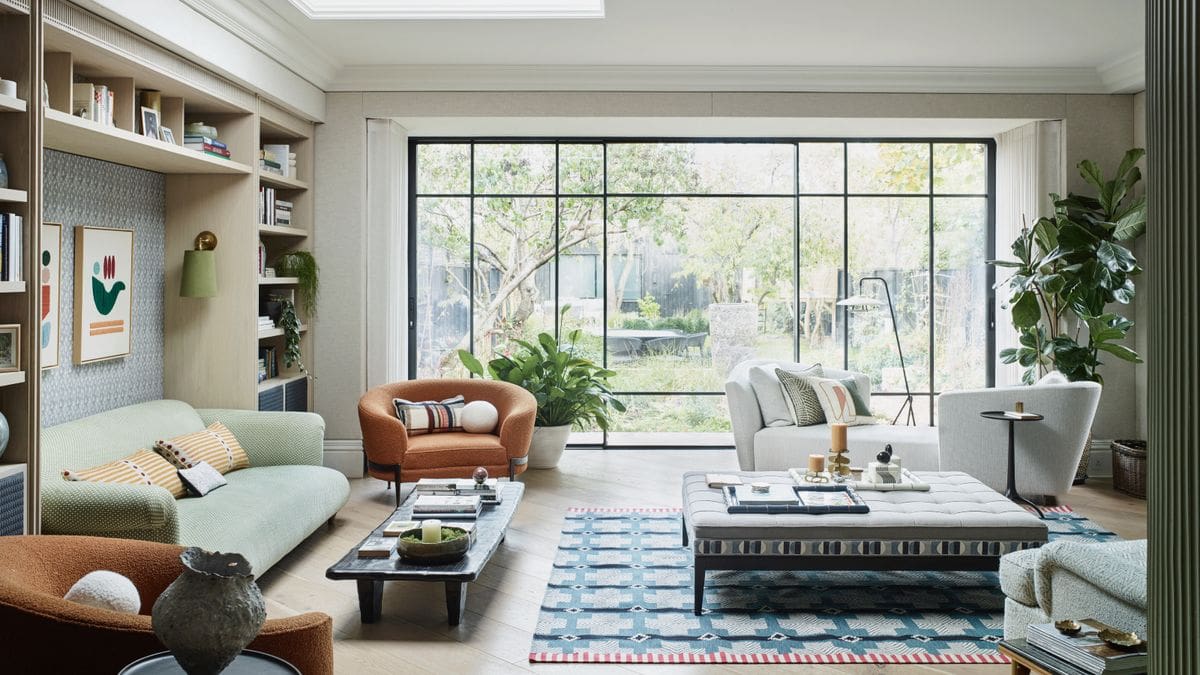
Modern homes are often designed to feel open, streamlined and effortless. On paper, that sounds simple enough. In reality, though, a beautiful home can still feel awkward to live in if the furniture layout is working against the space. A room can have great finishes, lovely natural light and carefully chosen pieces, yet still feel off for reasons that are hard to pinpoint. More often than not, the issue is not the furniture itself. It is the way it has been arranged.
This is especially true in contemporary interiors, where layouts tend to carry a lot of responsibility. Open-plan living, multi-use rooms and clean architectural lines leave less room to hide poor decisions. Every placement matters more. A sofa that is slightly too far from the coffee table, a dining setting that interrupts the natural path through the room, or seating that ignores the focal point can make the entire home feel less considered than it really is.
One of the most common examples is treating the sofa as a purely practical purchase rather than a layout-shaping piece. Well-chosen modern modular sofas can define zones beautifully and make a home feel flexible, inviting and architecturally in sync, but only when they are used in a way that supports movement, conversation and proportion.
If you want a home to feel polished, functional and calm, it helps to understand where many modern layouts go wrong. Here are the furniture layout mistakes that show up again and again, and what to do instead.
Pushing Everything Against the Walls
This is one of the oldest layout mistakes around, and it still appears in plenty of modern homes. People often assume that placing all furniture around the perimeter of a room will make it feel larger. Sometimes it does the opposite.
When sofas, chairs and side tables are all pressed hard against the walls, the centre of the room can feel strangely empty and disconnected. Instead of creating openness, it creates a gap between the people using the space and the room itself. The layout feels hesitant rather than intentional.
In many cases, floating furniture slightly away from the walls creates a much stronger result. Even a modest shift can help anchor a seating zone and make the room feel more balanced. In larger open-plan spaces, pulling furniture inward is often essential. It creates definition, encourages conversation and stops the room from feeling like a waiting area.
Ignoring the Natural Walkways
A modern home should feel easy to move through. One of the clearest signs of a poor furniture layout is when the room forces people to weave, sidestep or squeeze past pieces that are in the wrong place.
This often happens when the visual arrangement is prioritised over real-life use. A bench might look perfect under a window, but if it narrows the passage into the kitchen, it becomes an obstacle. A coffee table may look centred in the room, but if it blocks the main walking path, the layout will never feel right.
Good layout planning always considers circulation first. Think about how people actually enter, exit and move through the room day to day. The goal is not just to fit furniture into a space. It is to allow the space to function naturally around the furniture.
Using a Rug That Is Too Small
Rugs do a lot more than soften a room. They help define zones, connect furniture and create visual structure. When a rug is too small, the entire layout can feel like it is floating in fragments.
This is especially common in living areas where the rug ends up sitting like a small island in the middle of the room, touching nothing. The sofa sits beyond it, the chairs sit around it, and everything feels slightly disconnected.
In most cases, a rug should be large enough for at least the front legs of the main furniture pieces to sit on it. In larger living rooms, all legs may fit comfortably on the rug. The exact formula depends on the room, but the principle remains the same: the rug should support the furniture grouping, not hover independently beneath it.
Choosing a Layout That Looks Good in Photos but Feels Bad in Real Life
A modern interior can be visually stunning and still fail as a lived space. Social media and display homes have made many people more aware of styling, but sometimes that comes at the expense of comfort and functionality.
A pair of sculptural chairs may look impressive, but if they are too far from the sofa to allow conversation, the room becomes performative rather than usable. A dramatic coffee table may be beautiful, but if it leaves no room to put your feet up, place a drink or move around comfortably, it is not helping the space.
The best furniture layouts do not feel staged. They feel intuitive. They support everyday habits while still looking refined. A modern home should not only photograph well. It should be easy to relax in, host in and move through without constant adjustment.
Misjudging Scale and Proportion
Modern homes often favour fewer, larger statement pieces, but scale still matters enormously. A layout can fall apart when the furniture is either too bulky for the room or too slight to hold its own within it.
An oversized sectional in a compact room can dominate the floor plan and leave no breathing space. On the other hand, a collection of undersized pieces in a large open-plan space can feel scattered and underwhelming. Neither creates the sense of balance most people are looking for.
This is where proportion becomes more important than individual taste. A beautiful sofa is not necessarily the right sofa for the room. A slimline dining setting may suit a minimalist aesthetic, but if it disappears in a generous space with tall ceilings, the room can feel incomplete. Layout decisions should always respond to the architecture around them.
Forgetting to Create a Clear Focal Point
Every room benefits from a sense of direction. In many living rooms, the focal point might be a fireplace, a view, a television or a striking piece of art. In dining rooms, it may be the table itself or a feature light above it. Problems start when the furniture ignores that focal point altogether.
Without a clear anchor, rooms can feel unsettled. Seating angles may seem random, the arrangement may lack cohesion, and the space can end up feeling visually noisy even if the palette is restrained.
This does not mean every chair has to point towards the television. It simply means the layout should acknowledge what matters most in the room. Once the focal point is established, the rest of the arrangement becomes much easier to resolve.
Breaking Up Open-Plan Spaces Poorly
Open-plan living can be one of the great strengths of a modern home, but it also creates one of the most common layout challenges. Without walls to do the zoning for you, the furniture has to take on that role.
A common mistake is treating the open area as one giant room rather than a series of connected zones. This can lead to furniture that feels adrift, dining settings that do not relate to anything around them, or living areas that bleed awkwardly into circulation space.
Instead, each zone should feel defined but connected. Rugs, lighting, sofa placement and occasional furniture can all help create subtle boundaries. The aim is not to break the openness, but to make each part of the space feel purposeful. A good layout allows the room to flow while still giving each activity its own place.
Placing Furniture Without Considering Conversation
One of the easiest ways to tell whether a layout is working is to imagine how people would interact in it. Are seats positioned in a way that makes conversation easy? Is there a sense of connection between the pieces? Or does the room force everyone to either twist awkwardly or speak across a large void?
This is a common issue in modern homes where furniture is chosen to suit the edges of the room rather than the people in it. Long distances between seating, harsh angles and isolated chairs can all make the room feel socially cold.
Even in a minimalist or spacious interior, there should still be an invisible sense of togetherness. Furniture does not need to be crowded, but it should feel relational. Rooms are usually at their best when they invite interaction without demanding it.
Overfilling the Room
Sometimes layout problems are not caused by poor placement alone, but by simply having too much in the room. Modern interiors tend to feel best when there is a clear sense of space around each piece. When too many chairs, tables, storage units or decorative accents are competing for floor area, the room starts to feel compressed.
This can happen easily when people try to combine multiple ideas into one space. A reading nook, a media zone, extra storage, display shelving and occasional seating may all sound useful, but together they can overload the room and make the layout feel cluttered.
Restraint matters. Not every wall needs furniture. Not every corner needs filling. Sometimes the most sophisticated layout choice is leaving a little emptiness where it improves clarity and calm.
Forgetting About Lighting in the Layout Plan
Furniture layout and lighting are deeply connected, yet they are often planned separately. A room may look balanced during the day, then feel dim and awkward at night because the seating does not align with floor lamps, overhead lighting or practical task areas.
For example, a lounge chair placed in a dark corner with no reading light may look stylish but serve little purpose. A dining table positioned slightly off-centre beneath a pendant can make the whole room feel visually unbalanced. A sofa that blocks natural light from another area can also change the atmosphere more than expected.
A strong layout considers how the room will feel at different times of day. Natural light, artificial light and furniture placement should all work together rather than compete.
Treating Every Room the Same Way
Modern homes often share design language from room to room, but that does not mean the layout rules should be identical everywhere. A living room, dining area, bedroom and entry each require different spatial priorities.
One mistake people make is applying a generic formula everywhere. Centre the furniture, mirror both sides, add a rug, add side tables, done. The result may look orderly, but it can also feel impersonal and disconnected from how the room is actually used.
A more thoughtful approach asks better questions. What is this room for, really? Where do people pause? What needs to be easy? What should feel quiet, social, open or anchored? When the layout responds to the room’s actual purpose, the whole home starts to feel more natural.
The Best Layouts Feel Effortless Because They Are Well Resolved
The irony of good furniture layout is that when it works, people hardly notice it. They simply notice that the room feels calm, functional and inviting. It feels easy to sit down, easy to host, easy to walk through and easy to enjoy.
That sense of ease rarely happens by accident. It comes from understanding proportion, circulation, focal points, zoning and comfort, then arranging furniture in a way that supports all of them at once.
Modern homes do not need more furniture to feel complete. They need better relationships between the pieces already in the room. When you avoid the most common layout mistakes and start thinking more intentionally about how each piece shapes the space around it, the entire home begins to feel more resolved, more stylish and far more liveable.