
Introduction
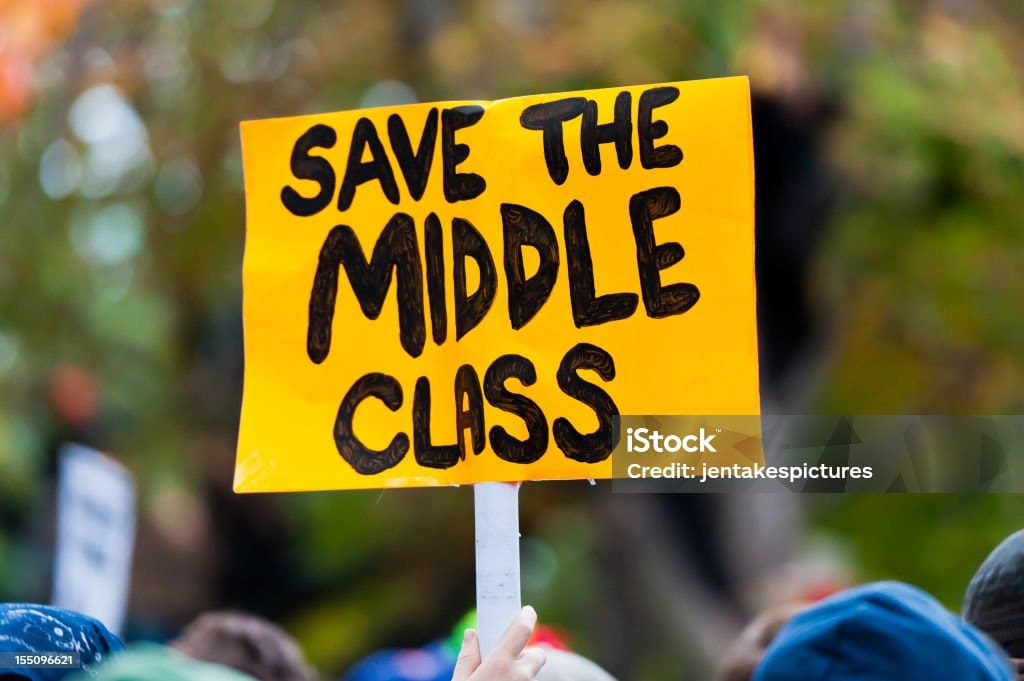
In 1971, about 61% of American households were considered middle class. By 2023, that share had declined to roughly 51%, according to research from the Pew Research Center.
This shift may seem gradual, but it reflects a deeper structural change in the American economy. The middle class—long considered the backbone of economic stability—is no longer as dominant as it once was.
So what defines the middle class in 2026? And why does it feel like more people are working harder, earning more, yet still struggling to keep up?
What Is the Middle Class?
The middle class is typically defined as households earning between two-thirds and double the median household income. This benchmark, commonly used by the Pew Research Center, provides a standardized way to measure income distribution.
For example:
- Lower-income households fall below this range
- Middle-income households fall within it
- Upper-income households exceed it
However, this definition is based strictly on income—not on cost of living, debt, or financial security. In today’s economy, income alone does not fully capture what it means to live a “middle-class lifestyle.”
Middle Class Income in 2026
According to data from the U.S. Census Bureau, the median household income in the United States is approximately in the mid-$70,000 range.
Using standard definitions, this places middle-class households roughly within:
- $50,000 to $150,000 for individuals
- $70,000 to $200,000+ for households
While these numbers may sound sufficient on paper, they do not reflect the rising cost of living in many regions. In high-cost areas, even six-figure incomes can feel financially constrained.
The Real Problem: Costs Are Rising Faster Than Income
One of the primary reasons the middle class is shrinking is that expenses have increased faster than wages.
Housing
Housing costs have risen significantly over the past decade. Data from the Federal Reserve Bank of St. Louis (FRED database) shows substantial increases in home prices nationwide.
Higher interest rates have also made mortgages more expensive, further reducing affordability.
Healthcare
Healthcare spending continues to grow each year. The Centers for Medicare & Medicaid Services report that national health expenditures have steadily increased. This trend places extra financial pressure on households.
Childcare
Childcare has become a major expense for working families. The U.S. Department of Labor reports that childcare costs can consume a significant part of household income. These costs are often comparable to housing costs in some regions.
Inflation & Everyday Expenses
The Bureau of Labor Statistics reports consistent increases in the cost of food. It also shows rising transportation costs. Other essentials have also seen price increases through the Consumer Price Index (CPI).
When these cost increases occur simultaneously, they reduce purchasing power—even if wages rise slightly.
Why the Middle Class Is Shrinking
Economists often describe this trend as a “hollowing out” of the middle class.
According to analysis from the American Enterprise Institute, the share of middle-income households has declined over time. Both lower- and upper-income groups have grown.
This suggests a widening gap:
Some households are moving upward into higher income brackets
Others are falling behind due to rising costs and financial pressure
As a result, fewer households remain in the middle.
The Housing Crisis Is Redefining the Middle Class
Housing has become one of the most important factors in determining financial stability.
The National Association of Realtors reports ongoing affordability challenges driven by rising home prices and mortgage rates.
For previous generations, Homeownership was a central milestone of middle-class life. Today, that milestone is increasingly difficult to achieve.
Higher down payment requirements have increased challenges for many households. Elevated interest rates further complicate entry into the market. Limited housing supply also contributes to the difficulty in entering the market.
The Subscription Economy and Recurring Costs
Another emerging factor affecting the middle class is the growth of recurring monthly expenses.
Modern households now pay for:
- Streaming services
- Software subscriptions
- Cloud storage
- Membership-based platforms
A study by C+R Research found that consumers often underestimate how much they spend on subscriptions each month.
While individual subscriptions may seem small, their combined impact can significantly reduce disposable income over time.
The Role of Debt
Debt is another major factor contributing to financial strain.
Data from the Federal Reserve indicates an increase in consumer debt. This rises across categories like credit cards, auto loans, and mortgages.
As interest rates increase, so does the cost of carrying that debt. This means a larger portion of household income is directed toward payments rather than savings or investments.
Why Many People Feel Financially Stuck
Even as incomes rise, many individuals report feeling financially stagnant.
This is often due to a combination of:
- Rising living expenses
- Increasing debt obligations
- Reduced purchasing power
In effect, higher earnings are offset by higher costs.
This creates the perception—and often the reality—that financial progress is difficult to achieve.
What It Takes to Be Middle Class Today
In today’s economic environment, maintaining a middle-class lifestyle often requires more than a single source of income.
Many households rely on:
Dual incomes
Additional income streams or side work
Careful budgeting and financial planning
The margin for error has become smaller. Unexpected expenses—such as medical bills or car repairs—can quickly disrupt financial stability.
Why This Matters
The middle class plays a critical role in economic growth.
When the middle class is strong:
- Consumer spending increases
- Businesses expand
- Economic stability improves
When it weakens:
- Spending slows
- Wealth inequality grows
- Economic volatility increases
This makes the decline of the middle class not just a personal issue, but a broader economic concern.
Conclusion
The middle class is not disappearing overnight—but it is changing.
Rising costs, shifting income distribution, and increasing financial pressures are redefining what it means to be middle class in 2026.
For many households, the challenge is no longer just earning more. It is about maintaining financial stability in a more demanding economic environment.
Understanding these changes is essential for adapting to them.